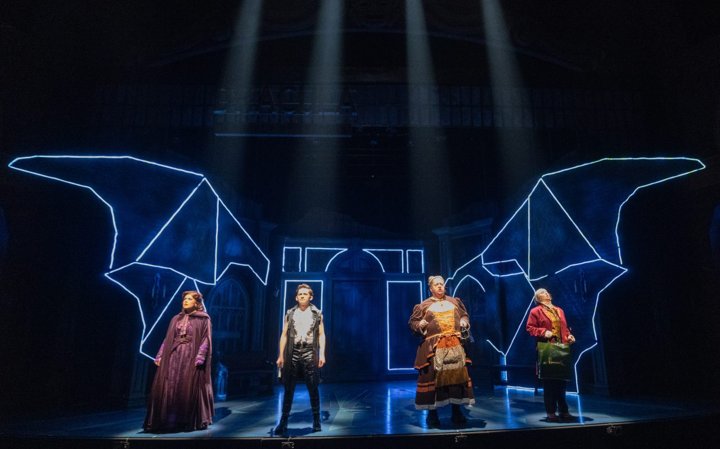
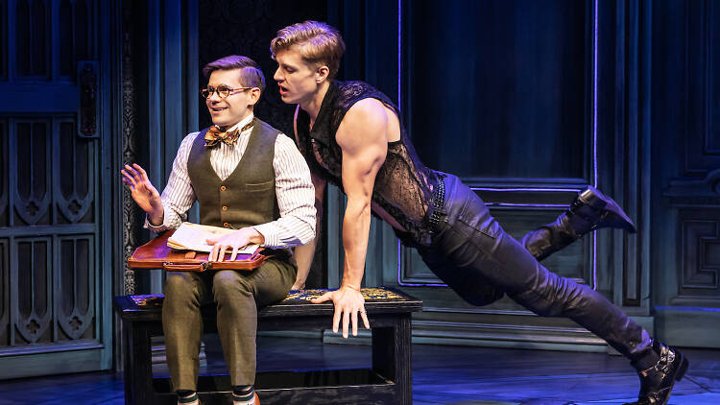
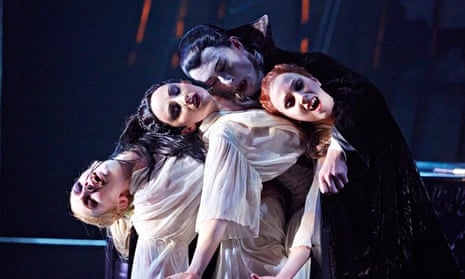
Lauren Powell praises Rachel Craig’s commanding Mina and the Westovian ensemble in Morgan Lloyd Malcolm’s retelling of Dracula. She admires the costumes, set and ambitious staging while noting uneven technical cues. The review concerns the Pier Pavilion production in South Shields.
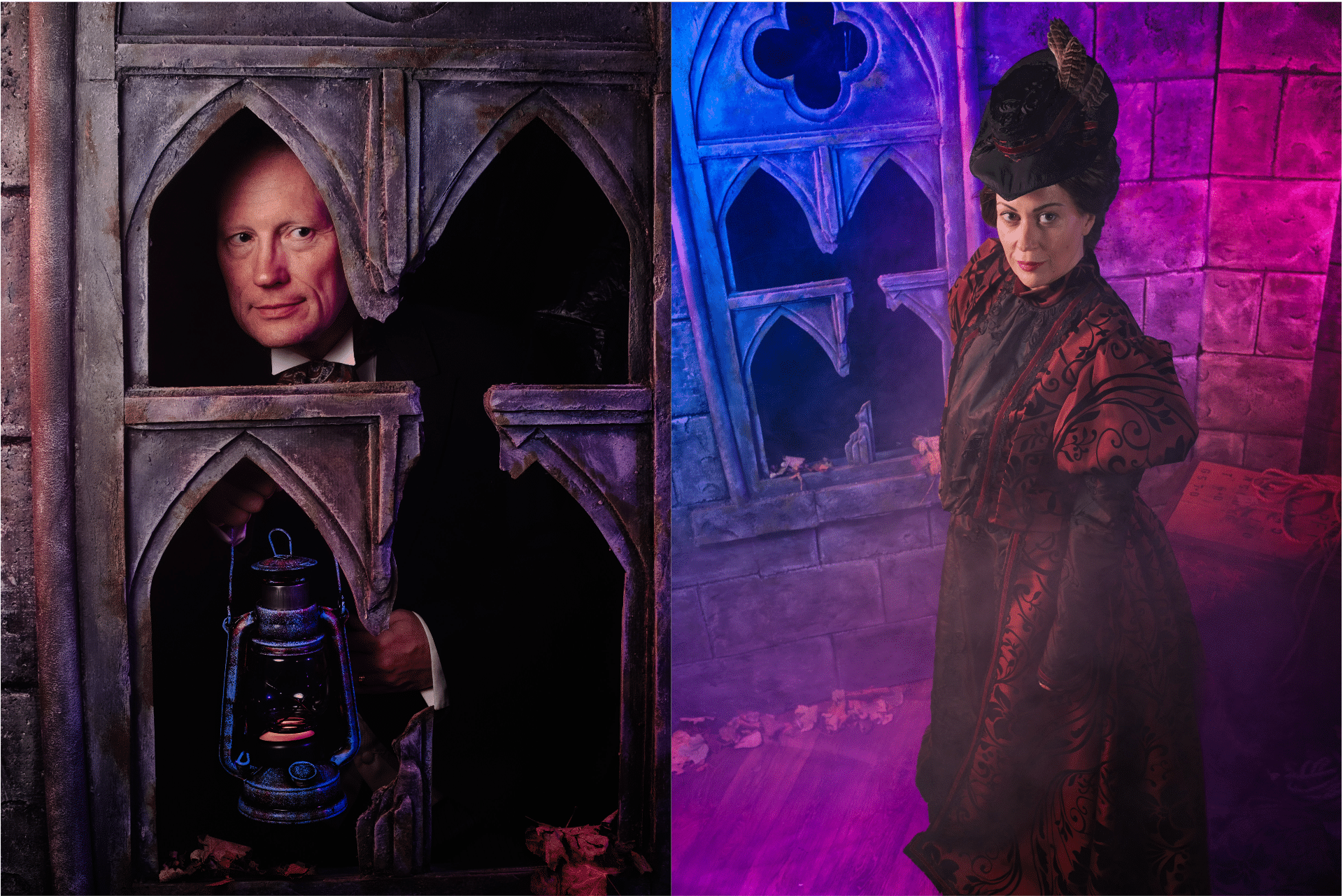
Ed Waugh reviews the Westovian Theatre Group’s production of Morgan Lloyd Malcolm’s adaptation at the Pier Pavilion. He praises Rachel Craig’s performance as Mina, Mike Harrison’s direction and the production’s lighting, sound and costumes, while suggesting that parts of the writing could move faster. The run ends on 7 November 2026.
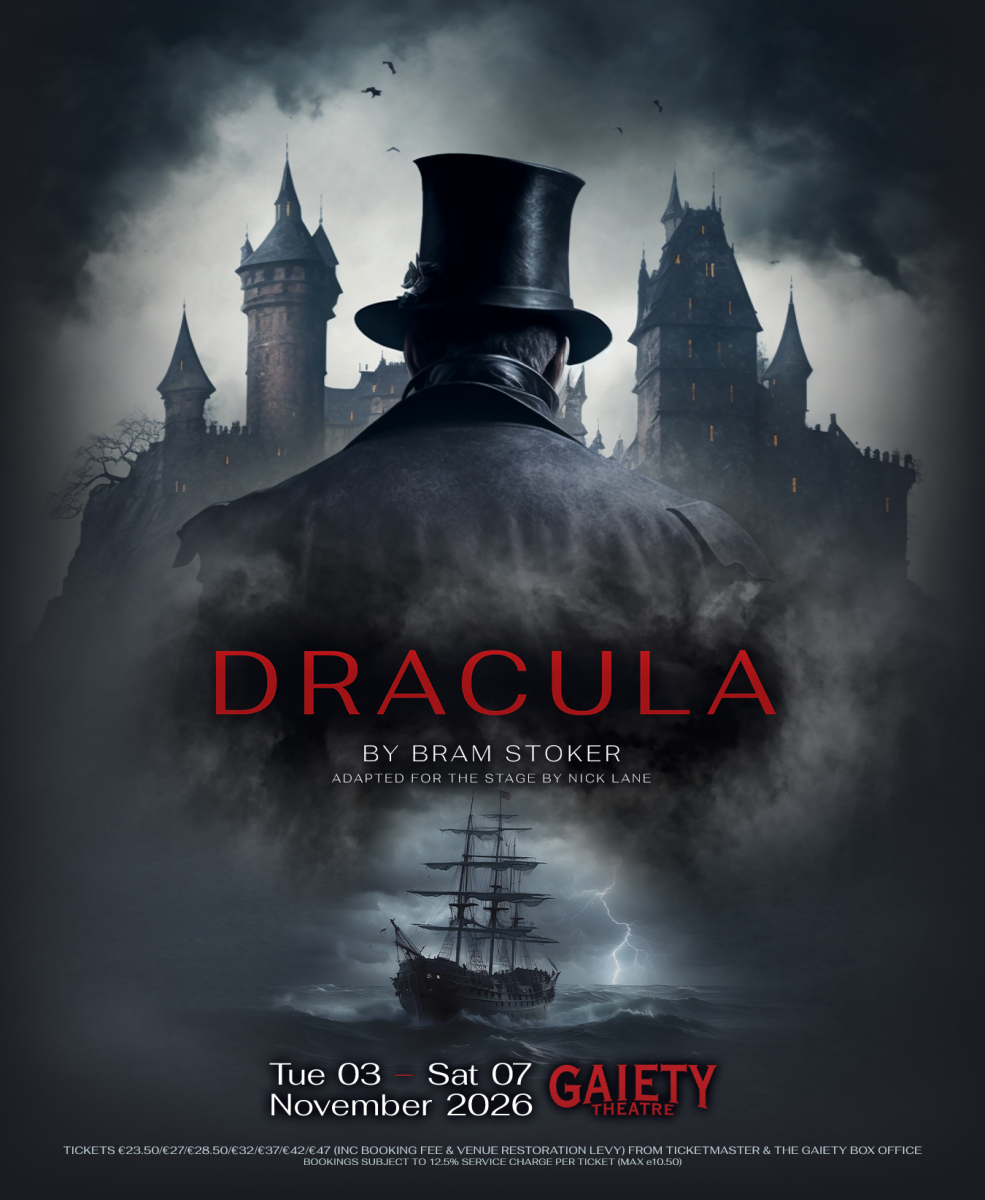
Adi Ajzenstadt finds effective technical shocks and committed performances in Nick Lane’s Dracula for Blackeyed Theatre and Verdant Productions at Dublin’s Gaiety Theatre. The review is mixed, praising moments of excitement while finding the simple staging and emotional atmosphere insufficiently powerful.
Irish Cultural Center and McClelland Library / EIN Presswire
Irish Cultural Center and McClelland Library
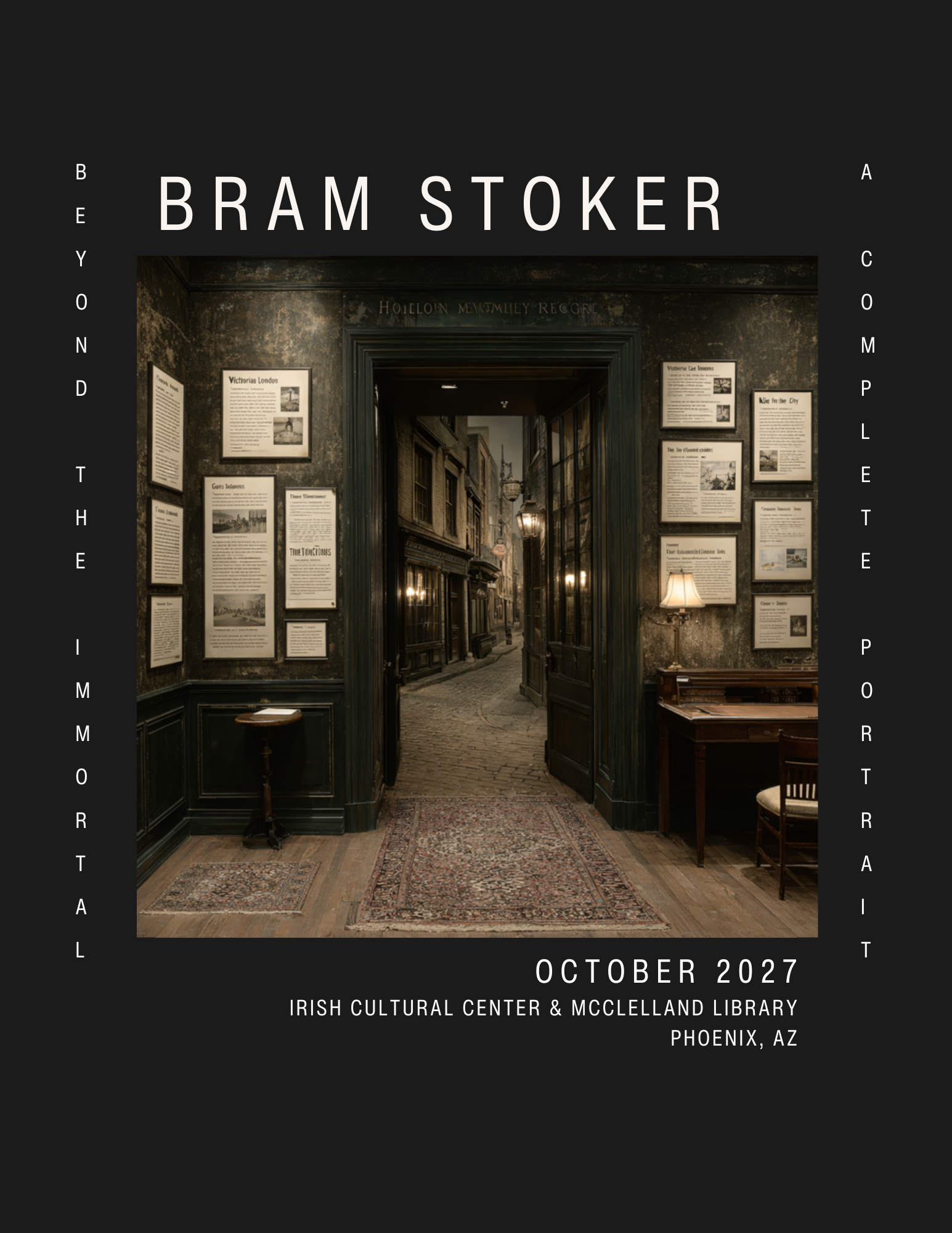
The Irish Cultural Center and McClelland Library announces an exhibition exploring Bram Stoker’s life beyond Dracula, with family material and immersive design by NeoPangea. The organiser plans an autumn 2027 opening in Phoenix, followed by a touring exhibition. This is an announcement of a future project, rather than a report of an exhibition already open.
Jack Gleeson reports on Brian Cleary’s rediscovery of “Gibbet Hill” and the charitable edition supporting research into hearing loss in newborns. The article follows the story’s return to print and its fundraising purpose; its 2026 publication date should not be confused with the earlier discovery.
Robyn Ahern explains how she approached Dracula as an audio mystery, placing Mina’s investigation at its centre. The interview discusses adapting action for sound, developing unsettling motifs and bringing fresh attention to Lucy and Renfield. Ahern also hopes listeners will return to Stoker’s novel.
Gemma Billington introduces Montblanc’s Writers Edition tribute to Bram Stoker, describing the collection’s Gothic design, red and black details and limited-edition fountain pen.
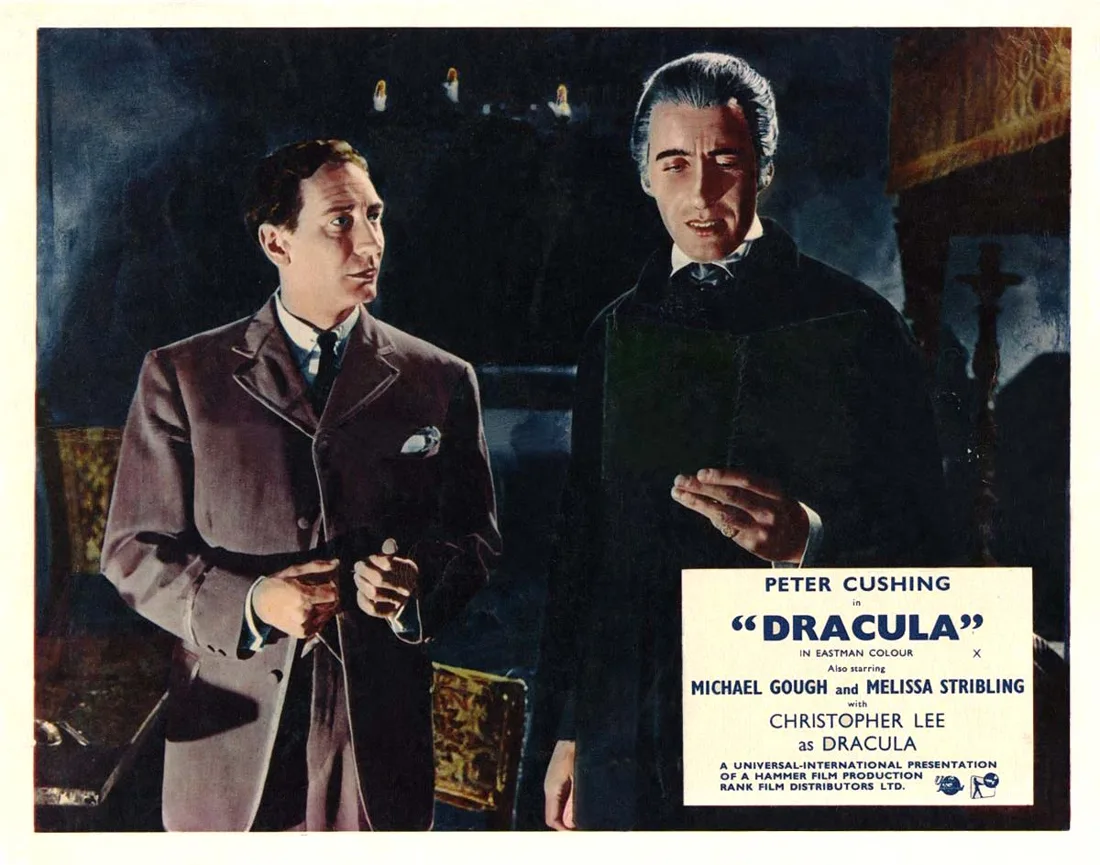
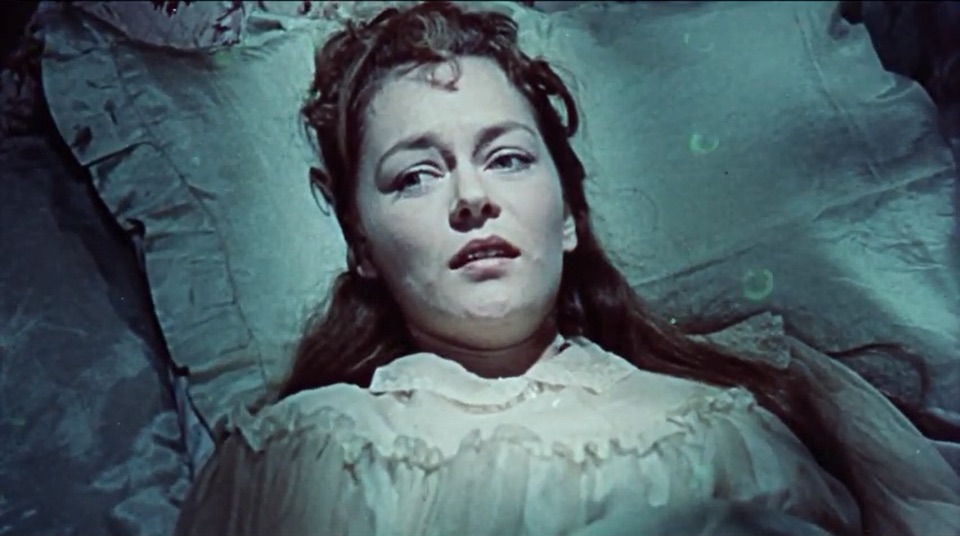
Kevin Maher gives Hammer’s restored Dracula five stars, arguing that Terence Fisher’s 1958 film still has the power to disturb and excite. He pays particular attention to Jack Asher’s colour photography, Christopher Lee’s physical presence and the charged encounter between the vampire and the people he threatens. The review considers how the new restoration changes the experience of a film long familiar through less complete or less vivid versions, discussing footage removed by censors and the prominence of desire beneath the Gothic surface. Maher presents the film as an achievement in its own right, rather than merely a historical stepping stone between Universal’s Dracula and later screen versions. His account also draws attention to contemporary responses to its violence and sexuality. The headline’s description of three additional minutes belongs to this review; it should be distinguished from the details and release formats in Hammer’s own restoration announcement.
Sinclair praises Paul Melendy’s flamboyant Count and the ensemble in Actors’ Shakespeare Project’s Watertown production of Dracula: A Comedy of Terrors. The review highlights Christopher V. Edwards’ direction, physical comedy and striking costumes, finding that the performers make even the cornier jokes entertaining.
David Jonsson tells Kelli Boyle how recording Audible’s Dracula allowed him to explore Dr Seward’s faith in science and his response to the supernatural. He discusses working with Mary Lambert, trusting performances recorded separately and his admiration for fellow cast member Maggie Gyllenhaal.
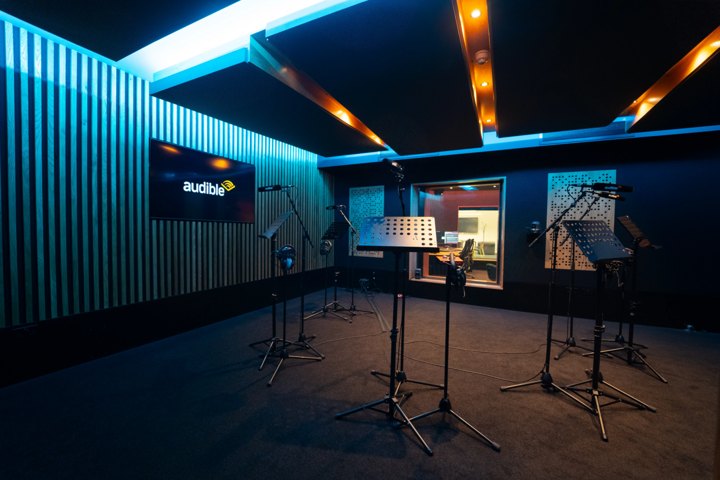
Patricia Nicol reviews Audible’s full-cast Dracula as an unusually immersive listening experience, describing the force of its sound design and the sudden shocks it creates in an ordinary domestic setting. Her account considers how recorded voices and effects can make Stoker’s story feel immediate without supplying the fixed images of a film. Jonathan Bailey, Ella Purnell, David Jonsson and the wider cast are discussed within a production that draws on the appeal of literary audio drama as well as celebrity performers. Nicol’s enthusiasm is not unqualified: she finds Maggie Gyllenhaal’s Van Helsing jarringly modern and American in relation to the rest of the world being created. The review therefore offers a useful assessment of what works and what jars in this particular interpretation. It also places the release within renewed interest in dramatic audio adaptations, providing a critical counterpart to the production’s announcements and interviews.
Mary Lambert discusses casting Jonathan Bailey, directing for audio and bringing Mina’s agency to the foreground in Audible’s Dracula. In her interview with Devansh Sharma, she connects the production with her experience of horror films and music videos, explaining how sound leaves room for listeners’ imaginations.
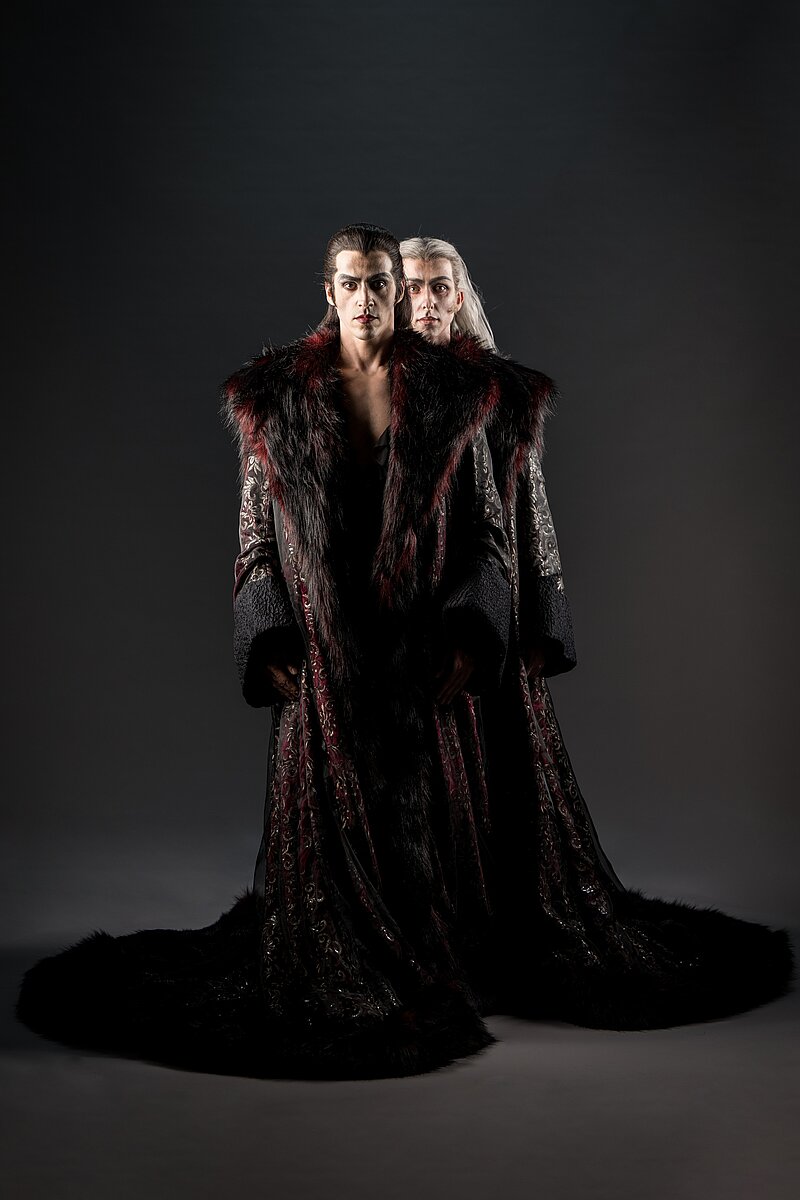
Theater Dortmund previews the German premiere of Krzysztof Pastor’s Dracula, opening on 17 October 2026. The ballet draws on Bram Stoker’s novel and Wojciech Kilar’s music, with two dancers embodying different aspects of Dracula. The announcement traces the production to its 2018 premiere with West Australian Ballet.
Francisco introduces an exclusive excerpt from Audible’s full-cast Dracula and interviews director Mary Lambert. The feature explains the production’s focus on Mina and its treatment of the vampire sisters, ahead of the October launch.
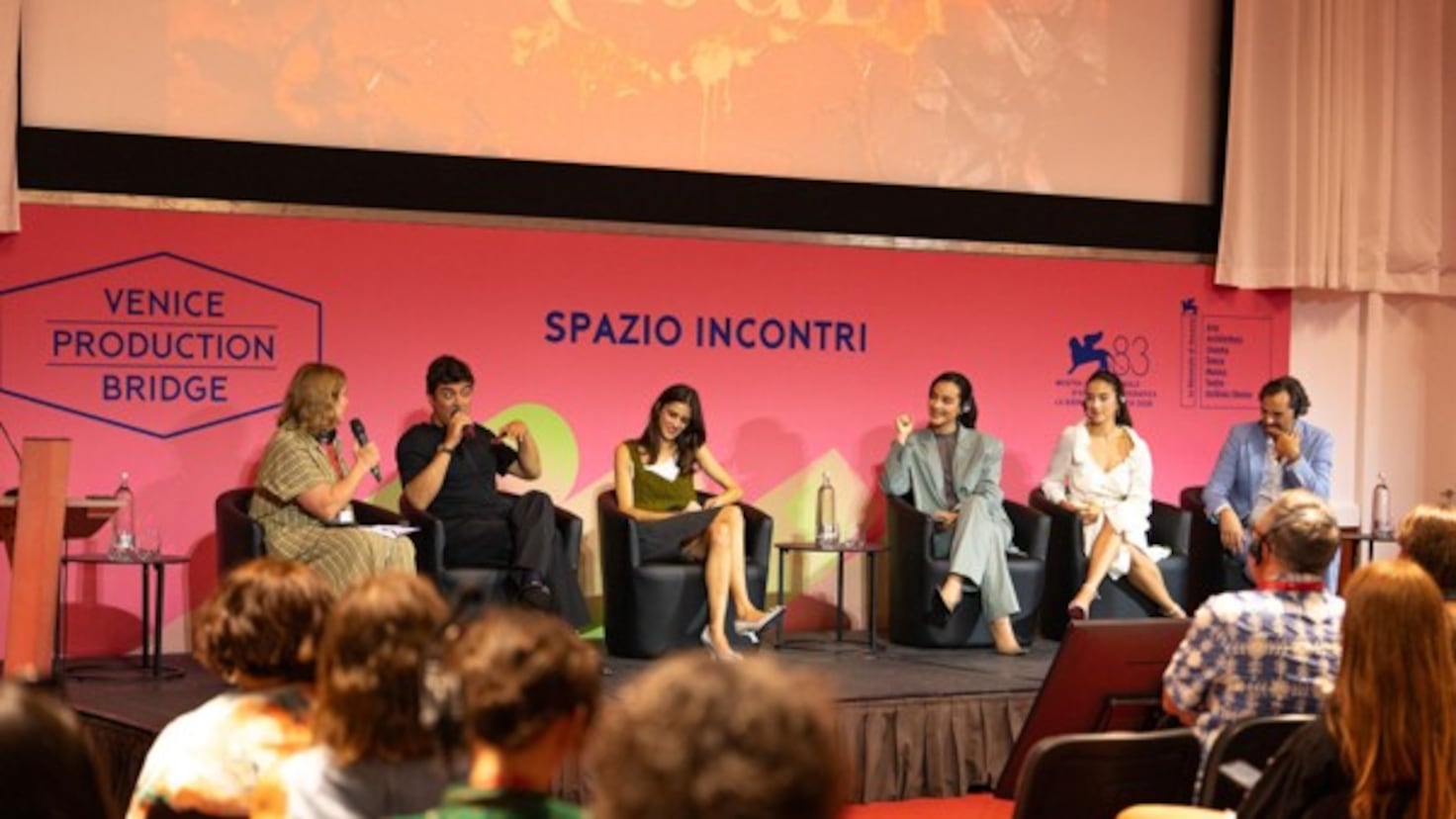
Matteo Mammoli explores how Audible developed Dracula for an international ensemble, interviewing Robin Morgan-Bentley about scripts, casting, recording and spatial sound. The feature also discusses Mary Lambert’s direction following the production’s presentation in Venice.
G One Radio introduces the French production Dracula, la parodie hilarante et terrifiante !, directed by Gaspard Legendre at Paris’s Apollo Théâtre. The feature describes its irreverent approach and multi-role ensemble. It is promotional coverage by a media partner of the production, rather than an independent review.
Rodríguez Peleteiro reports the Venice presentation of Audible’s adaptation, highlighting Claudia Salas as Mina and Asier Etxeandía as Dracula. The Spanish-language article describes its focus on Mina’s reconstruction of letters and testimony before the announced October release.
La Repubblica introduces Chiara Ugolini’s video interview with Riccardo Scamarcio at Venice. Its written introduction discusses his role as Dracula opposite Benedetta Porcaroli’s Mina in the Italian Audible adaptation, announced for release on 1 October 2026.
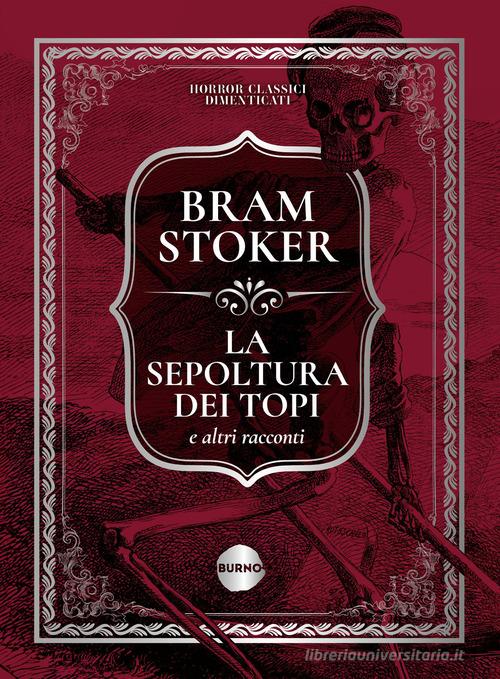
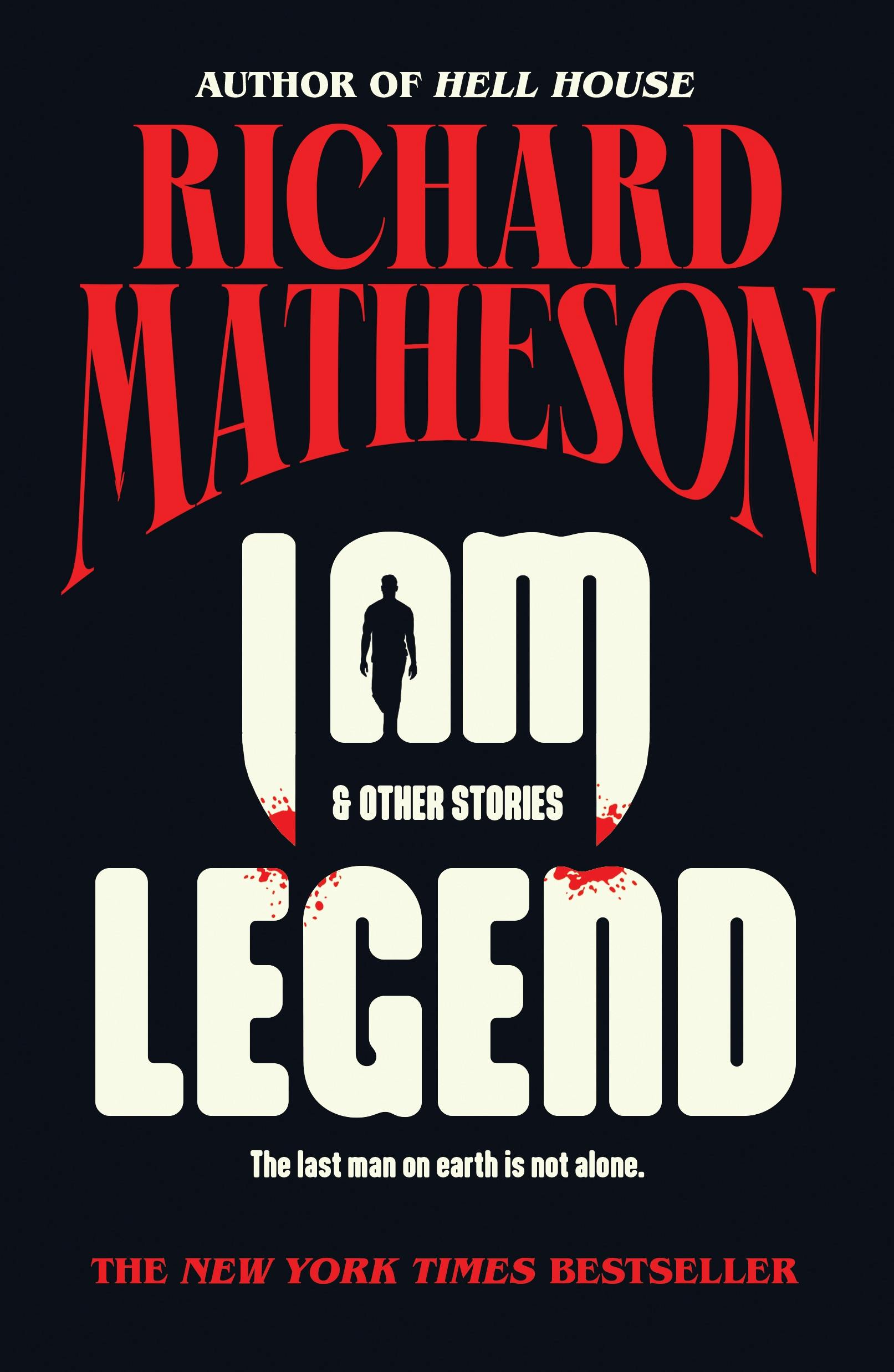
ANSA previews Burno’s illustrated collection La sepoltura dei topi e altri racconti, bringing together fifteen Stoker stories including “Dracula’s Guest” and “Gibbet Hill”. The announcement gives an intended publication date of 11 September 2026 and presents the volume as part of the publisher’s classic horror series.
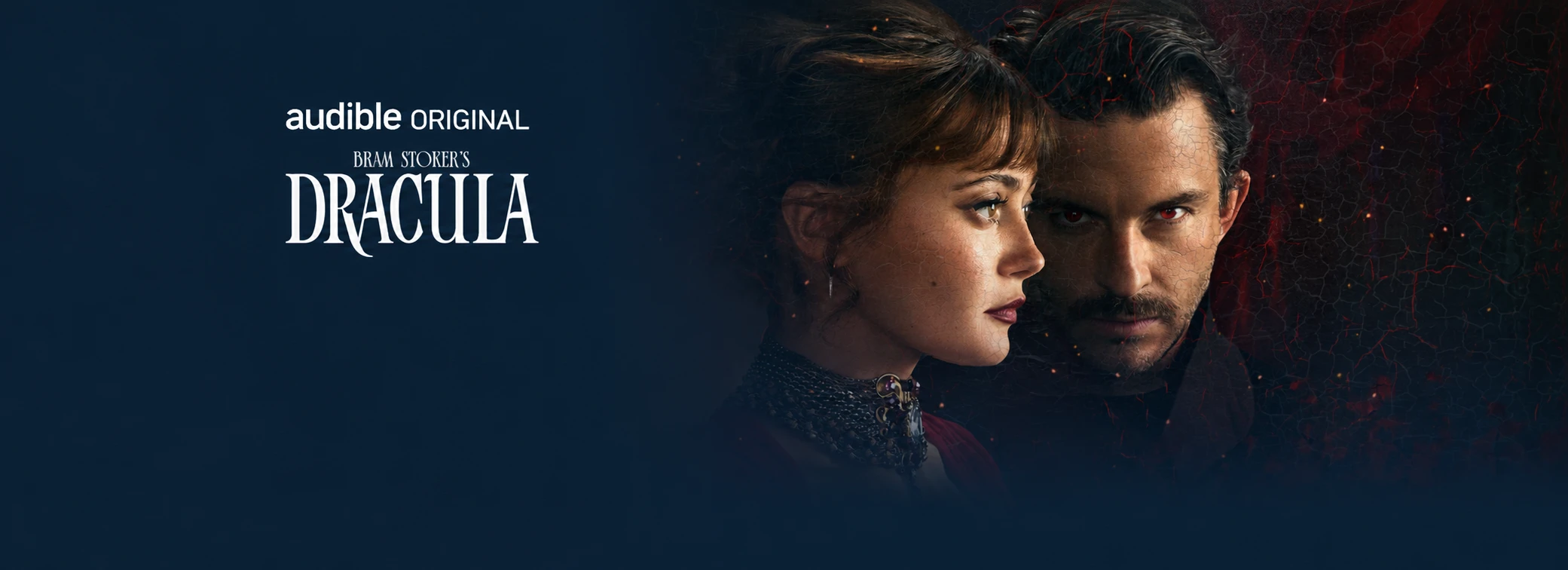
Audible announced seven language editions of its full-cast Dracula, with Jonathan Bailey, Ella Purnell and Maggie Gyllenhaal in the English cast. Robyn Ahern’s adaptation is directed by Mary Lambert. Five editions were scheduled for 1 October 2026, with German and Brazilian Portuguese to follow in 2027.
Moorhead enjoys Arizona Theatre Company’s fast-moving production, especially its five performers’ quick changes, physical precision and inventive staging. He acknowledges the broad, sometimes deliberately crude humour, while finding moments of humanity beneath the burlesque. The review concerns the Tempe Center for the Arts run directed by Gordon Greenberg.
Tim Dams reports plans for a 4K restoration of Hammer’s 1958 Dracula by Hammer Films and Silver Salt Restoration in partnership with Warner Bros. The announcement describes the reinstatement of footage from the original Japanese release and an intended October cinema and home-entertainment launch.
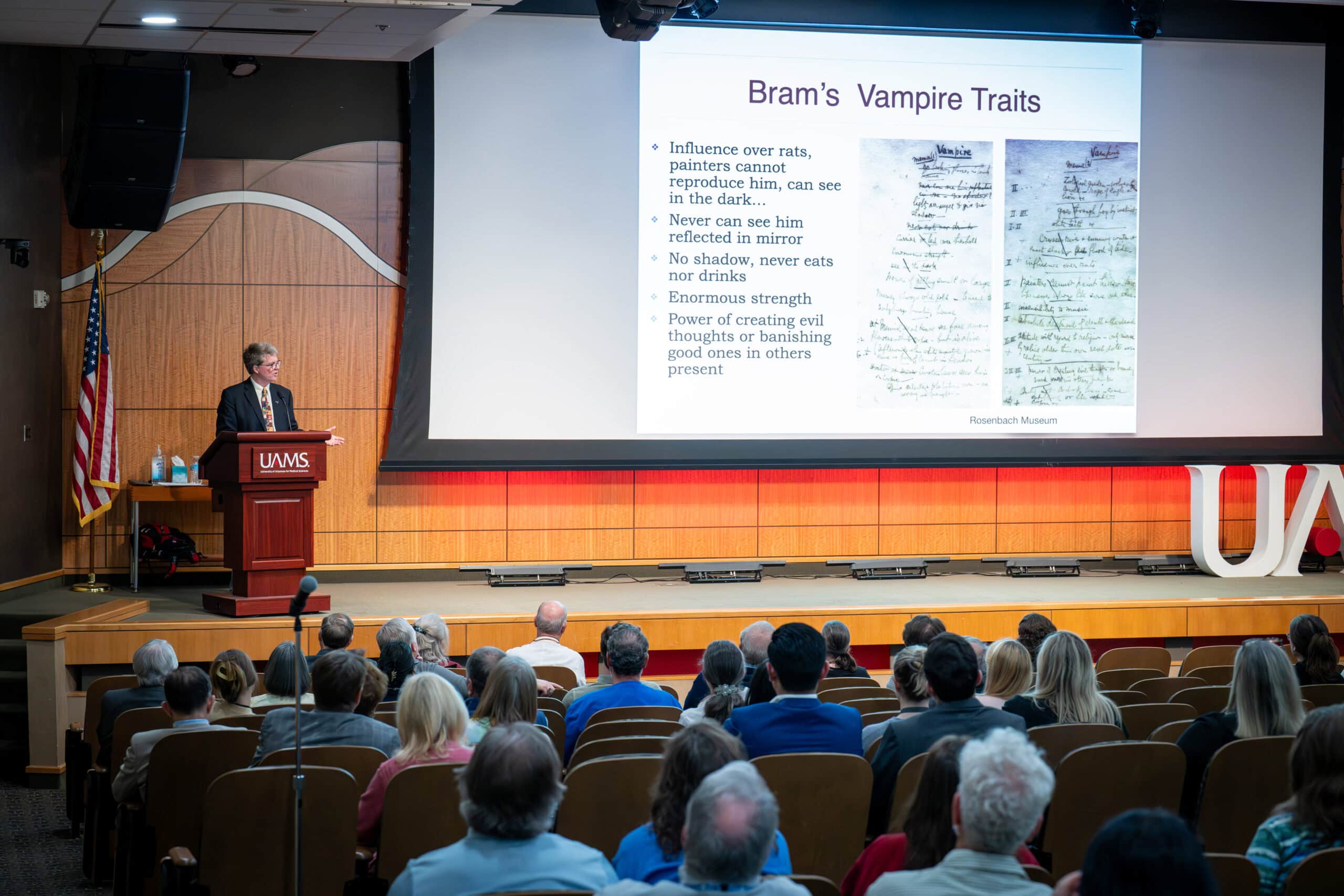
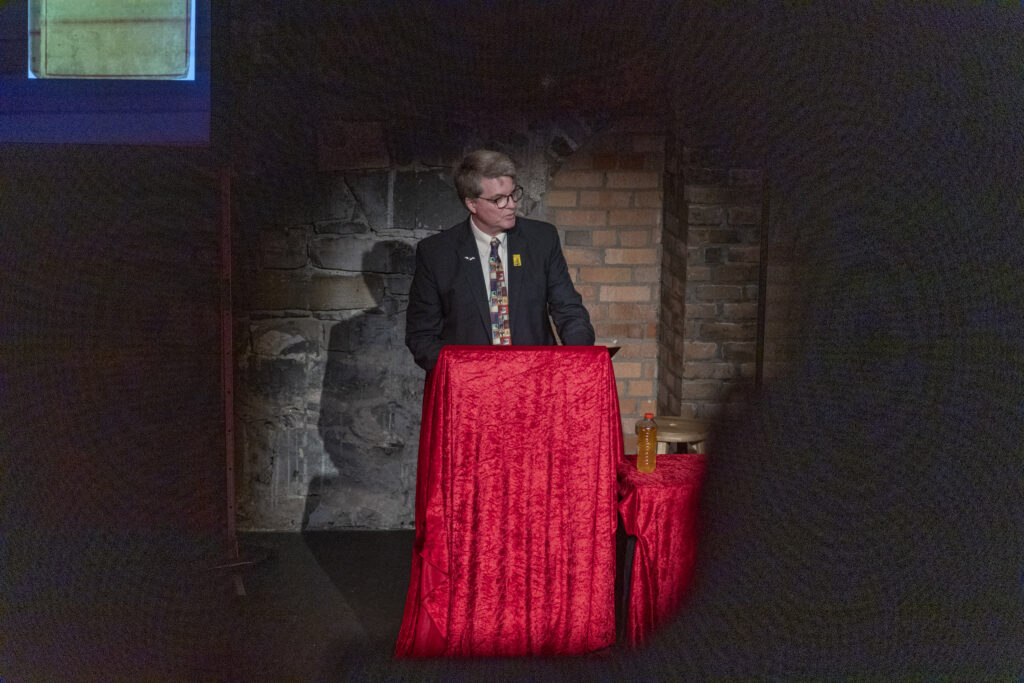
Satter reports Dacre’s lecture on medicine, science and the making of Dracula. Drawing on family documents and research materials, he offers his interpretation of how contemporary medical debates and Stoker’s reading shaped the novel.
Lloyd Evans offers a sharply negative response to Kip Williams’ Dracula at the Noël Coward Theatre. He argues that the extensive use of screens and cameras distances the audience from Cynthia Erivo, weakening the sense of sharing a live performance with an actor. His objections extend to the production’s changing voices, costumes and presentation of the characters, which he finds unconvincing rather than theatrically illuminating. The review questions whether the technical complexity earns its place in the storytelling or instead makes the audience watch an elaborate television-like construction. Evans finds the strongest connection with Erivo late in the evening, when she sings. His account is useful as a dissenting critical judgement beside more enthusiastic reviews: it identifies the very relationship between filmed images and live presence that other critics admire as the production’s central weakness. The article also reviews another play; this Estate account concerns its Dracula section.
Tom Millward reports from the opening of Kip Williams’ Dracula at London’s Noël Coward Theatre, speaking to Cynthia Erivo and Williams about its blend of live performance and cinema. The piece links to their opening-night interview and discusses the technical demands of the production.
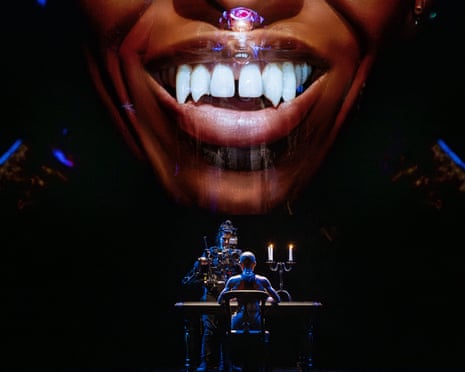
Sarah Hemming gives Kip Williams’ Dracula four stars, praising Cynthia Erivo’s ability to move among 23 characters and the intricate combination of live acting, live video and prerecorded film. Her account explains how changes of voice, posture and costume allow Erivo to become Jonathan Harker, Mina, Lucy, Seward, Renfield and the Count, sometimes appearing alongside other filmed versions of herself. Hemming sees this technique as more than a technical trick: it gives contemporary form to the novel’s questions of identity, desire, death and hostility towards outsiders. She also describes the production’s knowingly Gothic style, visual references to earlier vampires and Clemence Williams’ atmospheric score. Her judgement is qualified, however. The text becomes cumbersome and the evening feels overlong; she finds less immediacy and playfulness than in Williams’ The Picture of Dorian Gray. A striking snowstorm scene nevertheless helps restore its emotional force. The result is an admiring but discriminating account of a major stage adaptation.
Sarah Hemming interviews Kip Williams as he prepares Dracula with Cynthia Erivo, placing the production alongside his adaptations of The Picture of Dorian Gray and Strange Case of Dr Jekyll and Mr Hyde. Williams discusses the continuing power of these nineteenth-century stories and their relevance to contemporary anxieties about identity and technology. His use of cameras and screens is explored as a way of examining how people construct and perceive themselves, rather than simply adding cinematic decoration to a play. The article describes the precision required when one performer interacts with filmed versions of herself and moves between numerous roles. It also gives attention to rehearsal, collaboration and the technicians whose contribution makes the apparent solo performance possible. This provides a creative perspective on the production, explaining the director’s intentions and working methods before audiences and critics assessed the finished show.
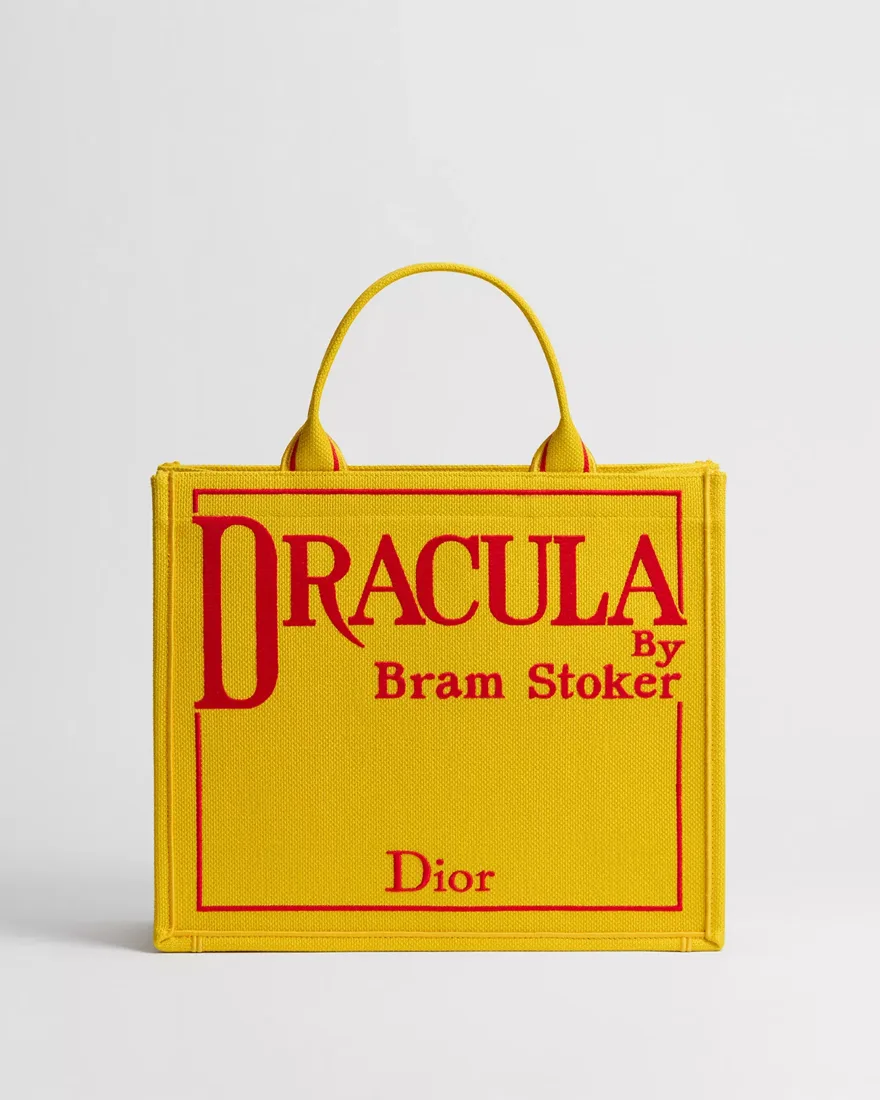
RTÉ reports Jonathan Anderson’s preview of Dior Book Totes inspired by literary covers before his first menswear show for the house. One design echoes the yellow-and-red cover of Bram Stoker’s Dracula, alongside designs referring to Les Liaisons Dangereuses and Dior on Dior.
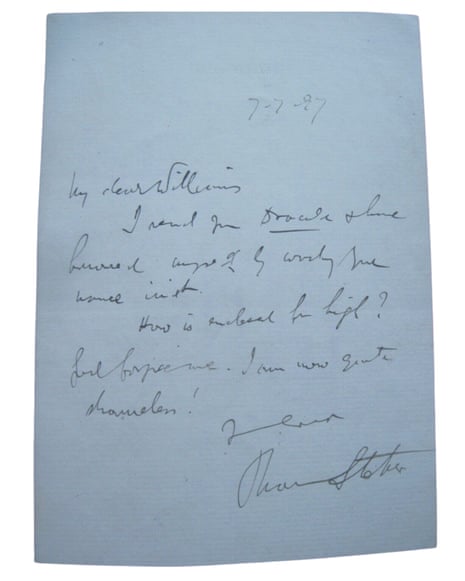
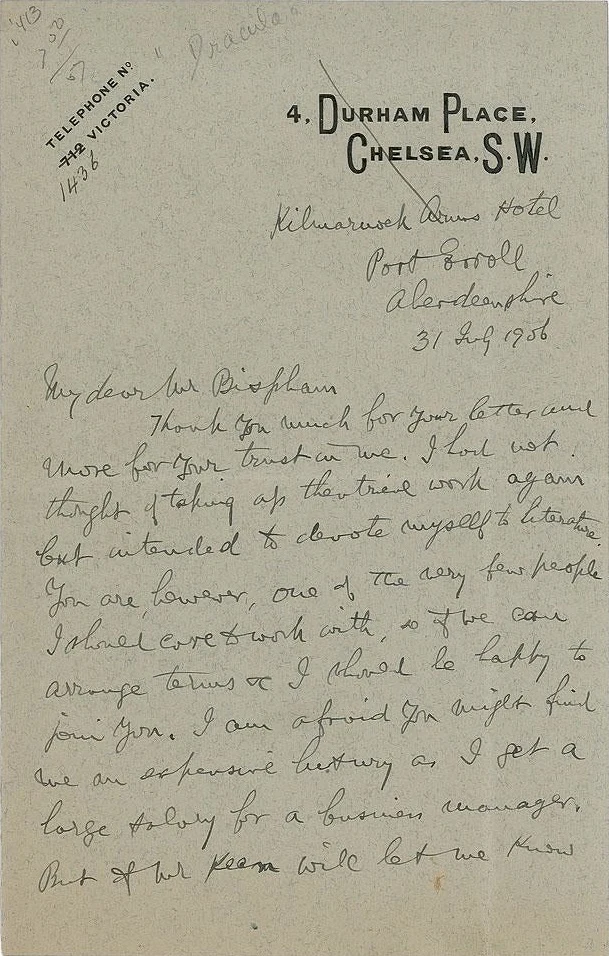
Steven Morris reports the sale of a letter in which Bram Stoker sends an inscribed copy of Dracula to an unidentified Williams. Written on 7 July 1897, the note gives a glimpse of his informal correspondence shortly after publication. The accompanying image shows this actual letter, rather than his separate letter to David Bispham.
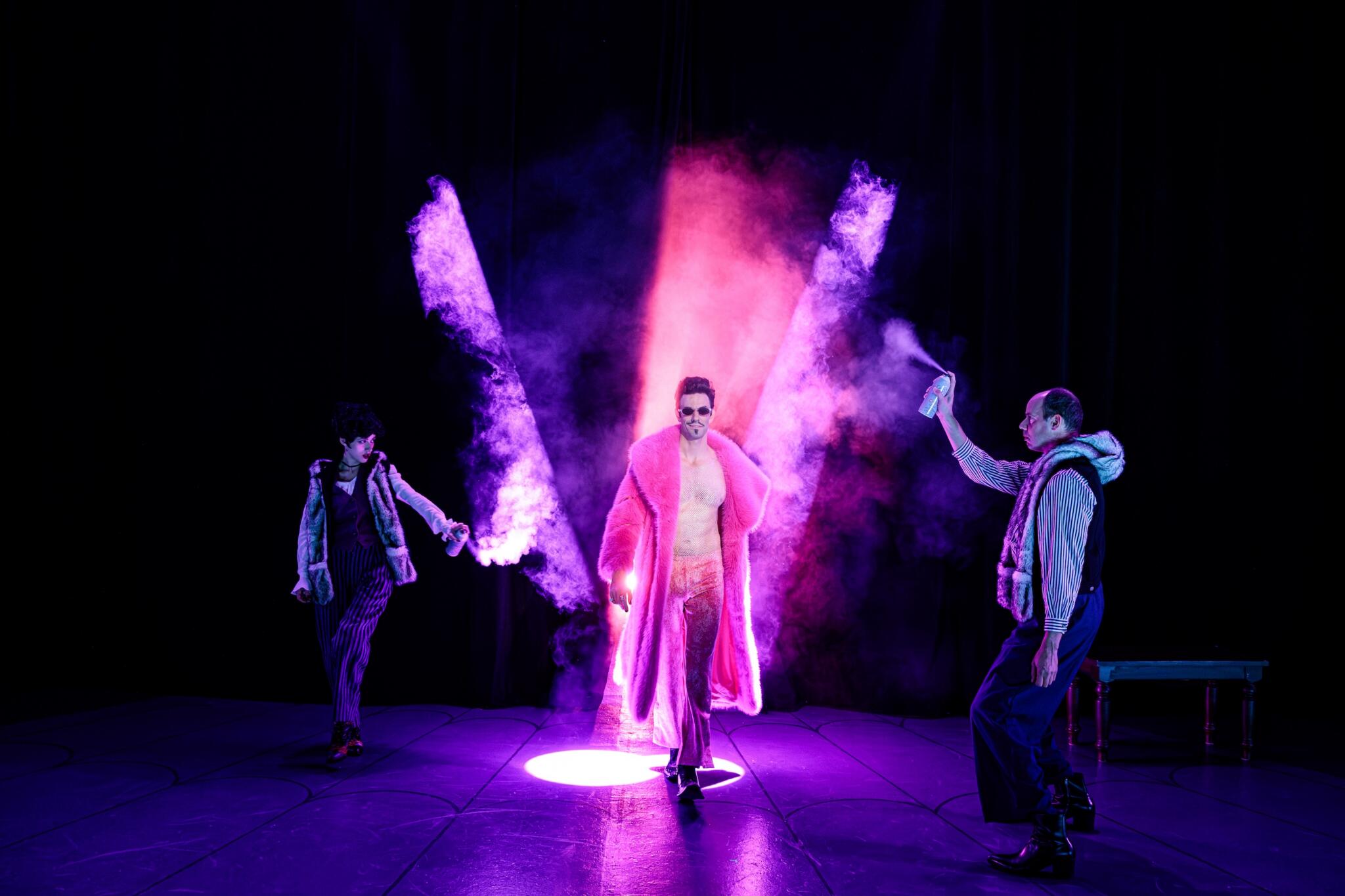
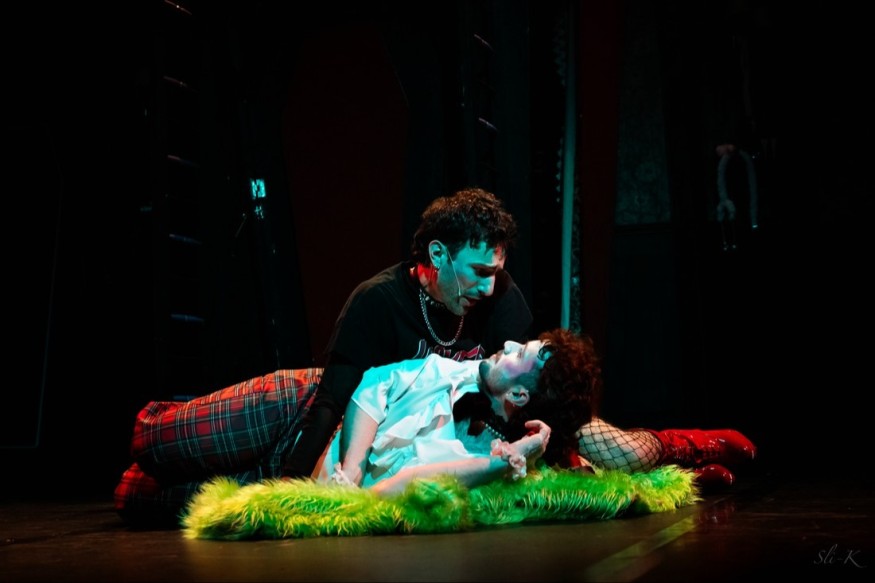
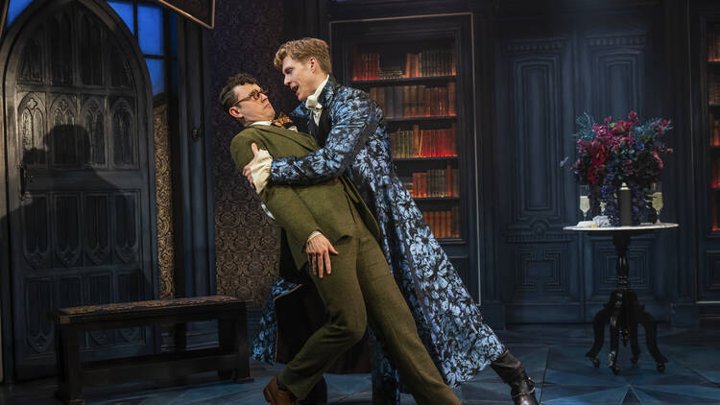
Andrzej Lukowski finds Dracula, A Comedy of Terrors too tame to make much of its promised irreverence. Reviewing the Menier Chocolate Factory production, he recognises James Daly’s charisma as the Count and the considerable energy of the performers, but questions the value of turning Stoker’s plot into an old-fashioned farce. The review considers whether its jokes and changes of character produce a fresh interpretation or simply soften the novel into undemanding entertainment. Lukowski contrasts its modest provocations with the more disruptive achievement of The Rocky Horror Show, suggesting that a vampire comedy needs a stronger reason to revisit familiar material. This is a critical response to the London staging, rather than a description of the play’s earlier New York reception; the two productions and reviews should remain distinct.
Carol Senf discusses how screen Draculas change with cultural anxieties, contrasting sympathetic interpretations with recent monstrous versions. The university feature also places Sinners alongside this tradition through Susana Morris’s account of race, community and identity.
Focus Features presents Robert Eggers’ Nosferatu as a Gothic story of obsession between a young woman and a vampire. Its official film page identifies Eggers as writer and director, lists Bill Skarsgård, Lily-Rose Depp, Nicholas Hoult, Willem Dafoe and the wider cast, and gives the US theatrical release as 25 December 2024. The record establishes the production and its original release context; it is not an independent review or a statement of current cinema availability. The accompanying image is publicity for this specific adaptation, rather than Murnau’s 1922 film.
Juzwiak admires Eggers’s meticulous visual construction but finds the film emotionally distant and insufficiently frightening. His critical review contrasts its striking imagery and painstaking research with what he sees as a lack of spontaneity.
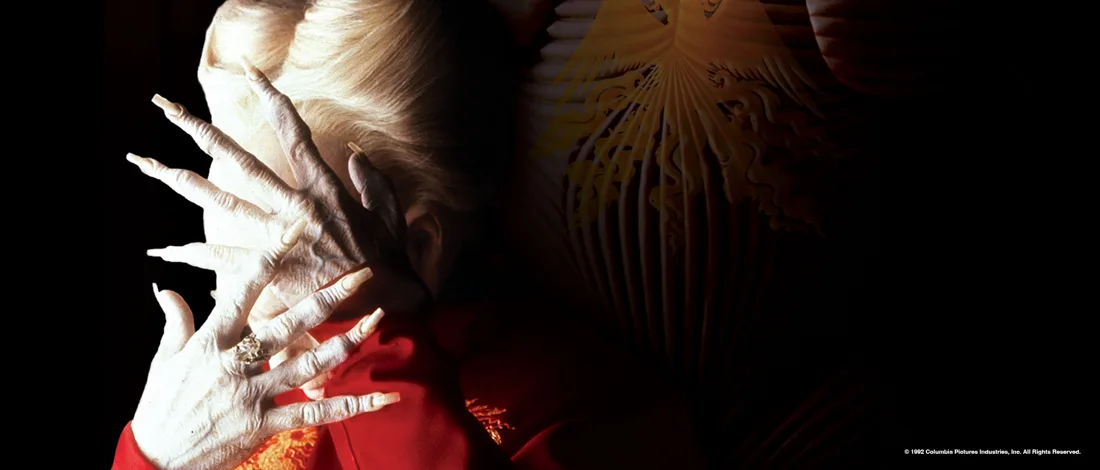
Andrew Fraser revisits Coppola’s Bram Stoker’s Dracula as a lavish, deliberately excessive film about love and loss. He discusses Gary Oldman’s Count, the practical effects and elaborate design, connecting its early-cinema techniques with Coppola’s enthusiasm for filmmaking.
The National Library of Ireland announces Brian Cleary’s rediscovery of “Gibbet Hill” in the 1890 Christmas supplement of the Dublin Daily Express. Its account describes the search and a new edition supporting the Charlotte Stoker Fund’s research into newborn hearing loss.
Ella Creamer follows Brian Cleary’s rediscovery of “Gibbet Hill” in the National Library of Ireland. She describes the newspaper clue that led him to the story and Paul Murray’s assessment of its place in Stoker’s writing. The report links the new edition to research into newborn hearing loss.
Paul Murray welcomes the Dracula Returns to Derby project and argues for Hamilton Deane’s role in transforming Stoker’s novel into a stage success. His letter traces the adaptation from its 1924 Derby premiere to its later London and international reception.
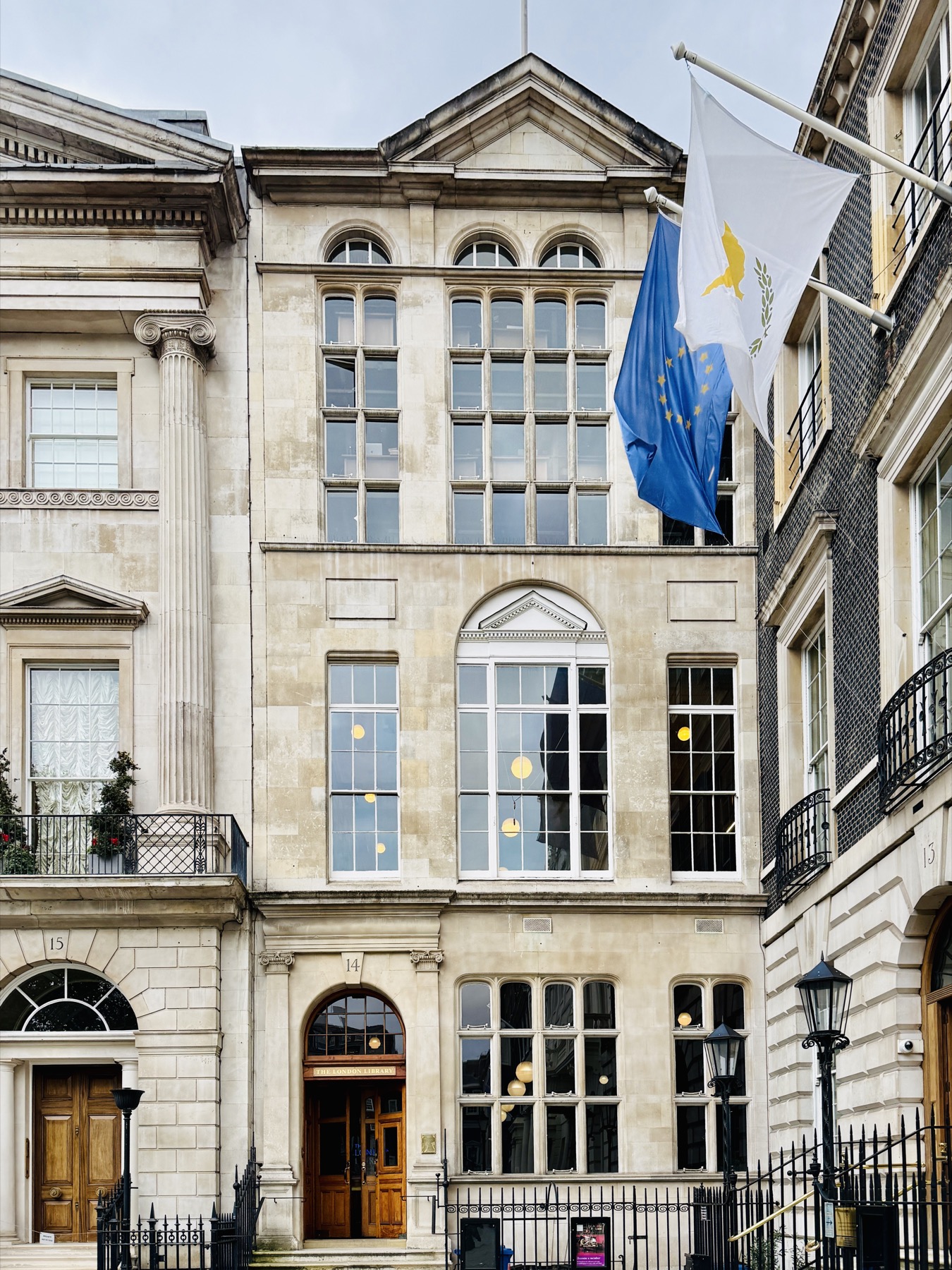
Noble revisits the London Library’s identification of twenty-six books thought to have supported Stoker’s research. The article explains how Philip Spedding compared annotations and marked passages with the surviving Dracula notes.
Raven Snook gives the Off-Broadway Dracula, A Comedy of Terrors four stars, enjoying its exuberant transformation of Stoker’s story into a five-performer farce. She highlights the speed of the jokes, quick character changes, camp presentation and James Daly’s sexually confident Count. Arnie Burton and Ellen Harvey are among the performers whose comic work helps sustain the evening. The review treats the show as an affectionate, knowingly absurd entertainment rather than a faithful Gothic adaptation, while acknowledging that it does not consistently reach the heights of its best theatrical predecessors. Its praise provides an instructive contrast with the less enthusiastic response to the later London production: it records how this particular staging made its comic machinery work for a New York audience.
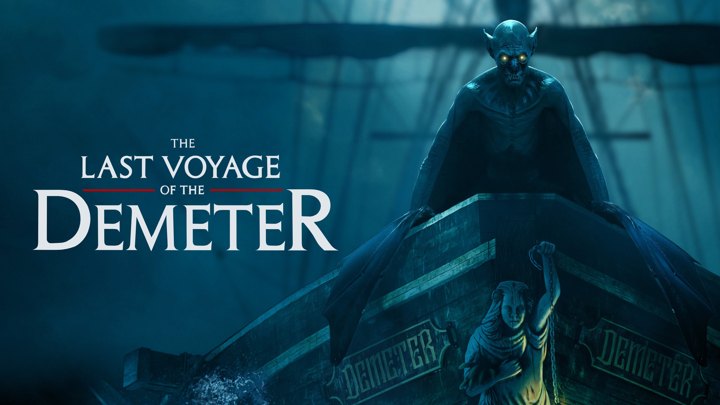
Benjamin Lee finds that the premise of expanding Dracula’s Demeter episode into a feature works better than the resulting film. His review discusses the protracted development and ambitious scale of the production while judging its suspense insufficiently sustained.
Dacre introduces the special 125th-anniversary edition of Stoker on Stoker at Dublin’s Bram Stoker Festival. He describes combining his research with actors Margaret McAuliffe and Donncha O’Dea under director Peter Dunne, using readings, images and performance to explore Bram’s life and the making of Dracula.
Joanna Moorhead explores Mike Shepherd’s research into Bram Stoker’s holidays at Cruden Bay and the Kilmarnock Arms. Hotel registers and local recollections frame his argument for the area’s importance to Dracula. The feature also introduces the Festival of Darkness; its more colourful accounts of inspiration remain attributed interpretations.
Peter Bradshaw revisits Coppola’s Dracula for its thirtieth-anniversary cinema revival. He praises Gary Oldman’s anguished Count and the film’s operatic energy, finding an extravagantly theatrical mixture of silent-cinema imagery, melodrama and horror.
Coverage of the newsletter’s breakout year explored how reading dated entries together brought new readers to the novel and prompted shared discussion, art and humour.
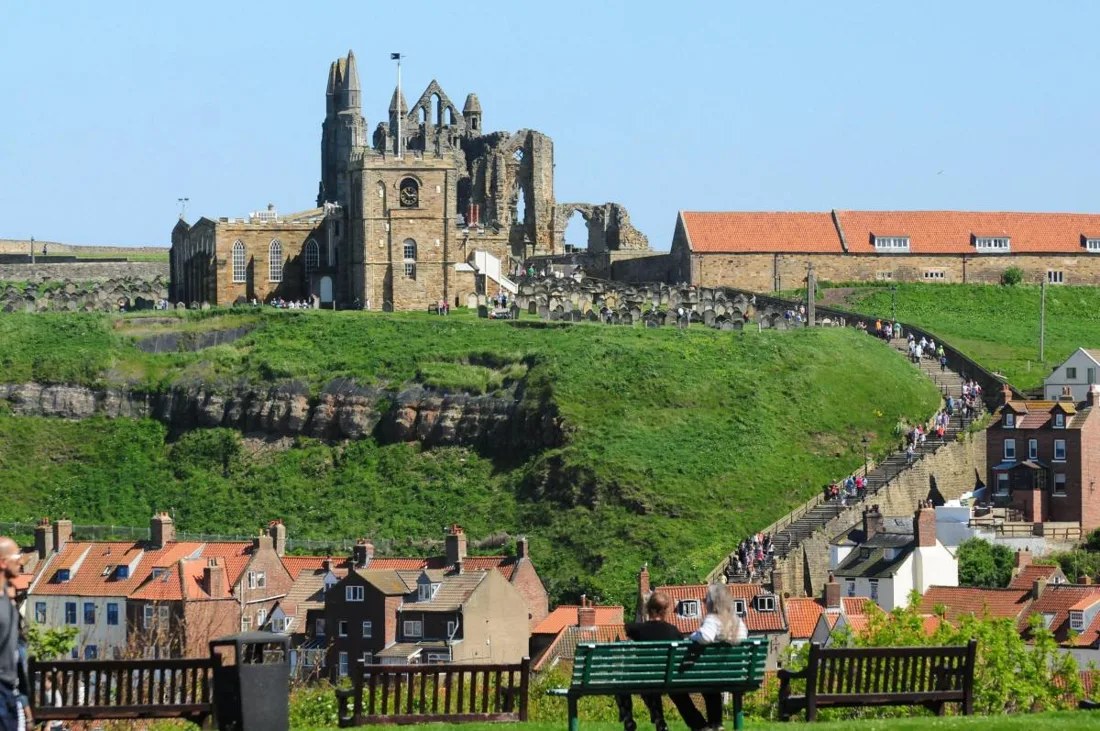
Guinness World Records reports that 1,369 people dressed as vampires gathered at Whitby Abbey on 26 May 2022, marking the 125th anniversary of Dracula’s publication. The article explains the requirements for the record attempt, including the prescribed costume and the period for which participants had to remain together. It places the achievement against the previous record of 1,039 participants, set in Virginia in 2011. Beyond its light-hearted spectacle, the gathering demonstrates Whitby’s continuing public association with Stoker’s novel and the use of the Abbey as a setting for literary commemoration. The article was published on 14 June; that is the date of the report, not the gathering itself.
Avery Keatley’s centenary report brings together film scholar Lokke Heiss, silent-film researcher Brent Reid and conductor Gillian Anderson to explain the survival of Nosferatu. The transcript describes Florence Stoker’s objection to an adaptation made without permission and the protracted legal action that followed Prana Film’s financial collapse. Its distinctive contribution is the account of what survived despite the destruction order: incomplete prints scattered across archives, later combined through painstaking restoration. Anderson also explains the reconstruction of Hans Erdmann’s music, challenging the assumption that a silent film was experienced without sound. The report therefore connects Florence’s copyright campaign with the material history of the film and its score. Its narration attributes the request for destruction to Florence; that differs in emphasis from Dacre’s account of advice from the lawyers in The Irish Times. Neither retrospective supplies the original court documents.
Derek Scally revisits Florence Stoker’s action against the unauthorised makers of Nosferatu for the film’s centenary, drawing on comments from Dacre. He explains that the production acknowledged Dracula while obtaining no adaptation licence, leaving Florence to pursue a costly dispute in Germany with help from the Society of Authors. The article stresses uncertainty about the surviving legal evidence and describes the difficulties created by Prana’s receivership and the circulation of prints across borders. Dacre challenges the familiar portrayal of Florence personally demanding the burning of the film: he attributes the proposal for destruction to advice from the lawyers. Scally connects this dispute with Florence’s later income from authorised adaptations. It is valuable for its focus on her position as a rights holder and for distinguishing a memorable legend from what the family’s account of the correspondence supports.
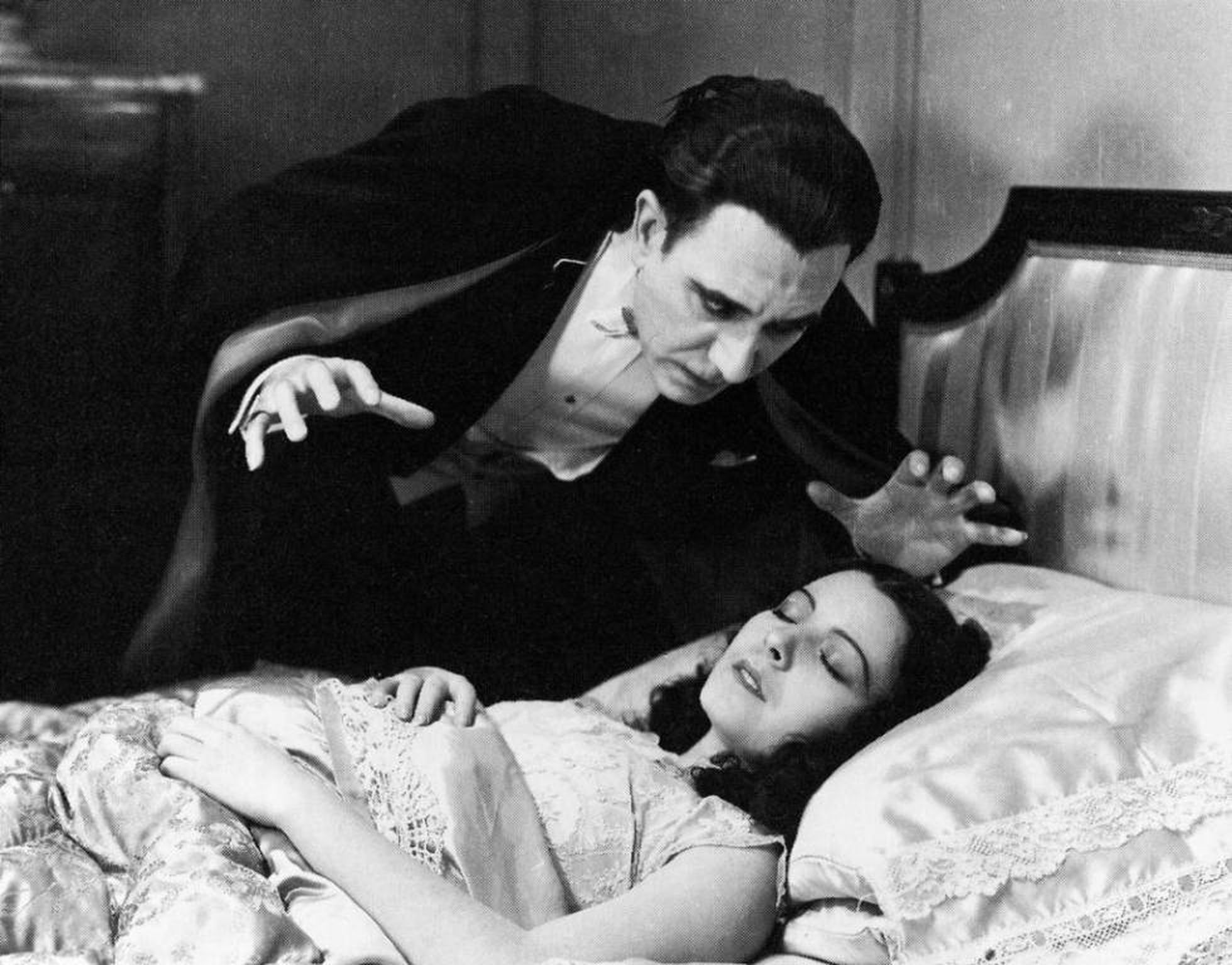
James McMahon explores the Spanish-language Drácula made at Universal in 1931 while the English-language production used the same sets by day. He considers Carlos Villarías and Lupita Tovar’s performances, the economics of multiple-language filmmaking and the later rediscovery of this distinctive version.
Jeremy Plester recounts the storm and wreck of the Dmitry at Whitby in October 1885, considering its connection with Dracula’s fictional Demeter. The piece places the novel’s arrival scene beside local maritime history; the two ships and their stories should be distinguished.
Olivia Rutigliano considers how the dispute over Nosferatu helped shape two enduring traditions of vampire cinema. Her essay begins with the unauthorised use of Dracula and Florence Stoker’s efforts to control the resulting film, then follows the survival of prints and the development of authorised stage and screen adaptations. It contrasts Murnau’s isolated, unsettling Orlok with the more urbane Dracula familiar from later performances. Rutigliano argues that the legal conflict is part of the explanation for these diverging screen identities, rather than simply a curious episode in film preservation. The essay is an interpretation based on later histories, including David J. Skal’s work; it does not reproduce the original case file. Its account of Florence’s intentions and some dates differs from other retrospectives, so those details should be read as the author’s account rather than established findings from newly recovered documents.
Marion McGarry revisits Charlotte Stoker’s recollections of the 1832 Sligo cholera epidemic during the COVID-19 lockdown. Drawing on Charlotte’s later account, she describes fear, isolation and family survival. The piece explores parallels with Dracula; its claims about literary influence are the author’s interpretation, rather than a proven single origin for the novel.
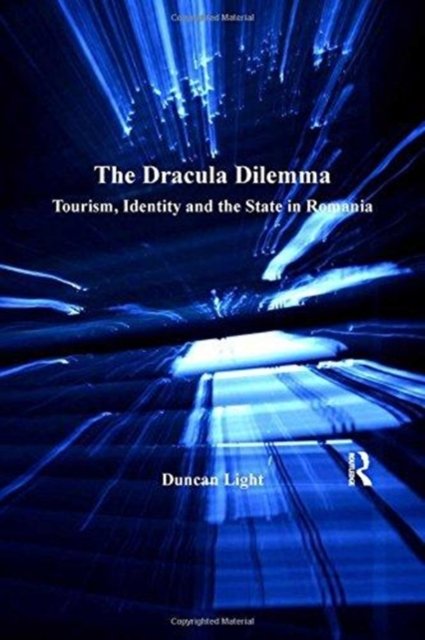
Duncan Light examines the tension between Romania’s desire for Western tourism and communist hostility to supernatural beliefs. He traces how local officials developed Dracula-themed hotels despite central resistance, distinguishing the fictional vampire from the national image of Vlad III.
Liz Evers’ biography places Florence Stoker’s work as literary executor within her wider life, marriage and family responsibilities. It describes her publication of Dracula’s Guest after Bram’s death and her determination to protect the value of his best-known novel. The account follows her challenge to the unauthorised Nosferatu adaptation and her work over stage and film rights, showing that Dracula’s afterlife depended on sustained practical and legal effort as well as the book’s popularity. Evers also considers the financial circumstances in which Florence was working and the later remembrance of her marriage. This is a modern scholarly biography with references to family papers and earlier studies, useful as a guide to further research. It should be distinguished from the letters and legal documents themselves, which it discusses but does not reproduce. The entry provides broader context for Florence’s role alongside the more narrowly focused film and copyright articles.
2018 6 articles
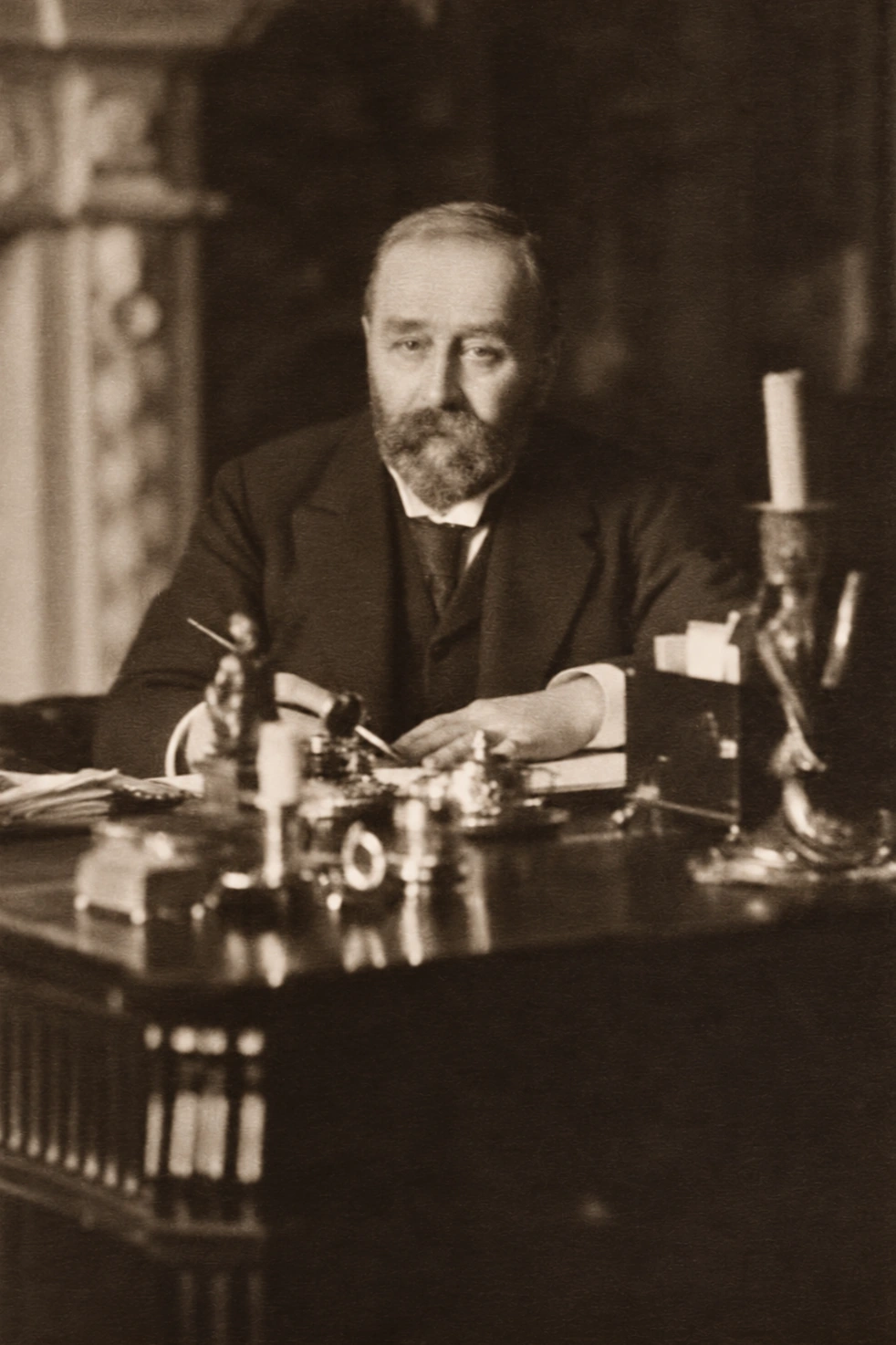
Photograph: Jessica. Courtesy of the Bram Stoker Estate
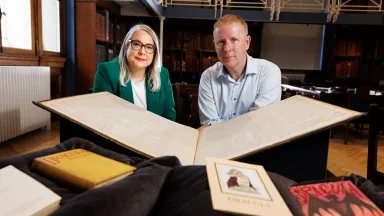
Benedicte Page reports the London Library’s identification of 26 books listed among Bram Stoker’s sources for Dracula. Several volumes contain underlining, crosses, folded pages and other marks corresponding closely to references in his research notes. The Library attributes these annotations to Stoker; Exeter scholar Nick Groom, who examined the books, supports that identification. Stoker belonged to the Library from 1890 to 1897. The report names works by Sabine Baring-Gould, Thomas Browne, A. F. Crosse and Charles Boner among the relevant holdings. Development director Philip Spedding explains how the discovery connects books still on the shelves with the novel’s composition, while director Philip Marshall places it within the Library’s continuing support for writers. This is a report of the Library’s announcement and scholarly assessment, rather than an independent authentication by the Estate.
The Central Bank of Ireland announces a €15 silver proof collector coin honouring Bram Stoker and Dracula. Designed by David Rooney, the coin was issued in a limited edition of 3,000 and presented at Glasnevin Cemetery, where Stoker’s family connections formed part of the occasion. The release records the involvement of Sharon Donnery, Paschal Donohoe and Dacre, and explains how the design brings together the author and his best-known creation. It is a significant example of official Irish commemoration rather than a general vampire-themed product. The announcement dates from 26 October 2018: its sales arrangements and issue details are historical, and should not be read as an assurance that coins remain available today.
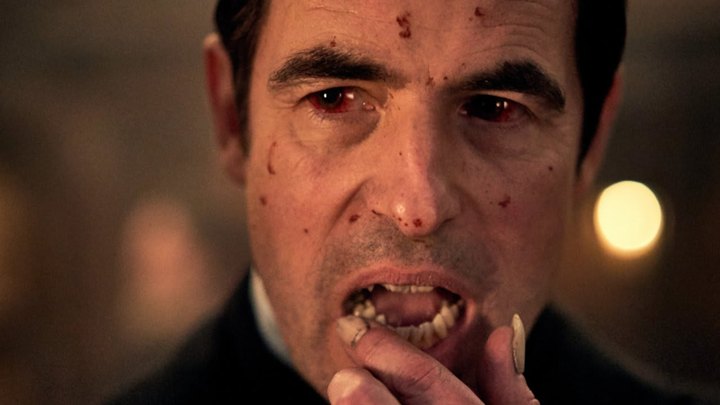
Netflix’s original commissioning announcement sets out its partnership with BBC One and Hartswood Films for a three-part Dracula adaptation by Steven Moffat and Mark Gatiss. Each planned episode would run for 90 minutes, drawing on Bram’s novel and beginning with the Count’s ambitions against Victorian London. The release identifies the commissioning and production teams and distinguishes the intended BBC and Netflix territories. It records the project at its announcement stage in October 2018; the later premiere and casting should not be confused with what had been announced then. The production photograph comes from later publicity for the completed series.
Dom Nero argues that Coppola’s Bram Stoker’s Dracula is as much a celebration of filmmaking as a Gothic horror story. He connects its shadows, elaborate designs and in-camera effects with silent cinema and the work of Murnau, Cocteau and Charles Laughton. The essay places the film’s theatrical excess alongside later director-led horror, including The Witch, Hereditary, The Shape of Water and Crimson Peak. Nero finds its handmade illusions and attention to physical detail central to its continuing force, and offers an unusually sympathetic reading of Keanu Reeves’s performance. His account is a critical appreciation of Coppola’s film, rather than a claim that its romantic narrative reproduces Stoker’s intentions.
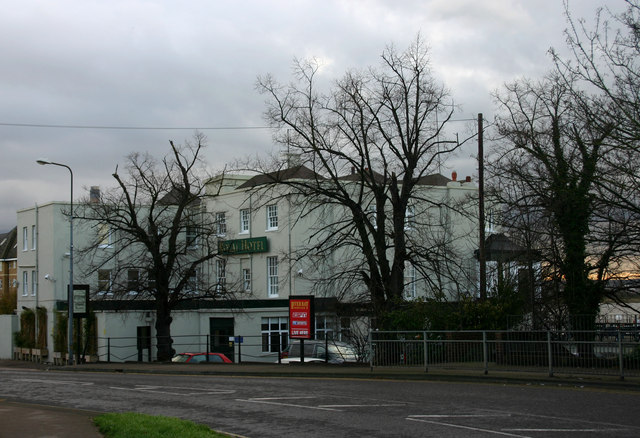
The Enquirer reports the publication of Ian Yearsley’s Dracula – The Essex Connection, a study of the novel’s Purfleet settings. Yearsley describes comparing Stoker’s fictional locations with local buildings and the village’s nineteenth-century history, including the Royal Hotel, Purfleet House and the ordnance establishment. He explains that a dismissive reference to the supposed connections prompted his research. The feature presents his argument that Stoker visited the area and used its buildings as models. Those proposed identifications are Yearsley’s interpretation: the report does not supply documentary proof of a visit by Stoker. Its value lies in recording a specific local-history argument about the novel’s English landscape.
Photograph: Jessica. Courtesy of the Bram Stoker Estate
Brendan McFadden reports the London Library’s identification of books apparently used by Stoker while researching Dracula. Markings in surviving volumes were compared with his working notes, linking the collection’s folklore, travel and historical titles to the novel’s preparation.
Michael Coate interviews film historian Bruce Scivally for the 25th anniversary of Coppola’s Bram Stoker’s Dracula. Scivally explains why a film he initially disliked came to seem an inventive and influential adaptation. He discusses James V. Hart’s screenplay, the romantic treatment of Mina and Dracula, Eiko Ishioka’s costumes, Wojciech Kilar’s music and the use of traditional visual effects. He also compares Gary Oldman with earlier screen Counts, praises Winona Ryder and criticises Keanu Reeves’s performance. The interview considers how Coppola’s operatic approach changed vampire cinema. Claims about the film’s influence and its literary themes are Scivally’s interpretations rather than established facts about Stoker’s intentions.
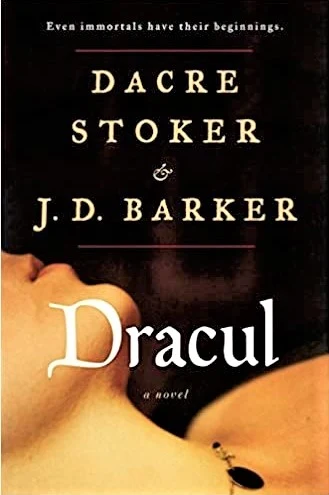
Alison Flood announces Dracul, the forthcoming fictional prequel by Dacre and J. D. Barker. Her report describes its imagined young Bram, family-story influences, publishing deals and proposed screen adaptation, while attributing theories about Dracula’s discarded material to the writers.
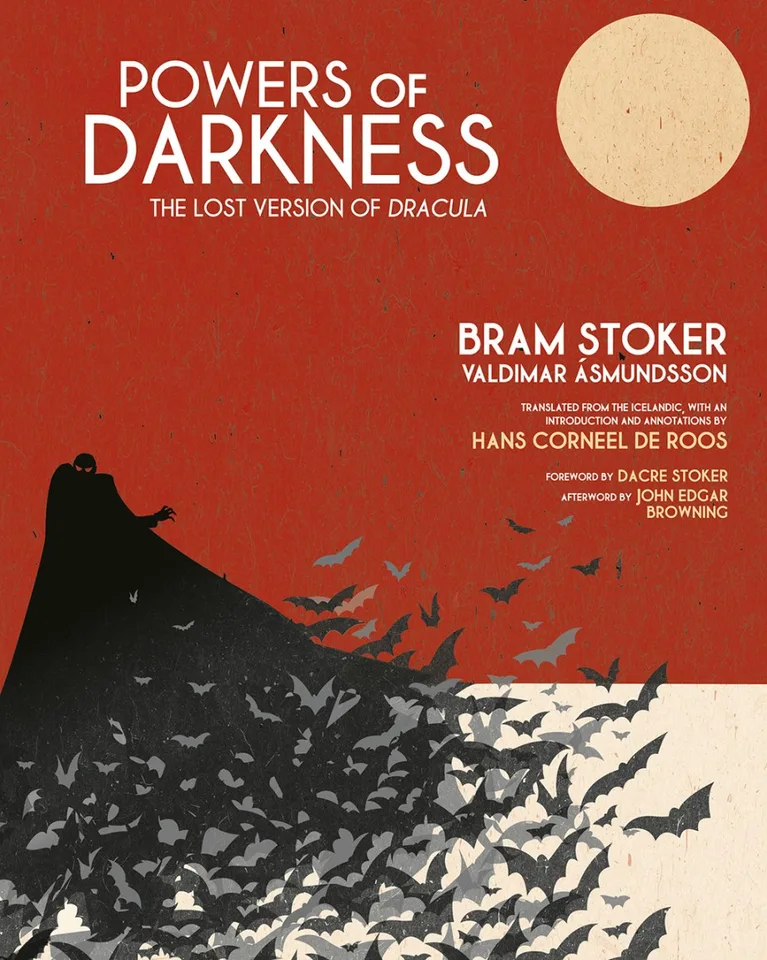
Dziemianowicz finds Powers of Darkness an intriguing Dracula curiosity but an uneven novel. He considers its altered plot, compressed English section and de Roos’s annotations, treating proposed links to Stoker’s drafts as questions rather than settled history.
Colin Fleming explores the changed characters, expanded castle episode and compressed later action of the Icelandic Makt Myrkranna, newly translated into English as Powers of Darkness. He considers possible explanations for its differences without establishing who was responsible for each change.
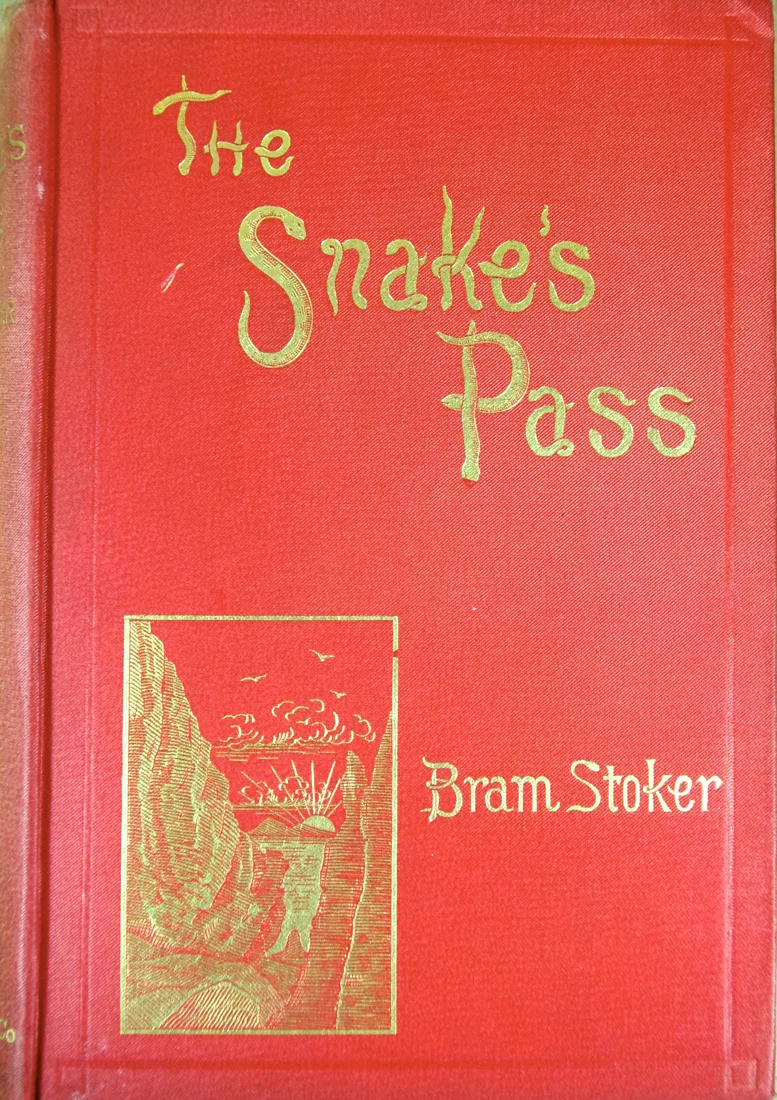
Senf reviews Lisabeth C. Buchelt’s critical edition of The Snake’s Pass, welcoming its treatment of Irish politics, folklore and colonialism. She values the contemporary reviews and critical essays while identifying omissions in the supporting bibliography.
Joseph Shelton considers Gary Oldman’s Dracula, contrasting the aged Count with his younger, romantic appearance. The essay focuses on the performance’s combination of menace and sympathy within Coppola’s reinterpretation of Stoker’s novel.
Medendorp reviews the remastered Blu-ray of Coppola’s 1992 film, praising Gary Oldman’s performance, theatrical sets and inventive in-camera effects. She weighs the dreamlike horror against uneven acting, sexual imagery and repetitive bonus features.
Scott D. Southard revisits the novel behind the familiar screen vampire. He discusses Dracula’s relatively few appearances, the importance of religious belief and the immediacy of its diaries and letters. His review contrasts Stoker’s predatory Count with romantic adaptations, while acknowledging weaknesses alongside the book’s memorable passages of suspense.
Vampire scholar J. Gordon Melton discusses his collecting, folklore and the changing rules of screen vampires. The interview ranges from Hammer and romantic leading men to Buffy, Twilight and children’s characters, showing how each generation reshapes the vampire.
Jeff Suess recounts the Lyceum company’s January 1884 visit to Cincinnati, where Henry Irving and Ellen Terry performed at the Grand Opera House and Stoker travelled as manager. The feature describes a Queen City Club dinner and draws on Joseph Hatton’s account of Irving’s American tour to recall his impressions of the city. Alongside this local history, Suess discusses Barbara Belford’s interpretation of Irving as an influence on Dracula. That proposed connection is distinguished here from the documented theatrical visit: the article does not establish a single real-life model for Stoker’s Count. Its claims about Vlad, the first meeting with Irving and Stoker’s employment require separate qualification.
Francis Ford Coppola tells Joe McGovern how reading Dracula aloud as a young camp counsellor informed his later adaptation. The interview discusses Winona Ryder’s involvement, Roman Coppola’s practical effects, soundstage construction, Eiko Ishioka’s costumes and Gary Oldman’s makeup. It also addresses Keanu Reeves’ much-criticised accent. Coppola’s recollections provide a creative account of the film’s production.
Pamela Hutchinson questions the proposed Nosferatu remake, arguing that Murnau’s imagery and the expressive power of silent cinema remain compelling in their own right.
Roger Luckhurst considers why Dracula still speaks to modern readers. He connects the novel’s fears of infection, migration and threatened boundaries with later outbreak narratives, while exploring its mixture of Victorian technology, Gothic conventions and older myths.
Alison Flood previews the British Library’s Gothic exhibition, highlighting early Dracula illustrations, Frankenstein material and manuscripts tracing the genre’s changing fears.
Luke Jennings finds David Nixon’s Dracula for Northern Ballet fast-moving and theatrically entertaining, praising the company’s dramatic commitment. He singles out the choreography for Lucy while judging the Count insufficiently sinister. The review concerns this 2014 production and cast.
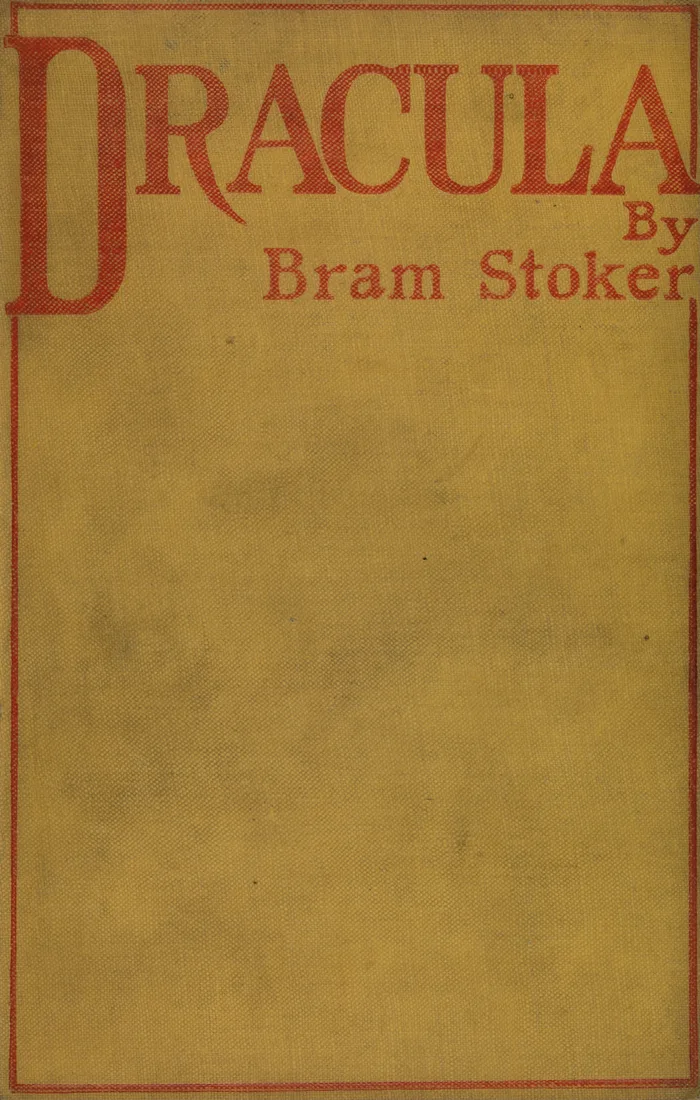
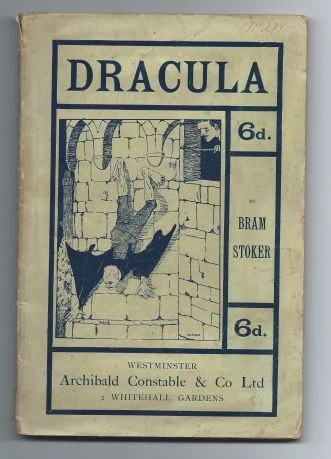
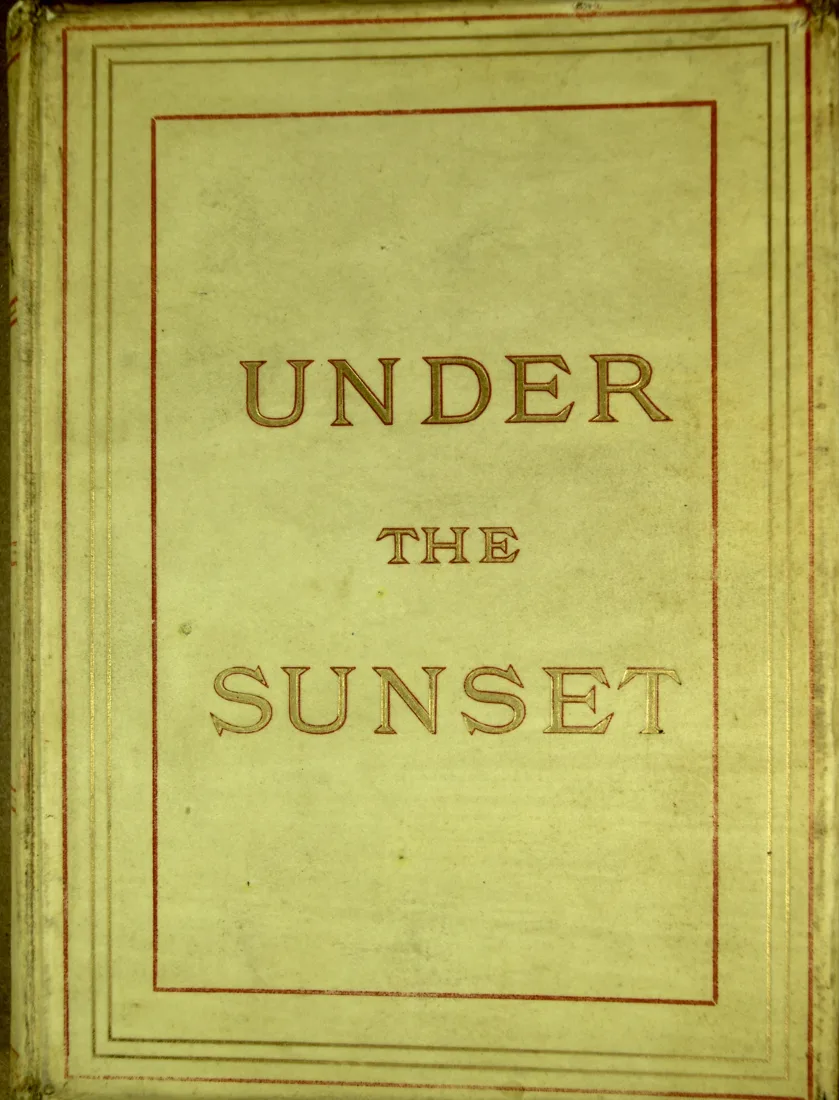
Robert McCrum places Dracula among the 100 best English-language novels, considering its Gothic inheritance, Victorian fears and enduring capacity for reinterpretation. His account also revisits the first edition, early reviews and Charlotte Stoker’s enthusiastic response. The illustrated first-edition cover matches the edition discussed.
Judith Mackrell praises Mark Bruce’s Dracula at Wilton’s Music Hall for the expressive force of its dancers and the atmosphere created by its design. Despite occasional narrative complexity, she finds the production deeply unsettling, especially in the Count’s movement and the vampire brides’ physicality.
Chris Hastings reports opposition to proposed housing development at Bray Studios, associated with Hammer’s Dracula films. Terry Gilliam and Richard O’Brien support the campaign to preserve the site, while the report sets out the owner’s claim that film production was no longer viable.
Vogue Italia editorial team; catalogue extracts by Cesare Cunaccia
Vogue Italia introduces the Milan exhibition Dracula e il mito dei vampiri and reproduces extracts from Cesare Cunaccia’s catalogue essay. The feature moves from historical vampire imagery to cinema, costume and fashion, discussing Eiko Ishioka’s designs for Coppola’s film and later Gothic references on the runway. It offers a distinct perspective on the visual afterlife of Bram’s creation. The webpage displays 12 April 2013, but its advance wording concerns an exhibition scheduled for 23 November 2012–24 March 2013. That inconsistency remains unresolved; the account should be read as historical exhibition coverage, not a current listing.
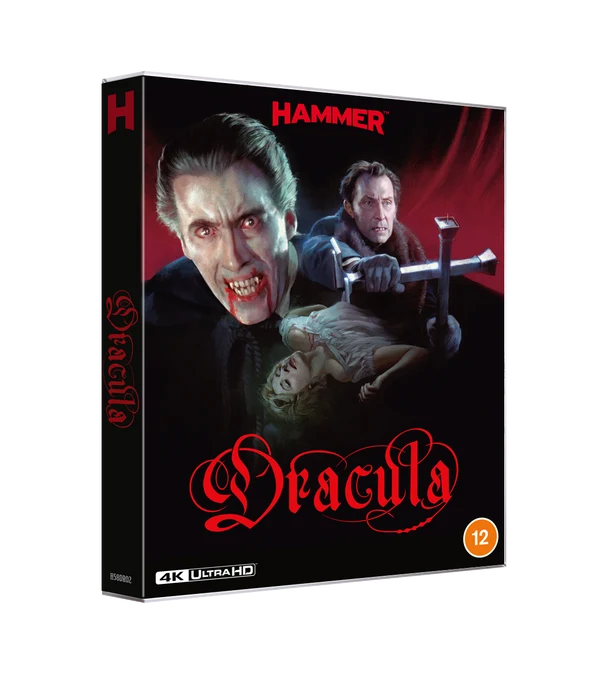
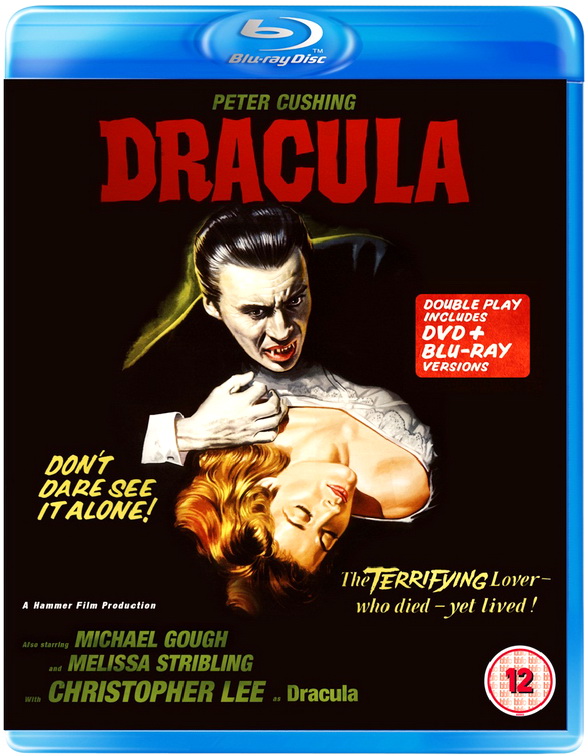
Greg Petaloudis introduces the 2013 UK Blu-ray and DVD release of Hammer’s Dracula, highlighting footage restored from surviving Japanese reels. The announcement distinguishes the BFI’s 2007 restoration from Hammer’s later version and describes added material in the seduction and disintegration scenes. It lists restoration and censorship features, commentary, surviving reels and other supplements, then assembles an extensive gallery of publicity photographs, posters and trade advertising. This is a contemporary release announcement and illustrated resource, rather than an independent technical assessment. Descriptions such as definitive belong to the promotion and should not be read as a judgement about later editions.
Margaret Wood investigates the claim that Dracula lacked US copyright registration. Her search in the Copyright Office’s historical card catalogue finds entries under Stoker’s name and a record of deposited copies. The feature offers a useful account of checking the evidence, illustrated with a 1938 Federal Theatre Project Dracula poster.
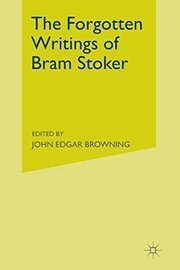
Browning describes recovering Stoker’s forgotten journalism and fiction, connecting examples with Dracula and arguing for attention to the writer’s wider output.
Anne Stiles examines Sir William Thornley Stoker’s surgical work, reservations about animal experimentation and connections with Dracula’s medical material. This substantial biographical chapter concerns Bram’s elder brother. The linked record provides an abstract; full text may require institutional or paid access.
Dalya Alberge reports John Edgar Browning’s recovery of Stoker’s scattered fiction, poetry and journalism for The Forgotten Writings of Bram Stoker. The feature describes his archival search and considers how the newly collected material illuminates Bram’s developing style and themes.
Chris Crum explains how Google’s tribute for Bram’s 165th birthday led readers to a visual selection of his books. The article considers how the search display promoted works beyond Dracula while also showcasing Google Books and sponsored shopping results.
Shaer marks Stoker’s 165th birthday by tracing his Dublin background, theatre career and the novel’s afterlife on screen. The feature explains how Dracula helped establish the modern vampire tradition.
Katy Waldman marks Stoker’s 165th birthday with a playful survey of his early life, theatrical work, marriage and fiction. Prompted by the Google tribute, she connects his less familiar writing with the enduring fame of Dracula.
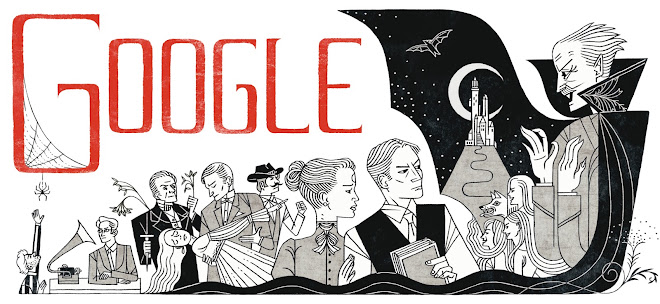
Sophia Foster-Dimino explains how she designed Google’s tribute for Bram’s 165th birthday. Reading Leslie S. Klinger’s annotated Dracula helped her place the novel’s characters and Victorian setting within its wider context. She wanted the picture to reflect the collective testimony through which Bram tells the story, including seven protagonists, four antagonists and one more ambiguous figure. Edward Gorey and Aubrey Beardsley influenced its Gothic visual style. Google’s preserved Doodle and the artist’s account provide a direct record of this public celebration of Bram and his novel.
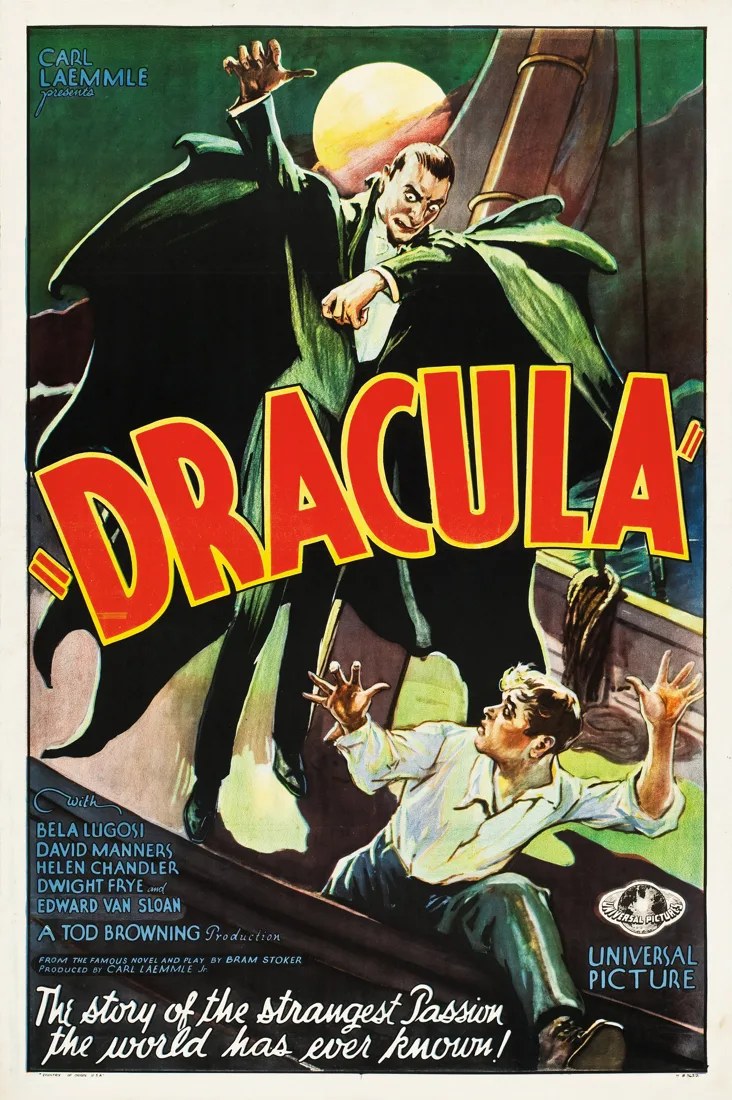
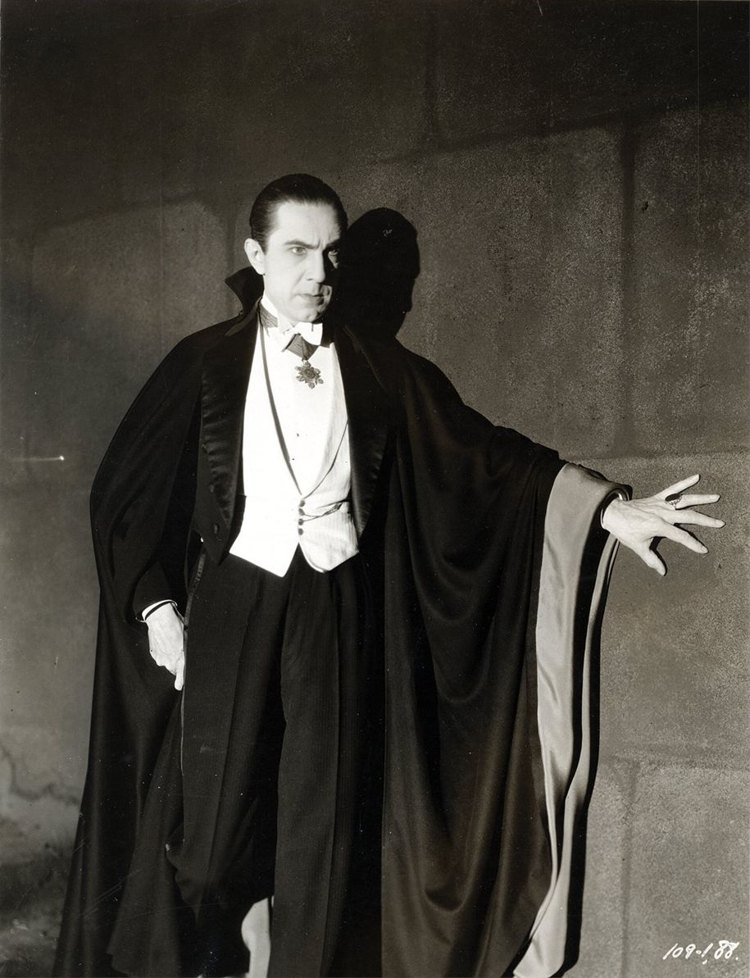
Molly Driscoll compares five screen adaptations: Tod Browning’s Dracula (1931), Terence Fisher’s Horror of Dracula (1958), John Badham’s Dracula (1979), Coppola’s Bram Stoker’s Dracula (1992) and Mel Brooks’s Dracula: Dead and Loving It (1995). She follows the changing Count through Bela Lugosi, Christopher Lee, Frank Langella, Gary Oldman and Leslie Nielsen, noting the films’ stage connections, romantic emphasis, altered characters and comic treatment. The feature contrasts critical and commercial responses while showing how freely filmmakers reshape Stoker’s story. This is Driscoll’s selection, rather than an Estate ranking. Publisher metadata gives the original publication as 8 November 2012; the current pages display an update of 1 September 2022.
HUMANITIES / National Endowment for the Humanities
Meredith Hindley
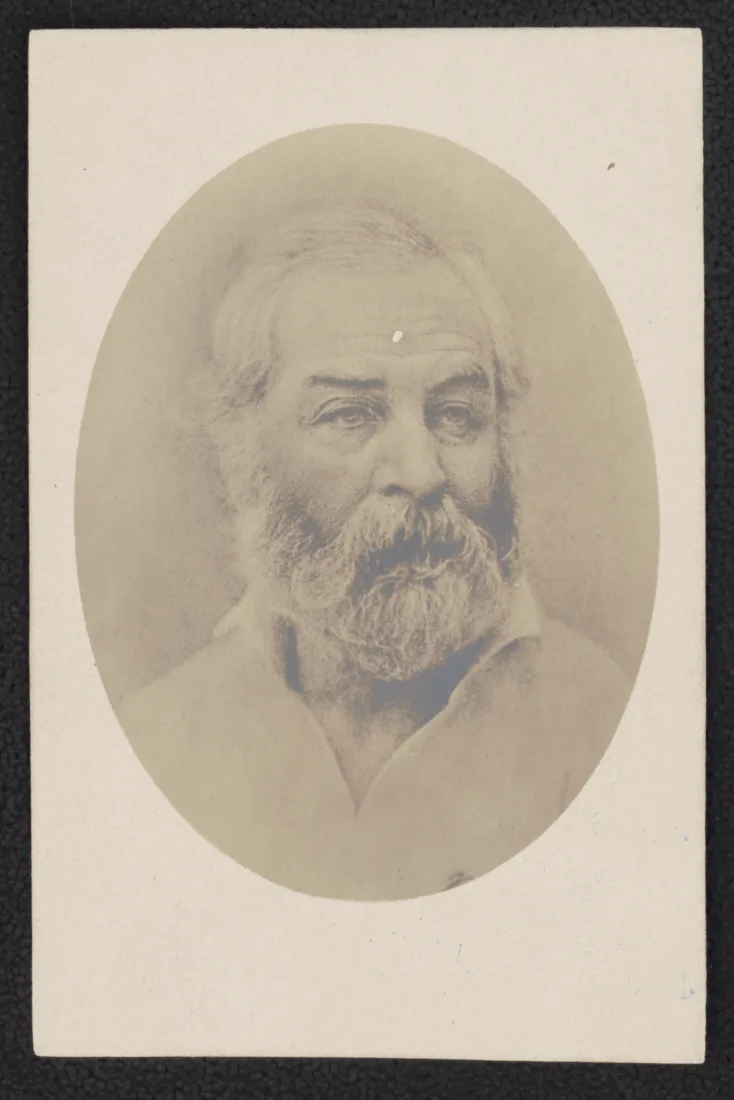
Meredith Hindley traces Stoker’s admiration for Walt Whitman, from his response to hostile criticism of the poet to the unusually frank letter he eventually sent. The feature follows their correspondence and meetings, placing this transatlantic friendship within Stoker’s developing literary and theatrical life.
Paul Hechinger explores the British and Irish cultural background of Dracula, drawing on Dacre Stoker’s appearance at New York Comic Con. The feature places the novel alongside earlier vampire fiction and reports Dacre’s interpretations of Bram’s childhood, family stories and medical connections. It also follows the proposed importance of Slains Castle and Whitby, including the shipwreck narrative and the discovery of the name Dracula in William Wilkinson’s book. Hechinger considers Henry Irving as a possible model for the Count and closes with a family anecdote about Bram’s attempted rescue of a drowning man. The article’s claims about childhood treatment, personal relationships and particular inspirations remain attributed interpretations and recollections, rather than established explanations of how the novel was written.
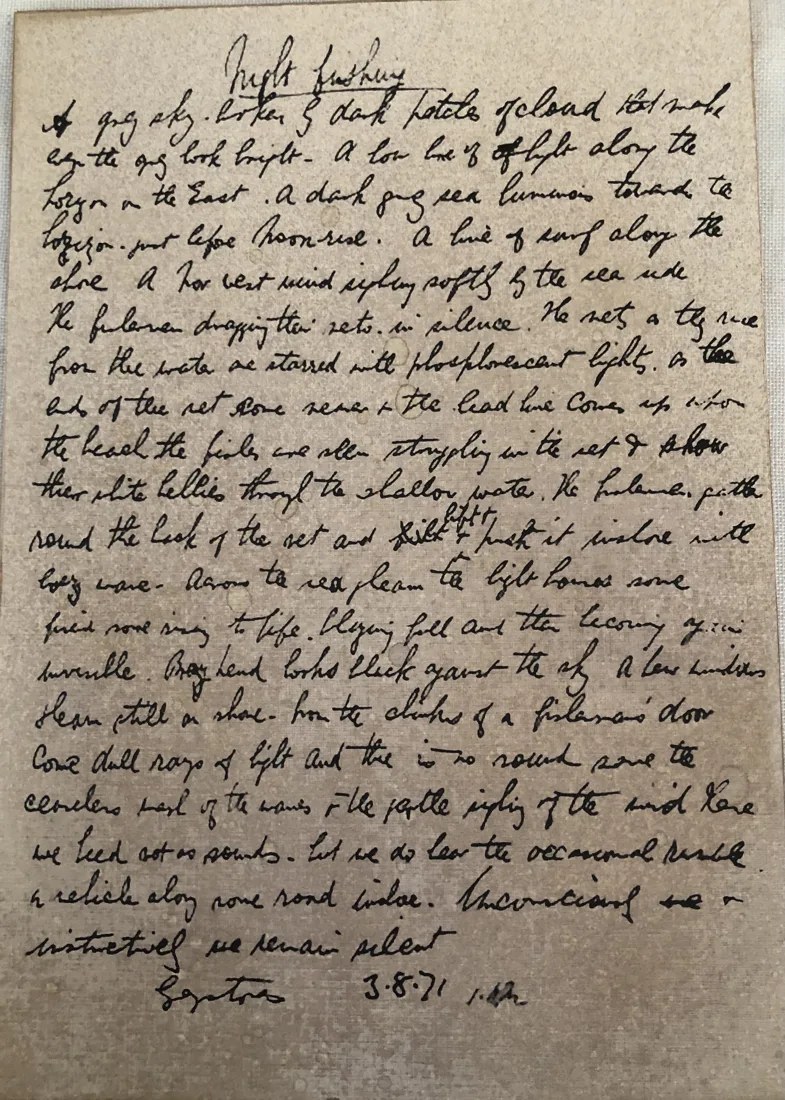
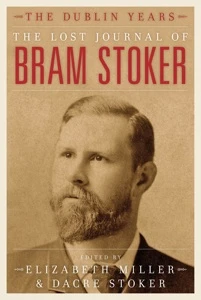
Dacre explains how a private family notebook became The Lost Journal of Bram Stoker, edited with Elizabeth Miller and published in the centenary year of Bram’s death. He credits Noel with making publication possible and describes the responsibility of interpreting material written for Bram’s own use. The article follows the practical challenges of deciphering handwriting, identifying people, understanding nineteenth-century language and making sense of brief or cryptic observations. Dacre argues that the notebook offers a closer view of Bram’s Dublin years and of the experiences behind his fiction, while acknowledging that it is not always possible to distinguish exact observation from imaginative embellishment. It is therefore valuable as an editor’s first-person account of working with the manuscript, rather than a claim that the notebook supplies a simple explanation for every later story. The article concerns the published edition; the complete modern editorial text is not reproduced on the Estate website.
Douglas Starr relates Dracula’s appearance and behaviour to Victorian criminal anthropology, especially the theories of Cesare Lombroso and Max Nordau. He discusses the novel’s explicit references to them and contrasts its threatening Count with attractive modern screen vampires.
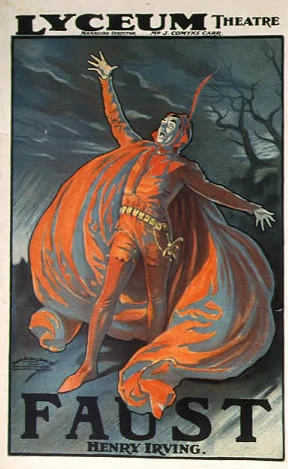
Peter Crawley examines Stoker’s theatrical career, from reviewing Irving to managing the Lyceum and studying stage lighting. He connects that practical background with Dracula’s stage afterlife and the adaptations presented during Dublin’s first Bram Stoker Festival.
This review praises Duncan Light’s study of Romania’s uneasy relationship with Dracula tourism. It examines the tension between overseas vampire fantasies, national identity and state tourism policies, including the unsuccessful Dracula Land theme-park proposals.
A Sunday Independent arts-and-diary item reports that a first edition of Dracula bearing Graham Greene’s signature was due to be offered by Bloomsbury Auctions in London. It gives a presale estimate close to €10,000 and contrasts that with a lower valuation for a copy without the Greene association. These are the article’s estimates, not a verified sale result. The same item notes the opening of The Life of Bram Stoker 1847–1912 at the Little Museum of Dublin, with Arts Minister Jimmy Deenihan attending. Together the notices show two forms of Stoker’s centenary recognition: interest in the provenance of a collectible book and renewed attention to his life in Dublin. The source page continues with unrelated diary items, which are outside this Estate account.
Halifax retells a theatrical reminiscence in which Stoker and George Alexander flee a lion-taming show in Birmingham. The article connects the episode with his work for Irving, while leaving the encounter’s date uncertain.
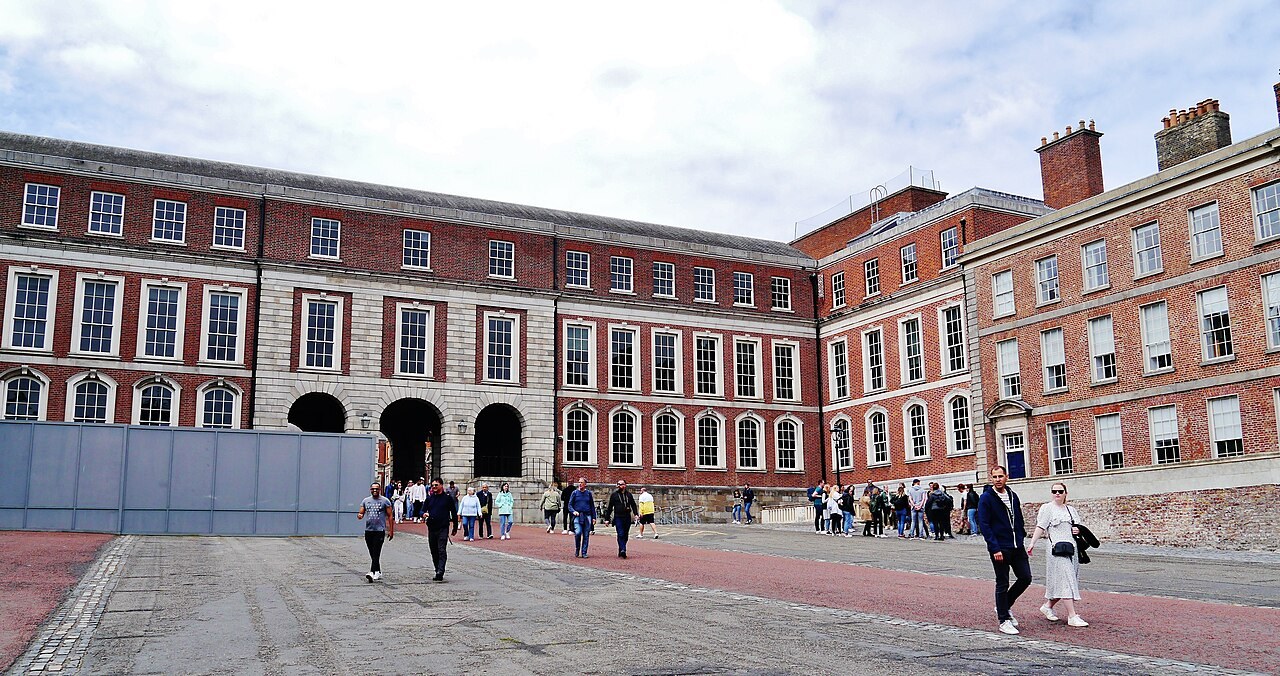
Dara Kelly previews Dublin’s inaugural Bram Stoker Festival, scheduled for 26–28 October 2012 in the centenary year of his death. Patricia Cornwell’s opening discussion, a Little Museum of Dublin exhibition, a Nosferatu screening with a live score, cathedral storytelling, walking tours and children’s activities form part of the programme. The report also describes a planned closing performance by Spraoi at Dublin Castle. It documents the launch of a lasting public commemoration of Bram and his work. This is an advance programme report, rather than proof that every advertised activity took place exactly as planned.
Richard Fitzpatrick profiles Storymap, the Dublin project linking filmed storytelling with locations across the city. Among its personal and historical accounts is Dacre’s introduction to Bram; the founders explain how the collection developed into themed walking routes.
English Heritage announces family-friendly promenade performances of Dracula around Whitby Abbey during summer 2012. Four actors lead visitors through a forty-minute adaptation, with further evening performances planned for Halloween in Stoker’s centenary year.
Steve Balshaw marks the centenary of Stoker’s death with a survey of the literary vampire, written alongside Grimm Up North’s Manchester film programme. He follows Polidori’s aristocratic vampire, the serial adventures of Varney and Le Fanu’s Carmilla before considering Stoker’s combination of Gothic devices, multiple narrators and modern technology. The essay contrasts the threatening vampire with later romantic versions and argues that Stoker’s achievement lay partly in synthesising earlier traditions. It is a critical interpretation rather than a verified checklist of direct borrowings. Some of its publication-history and biographical assertions require qualification; the Estate account does not repeat them as established facts.
Liamy Mac Nally reports research by Fiona Fitzsimons, Helen Moss and Jennifer Doyle into Bram Stoker’s maternal ancestry, published in Irish Roots in 2012. The column connects Charlotte’s Blake and O’Donnell family with Garracloon near Cong and Newport, and discusses General George Blake and the family’s relationship to the Cathach manuscript. It then considers how knowledge of this inheritance might offer a reading of Dracula through aristocratic decline and a remembered warrior past. The genealogical reporting and the interpretation of the novel are distinct: the column does not demonstrate that a particular family story determined Stoker’s plot or establish his intended meaning.
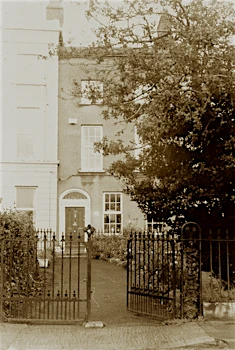
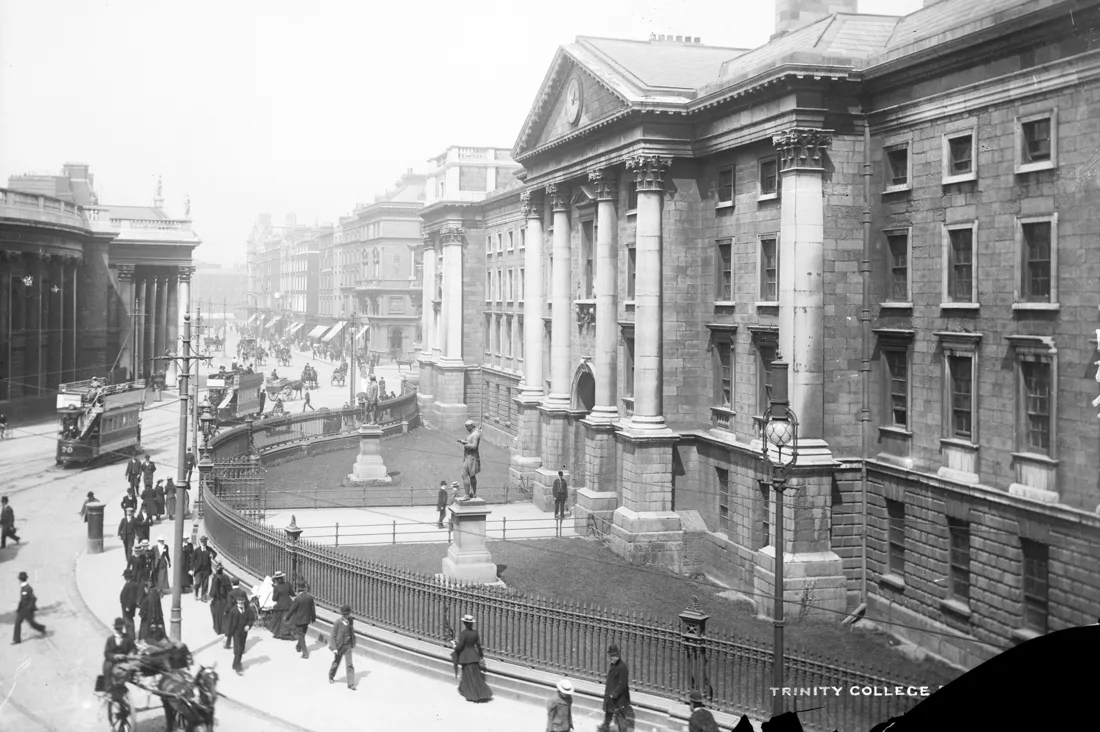
Cormac Murphy contrasts Dublin’s Stoker centenary programme with the absence of an agreed museum scheme for the writer’s birthplace. Estate agent Peter Quigley describes interest in 15 The Crescent, Clontarf, and enquiries about possible visitor use, without identifying a completed purchase or official project. The report then outlines a Dracula reading at St Patrick’s Cathedral, the Trinity College conference, guided walks and a Little Museum discussion. It captures a particular moment in the debate about how Dublin should commemorate Stoker. The property’s asking price, availability and proposed uses belong to July 2012 and are not current visitor information. The Estate account also avoids repeating the article’s incidental claim about the length of Bram’s Dublin Castle employment.
Christopher Frayling considers how Dracula has overshadowed its creator. He revisits Bram Stoker’s public life with Irving, the limited personal evidence and the novel’s transformation through cinema, questioning whether biography can fully recover the man behind it.
Emma Gallager interviews Dennis McIntyre about Charlotte Stoker’s childhood in Sligo and his view of the town’s importance to Dracula. McIntyre discusses Charlotte’s experience of the 1832 cholera epidemic, the frightening accounts associated with it and his belief that such stories could have influenced Bram. The feature also advocates greater local recognition of the Stoker connection during the centenary of the writer’s death. This is evidence of a particular interpretation and of Sligo’s literary heritage activity in 2012. It does not establish a direct causal link between the epidemic and the novel. The Estate does not repeat the article’s uncertain burial claim, its unsourced mortality figures or its suggestion that Bram invented the word undead as established facts.
Arminta Wallace profiles the outwardly conventional civil servant whose imaginative life produced Dracula. She considers Stoker’s childhood, theatre criticism, devotion to Henry Irving and the continuing biographical questions and interpretations surrounding his private life.
Arminta Wallace interviews Jarlath Killeen about Stoker’s Dublin life ahead of the 2012 Trinity centenary conference. The discussion covers his many city addresses, walking and athletic interests, civil-service travels and the Irish settings and encounters behind his fiction.
Luke Gibbons looks beyond Dracula to Stoker’s interest in technology, America and future warfare. Reading The Mystery of the Sea and The Lady of the Shroud, he connects their inventions and political conflicts with imperial rivalries and the approaching twentieth century.
Mark Dawidziak marks the centenary of Stoker’s death by contrasting the Count in the novel with the romantic vampires of contemporary screen franchises. Rosenbach librarian Elizabeth E. Fuller discusses the surviving research notes and the time Stoker devoted to the book alongside his theatre work. The feature recalls how the Titanic disaster overshadowed news of his death, considers his other writing and traces Dracula’s changing screen image through Nosferatu, Lugosi and later performers. J. Gordon Melton reflects on the novel’s part in preserving Stoker’s name. The article’s value is its named expert testimony and its view of Stoker’s reputation in 2012, rather than its incidental television schedules.
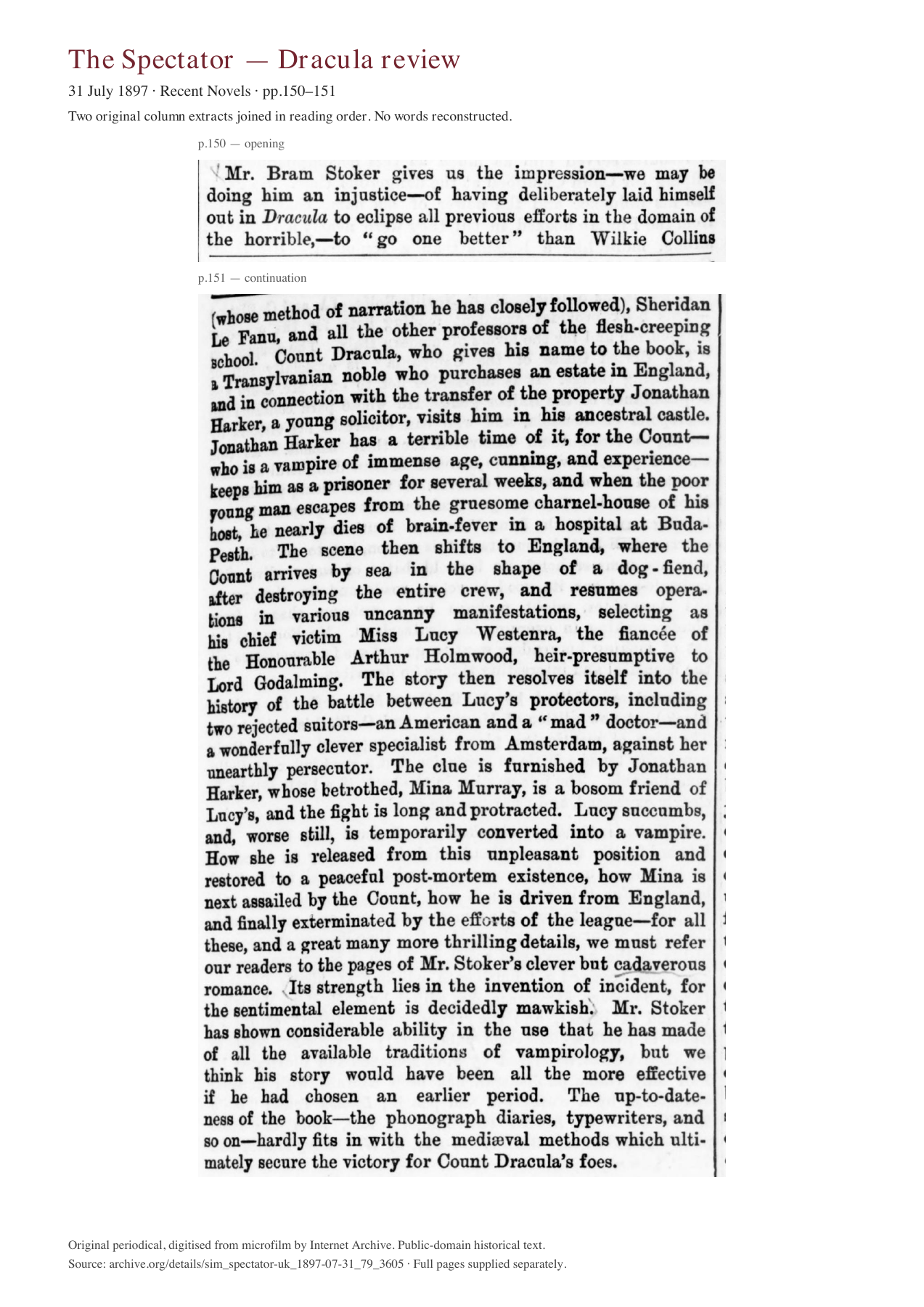
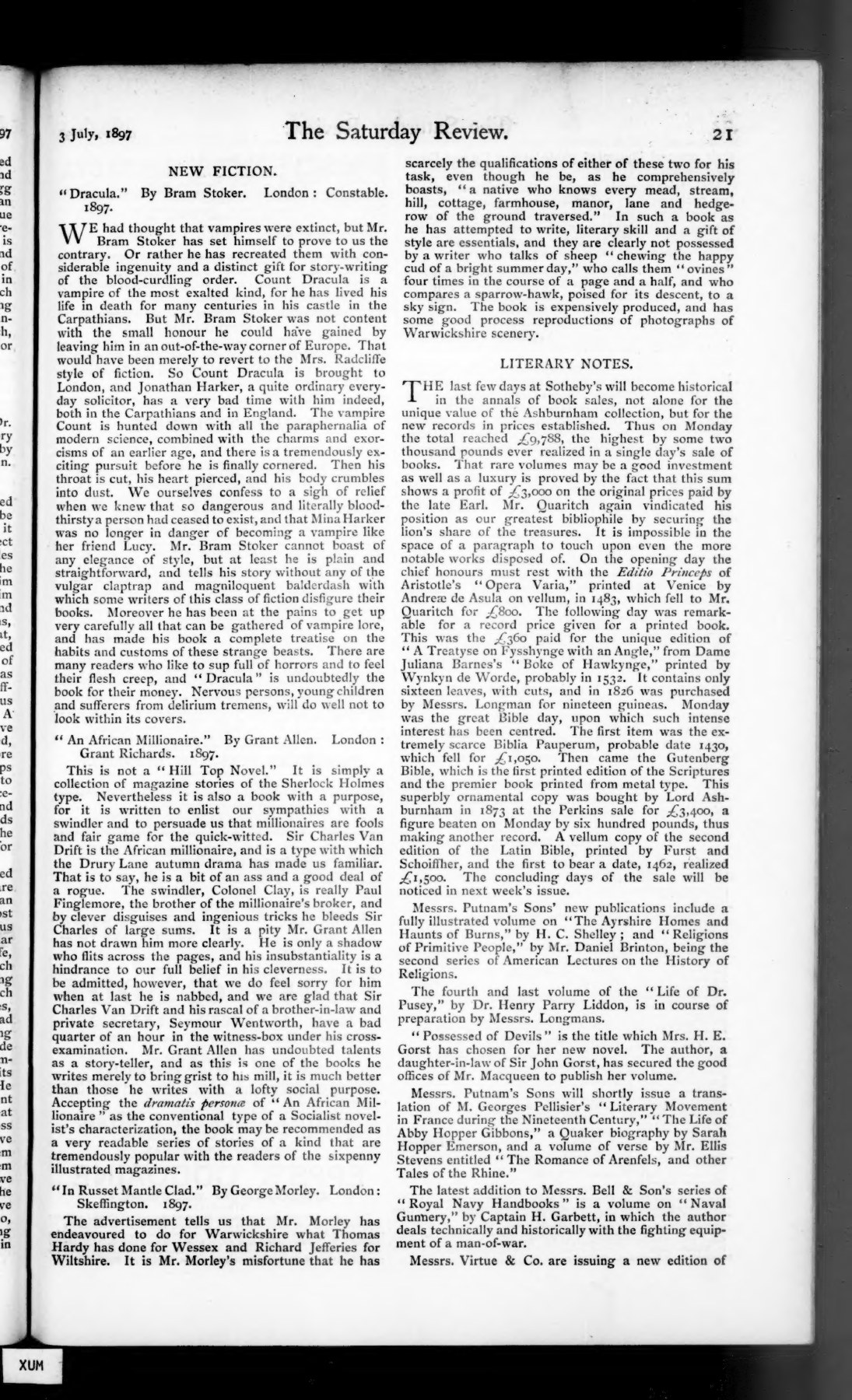
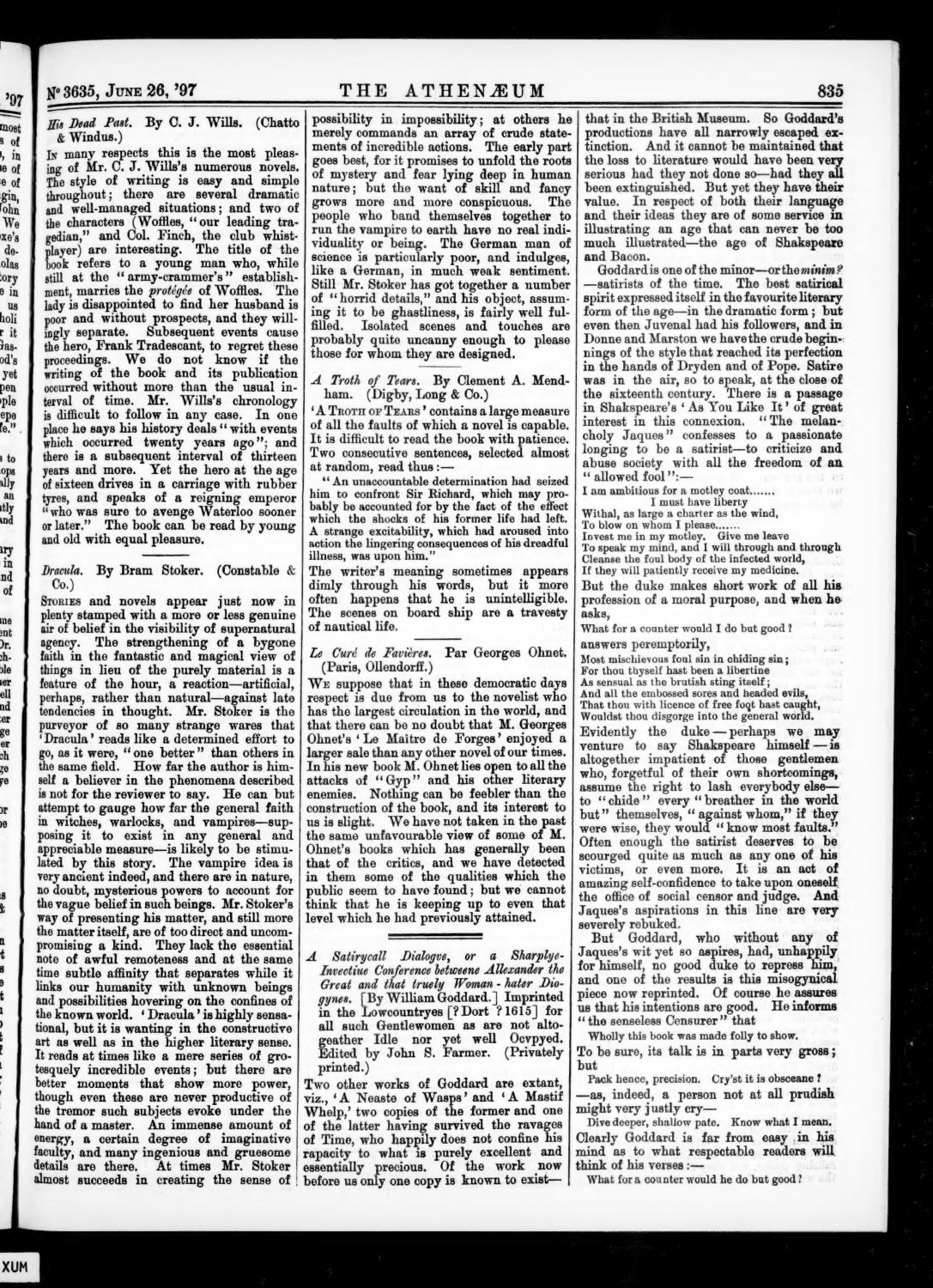
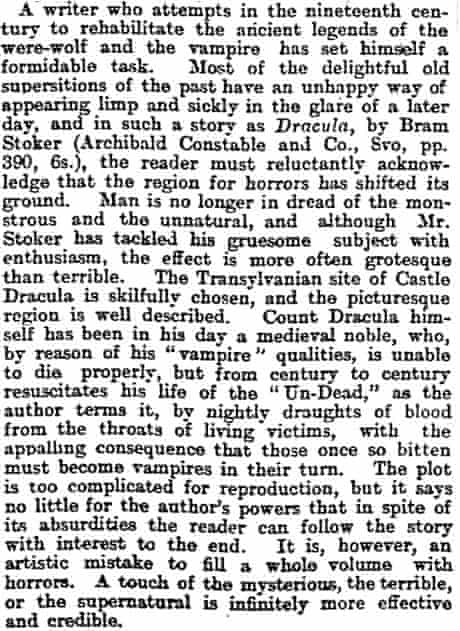
Sam Jordison revisits the Guardian’s sceptical 1897 review of Dracula and traces the vampire’s changing cultural role, from Romantic literature to Twilight. He argues that successive generations reshape the creature around their own anxieties and desires.
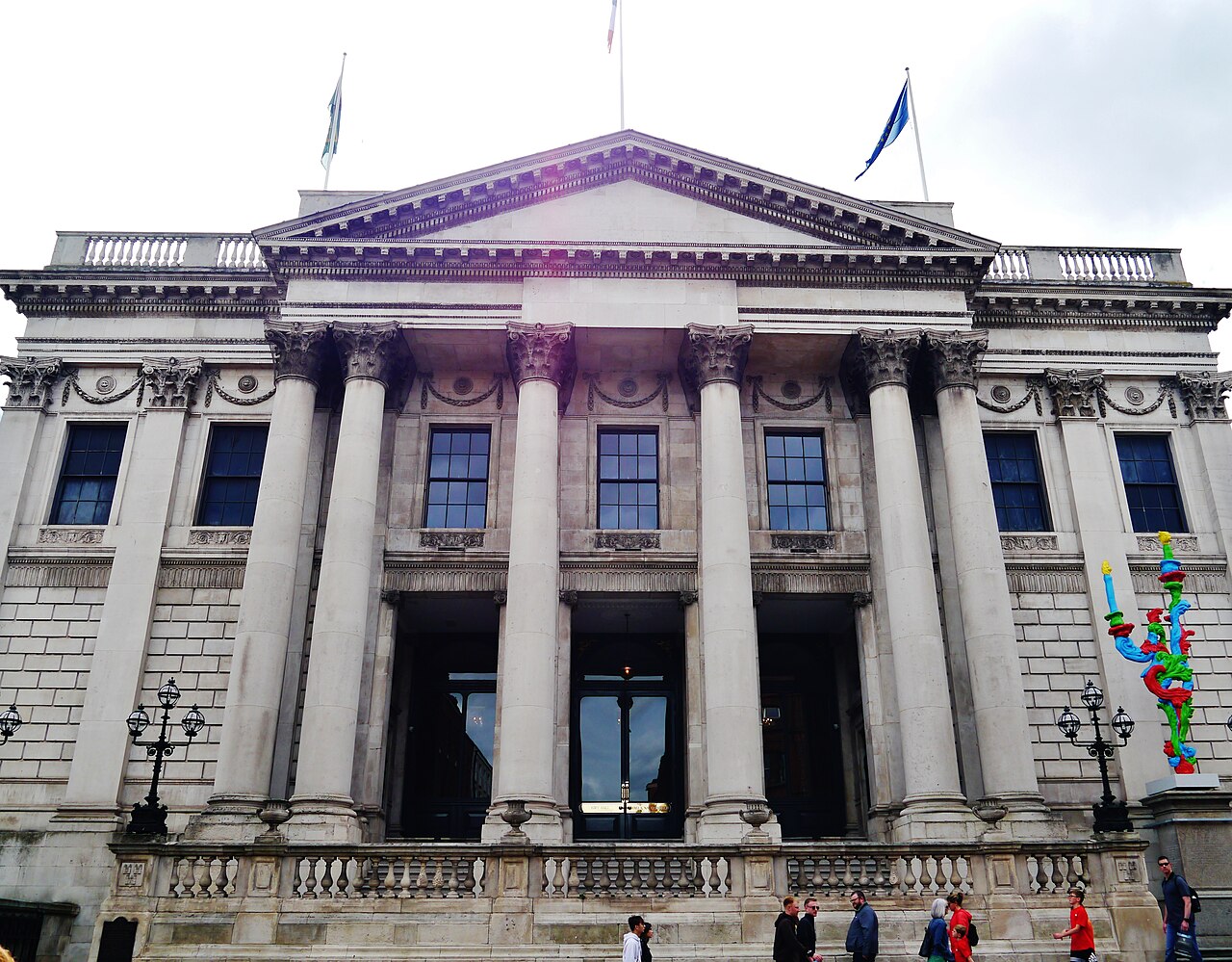
In a letter to the Irish Independent, Mark Lawler and John Gallagher of the Liberties Heritage Association support a proposed Stoker statue beside Dublin City Hall. They connect the location with the nearby offices of the Dublin Evening Mail, for which Bram wrote theatre criticism, and discuss Sheridan Le Fanu’s association with the newspaper. The writers argue that the site would return Stoker to a part of the city connected with his working life. Their statements about a disagreement with the council and family funding are the letter writers’ account, not a council decision or a verified funding agreement. The letter is evidence of public support for commemoration in 2012; it does not show that the statue was approved or erected.
Arifa Akbar surveys Dracula’s enduring appeal, literary interpretations and screen transformations, with commentary on how successive actors changed the Count’s menace and sexuality.
Painting by Aidin Hickey.Existing Estate-supplied illustration retained; no claim of new reproduction permission or authentication of the exhibited drawings.
Ken Sweeney reports plans to exhibit pen drawings attributed to Bram Stoker during the centenary of his death. The report says the images of riders and horses were found in the home of Bram’s brother William Thornley Stoker and that Ivor Stoker Dickson supplied copies. Dublin Painting and Sketching Club president Tom Scott discusses Bram’s membership and the limits of the surviving artistic record. The article also announces an Aidan Hickey portrait for the Irish Writers’ Centre and a subsequent display at the club’s annual exhibition in Dún Laoghaire. Its distinctive contribution is this account of the drawings’ reported family provenance and the 2012 exhibition arrangements. Attribution to Bram remains qualified: the newspaper report is not independent authentication of the original sheets. The unrelated brief biography at the end is not used to settle disputed dates or first-publication claims.
Sylvia Morris surveys the Shakespearean side of Stoker’s theatrical career, particularly his work with Henry Irving and the Lyceum. She outlines the 2012 centenary conferences and points to the Stoker – Irving archive in Stratford-upon-Avon.
Sean Diffley marks the approaching centenary of Stoker’s death by looking beyond Dracula to the writer’s sporting life. The column discusses his Trinity rugby seasons, his friendship with athlete and organiser Henry Dunlop, and his participation in walking races and hurdling. It identifies Stoker as a walking-race judge in the programme for Dunlop’s 1873 athletics championships at Trinity. Diffley places these activities alongside the sporting interests of James Joyce and Samuel Beckett, challenging a narrow image of writers as detached from physical competition. The value of this item is its specific account of Stoker’s sporting associations. Dates, team memberships and the programme reference are Diffley’s reported findings; the original sporting records have not been collated as part of this article check. The column’s incidental sales comparison and later cricket anecdote are not adopted as Estate findings.
Paul Bignell reports the unveiling of Stoker’s Dracula publishing agreement, discussing its preservation and the novel’s complicated publishing and copyright history.
Philip Dodd presents a forty-five-minute Night Waves discussion devoted to Dracula ahead of the centenary of Stoker’s death. The BBC listing provides access to the Radio 3 programme, first broadcast on 7 March 2012.
Michael Farry highlights a Collooney anecdote in the forthcoming Lost Journal of Bram Stoker, drawing attention to Stoker’s ear for local speech. The post also records the planned publication by Dacre and Elizabeth Miller.
Alanna Gallagher reports the proposed sale of Bram’s birthplace at 15 Marino Crescent in January 2012, the centenary year of his death. Alongside a description of the house and its condition, she records the owners’ wish for a State purchase and a proposal to establish a museum. The account is useful evidence of a debate about preserving and interpreting the building. Its asking price, ownership details and proposed use describe the position in 2012; they do not establish the property’s present status or show that a museum was created.
Pamela Duncan reports Christopher Lee’s acceptance of the Bram Stoker Gold Medal from Trinity College Dublin’s Philosophical Society. The article places the honour alongside his long screen career and his repeated performances as Dracula, while recording his preference for other roles, including The Wicker Man and Jinnah. Lee discusses the actor’s task of making unbelievable events convincing, and the report notes the presentation of a collection of M. R. James ghost stories by Trinity’s Darryl Jones. Published on 9 November 2011, this is contemporary reporting of an event connecting a major screen interpreter of Dracula with Bram’s former university. The related picture shows Lee in his original Hammer role; it should not be mistaken for a photograph of the award ceremony.
Elizabeth Miller discusses the questions and misconceptions that shaped her work as a Dracula scholar. Interviewed by Carlota McNally, writing as McVladie, she argues that Stoker borrowed the name Dracula but knew too little about Vlad the Impaler to base the whole novel on him. The conversation ranges from the novel’s characters and Miller’s bat jewellery to her friendships with Raymond McNally, Nicolae Paduraru and Ingrid Pitt. She also describes meeting Dacre Stoker and their work on the unpublished Dublin notebook, ahead of its appearance in the centenary year of 2012. Her answers offer both a statement of her research position and a personal portrait of a scholar responding to readers, enthusiasts and persistent vampire myths.
TheGenealogist introduces Stoker through family history and records, including his father’s entry in the 1846 Dublin Almanach. The article sketches the writer’s childhood, civil-service career, theatrical connections and marriage, illustrating how directories can support biographical research.
Fantz reports the rediscovery of Stoker’s Dublin journal and Dacre’s work towards its publication. Selected entries reveal experiments with stories, humour and poetry; proposed links to Dracula are presented as interpretations.
RTÉ reports the rediscovery of Bram Stoker’s private notebook by his great-grandson Noel. The account describes its picture of Victorian Dublin and the planned annotated publication, while attributing suggested links with Jonathan Harker’s journal to Dacre.
Alison Flood reports Noel’s rediscovery of Bram Stoker’s early notebook and the work of Dacre and Elizabeth Miller towards publishing it. Its observations of Dublin life and draft ideas offer evidence of Bram’s writing before Dracula; suggested connections with the novel remain interpretations.
Lettie Ransley revisits Dracula as a Gothic novel shaped by Victorian anxieties about sexuality, identity and empire. She considers its documentary form and the collision between folklore and modern knowledge, contrasting the original Count with later romantic vampires.
Iliane Tecchio; original account by Charlotte Stoker
Iliane Tecchio presents a Portuguese translation of Charlotte’s recollections of the 1832 cholera epidemic in Sligo, together with an English reading text. The account describes fear, hurried burials, household precautions, neighbours’ deaths and the family’s difficult attempt to find refuge. The journal identifies its printed source through the 2003 Penguin Dracula appendix and Harry Ludlam’s 1962 biography. It is a modern bilingual republication of Charlotte’s retrospective account, not a scan of her handwritten letter or a contemporary newspaper report of 1832. Charlotte’s memories and the introduction’s claims about their influence on Bram should be distinguished from independently verified epidemic history.
Karl Whitney uses the disappearance of a Stoker plaque at 30 Kildare Street to reflect on Dublin’s literary commemoration and the property crash. His opinion piece places the author’s public memory beside the financial troubles of the building’s owners.
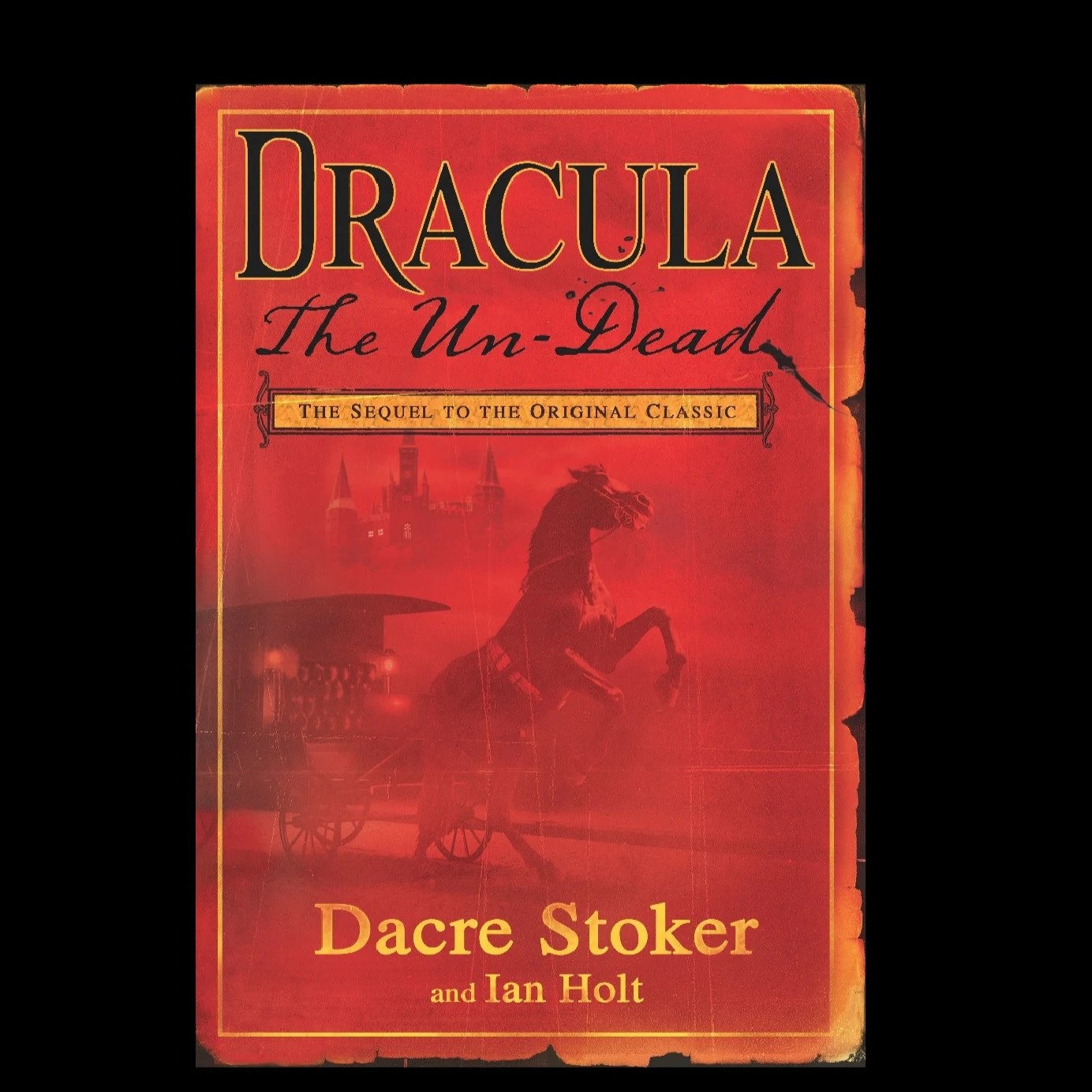
Kirkus reviews Dacre and Ian Holt’s Dracula: The Un-Dead as an exuberant, crowded supernatural sequel. It describes a large cast drawn from the original novel and historical figures, judging the result messy but entertaining. This is a critical review of fiction, rather than a continuation written by Bram.
Alison Flood announces the planned Dracula: The Un-Dead by Dacre and Ian Holt. Her report outlines the later setting and returning characters, explaining how the writers proposed to draw on Bram’s notes while creating a new fictional continuation.
Tony Williams reads Hammer’s 1958 Dracula as a response to changing British social and sexual conventions. He relates Christopher Lee’s aristocratic Count to a repressed Romantic tradition, while examining how the film’s colour, design, music and performances give forbidden desire a powerful screen presence. Van Helsing’s scientific methods provide a competing appeal to rational order. Williams also argues that comic interludes and familiar assumptions about British normality contain some of the story’s disruptive possibilities. His essay therefore treats the film as culturally conflicted rather than simply liberated or conservative. These are the critic’s interpretations, published in 2005, not documented statements of the filmmakers’ intentions.
Terry Eagleton places Paul Murray’s biography of Bram Stoker within the traditions of Irish Gothic writing. He connects the genre’s unsettled houses, threatened property and anxious inheritances with the insecurity of Ireland’s Protestant Ascendancy, reading Dracula’s dwindling supply of native soil through that historical lens. Eagleton welcomes Murray’s thorough research and the information his biography brings together, while questioning its resistance to theoretical interpretation. His review also considers the novel’s combination of modern recording technology with older supernatural beliefs, and the gap between its literary weaknesses and its enduring imaginative force. These are Eagleton’s critical readings, rather than a statement of Stoker’s documented intentions.
Roz Kaveney considers Paul Murray’s biography as an account of a man whose fame rests overwhelmingly on Dracula. The review discusses Bram’s theatrical connections and literary interests, assessing how far surviving facts and possible influences can illuminate the novel.
Ian Thomson welcomes Paul Murray’s biography of Bram Stoker, discussing its readable account of his Victorian world and the sources behind Dracula. The review connects the novel’s unsettling sexuality and modern technology with the theatrical and cultural life of its author.
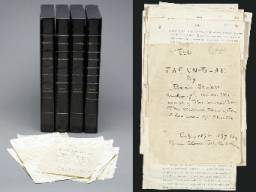
RTÉ’s archive account describes the 2002 offering of Stoker’s corrected Dracula typescript at Christie’s in New York. It identifies the title The Un-Dead, the author’s handwritten changes and the substantial typed manuscript, and reports the estimate announced before the sale. This is a record of the auction offering, not confirmation that it sold for that estimate. The archive identifies Colm Connolly as reporter and 17 April 2002 as the original broadcast date. The Estate account is based on RTÉ’s complete written description; the accompanying film could not be inspected because the player currently reports a playback failure.
Roger Ebert enjoys Shadow of the Vampire as both a dark comedy about filmmaking and a vampire story of its own. E. Elias Merhige’s film imagines that Max Schreck, the star of Murnau’s Nosferatu, really was a vampire, and that the director accepted the danger in pursuit of his artistic vision. Ebert praises Willem Dafoe’s transformation into this fictional Schreck and John Malkovich’s portrayal of Murnau as a director whose ambition overrides concern for other people. Their relationship turns familiar conflicts between a demanding star and an obsessive filmmaker into macabre jokes. The review also admires the recreation of the silent film’s visual atmosphere and the mixture of absurdity and genuine unease. It is important to retain the distinction between that invented backstage story and the history of the 1922 production: the premise is a fiction, not evidence that Schreck or Murnau behaved as the film depicts.
Roger Ebert reassesses Tod Browning’s Dracula through Bela Lugosi’s performance, Karl Freund’s photography and the arrival of a new musical score by Philip Glass. He argues that Lugosi’s measured speech and stylised presence helped make the Count a recognisably human and socially unsettling figure, influencing many later screen portrayals. The Transylvanian settings and sea voyage are praised for their visual impact, while the drawing-room scenes reveal the more static theatrical origins of the adaptation. Ebert had seen Glass and the Kronos Quartet accompany a restored version at Telluride, and considers how the music changes the experience without erasing the earlier film. His judgement is that the picture remains compelling chiefly through its performances, design and photographic invention, with moments that still bring the underlying horror into focus. This is a 1999 essay about the 1931 film and its later presentation, not a contemporary notice of its first release.
In this Great Movies essay, Roger Ebert argues that Nosferatu retains its power because it approaches the vampire with conviction, before the figure became familiar through decades of imitation and parody. He examines Max Schreck’s animal-like presence, Albin Grau’s designs and Murnau’s handling of shadows, unusual camera effects and movement within the frame. The sea voyage, coffins and spreading fear connect the monster with disease and collective anxiety, while Ellen’s sacrifice invites a reading of the film’s sexuality and social order. Ebert distinguishes this haunting imaginative force from the sudden shocks expected of much modern horror. He also considers why silence matters: the characters cannot simply talk away the disturbing images confronting them. The essay is a later critical reassessment, published in 1997, rather than an original review from the film’s 1922 release. Its interpretations should be read as Ebert’s arguments, not as a statement of Murnau’s documented intentions.
Fallon reviews the centenary critical edition, welcoming its extensive background material while questioning some academic solemnity. The short notice also recognises the novel’s continuing appeal and its prolific stage and screen descendants.
MoMA announces a centenary season of forty vampire films from fourteen countries. Curated by Joshua Siegel with Leonard Wolf, the programme brings together canonical Dracula adaptations, national variations, independent films and parodies.
Frank McLynn finds Barbara Belford’s biography lively and well researched, particularly in its account of Victorian literature and the occult. He considers its Freudian reading of Dracula while questioning whether the surviving record can rescue Bram’s wider career from the novel’s shadow.
John Beifuss reviews Barbara Belford’s biography through the contrast between Bram Stoker’s celebrated friends and his elusive private personality. He considers how a life spent supporting Irving complicates the biographer’s attempt to recover the creator of Dracula.
Kirkus finds Barbara Belford’s biography constrained by the scarcity of revealing personal records. Its review considers Bram’s devotion to Irving and the difficulty of turning a largely supporting public role into a fully realised biographical portrait.
Roger Ebert enjoys the extravagance of Francis Ford Coppola’s Dracula while finding its storytelling difficult to follow. He describes an adaptation built around Gary Oldman’s changing appearances, Winona Ryder’s Mina and Anthony Hopkins’ Van Helsing, with performances pitched to match the immense visual design. His strongest praise goes to the sets, atmospheric photography and sheer theatrical intensity: the film creates a lush world of castles, fog, shadows and heightened desire. Against that achievement, Ebert sets a lack of narrative momentum and coherence. The succession of spectacular encounters does not give him a sufficiently clear story or an emotional investment in the characters. He therefore approaches the film as an experience of colour, mood and operatic excess rather than an entirely successful drama. This contemporary review records both the pleasure of its visual invention and the reservations that accompanied its arrival, rather than treating its later reputation as a foregone conclusion.
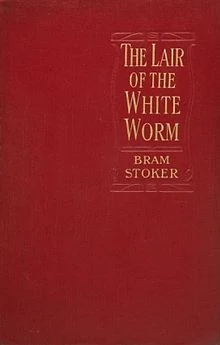
Hans Petrovic enjoys Ken Russell’s The Lair of the White Worm as an extravagant parody whose success depends on an audience accepting its absurdity. He finds little narrative logic but recognises a deliberate excess of snake imagery, religious provocation and grotesque humour. Amanda Donohoe’s Lady Sylvia Marsh dominates an account of the film’s modern Derbyshire setting and loosely adapted plot. Petrovic calls Bram’s underlying novel weak, while treating Russell’s eccentric transformation as entertaining on its own terms. This is a contemporary New Zealand review of the 1988 film, published in July 1989; its judgements belong to the reviewer. The accompanying cover identifies the novel being adapted, rather than showing a scene from the film.
Roger Ebert approaches Werner Herzog’s Nosferatu the Vampyre as a meditation on vampirism rather than a conventional succession of shocks. He argues that the familiar plot has become less important than the feelings and images that Herzog draws from it. The journey through the mountains is a central example: landscape, cloud and music establish a sustained mixture of exhilaration and dread before the Count appears. Ebert particularly admires Klaus Kinski’s performance for avoiding the actorly relish and theatrical gestures associated with many screen vampires. The creature is presented as an unhappy, unsettling presence, rather than a performer enjoying a flamboyant role. The film’s slowness is therefore part of its achievement for this reviewer, inviting repeated viewing and attention to mood. His account helps explain why this adaptation should be experienced differently from a fast-moving horror thriller or an instalment in a familiar commercial series.
Roger Ebert praises John Badham’s Dracula for allowing performance, design and atmosphere to overcome material that could easily collapse into self-parody. Frank Langella’s Count is central to that success: Ebert admires his restraint, aristocratic manners and persuasive attraction, contrasting him with more overtly theatrical screen vampires. He also draws attention to the deliberately unreal grandeur of the settings, the music and Albert Whitlock’s effects work, which give the Gothic world a convincing imaginative presence. The review finds particular force in the character’s burden of immortality and his attempt to justify what he offers his victims. Laurence Olivier, Donald Pleasence and Kate Nelligan contribute to the production’s strengths. Rather than simply seeking fresh shocks from a familiar story, Ebert values the film’s recovery of elegance, tragic feeling and suggestion. His response is notably warmer than his later assessment of Coppola’s visually extravagant version.
Blumenberg compares Herzog’s Nosferatu with Murnau’s 1922 film and the legacy of Weimar cinema. He praises Kinski’s melancholy vampire and the plague sequences, while arguing that reverence for the earlier masterpiece sometimes holds Herzog back. This contemporary German review is preserved in full by filmportal.de; the summary here is in English.
Roger Ebert responds to Dracula A.D. 1972 with comic scepticism, turning the recurring rituals used to revive the Count into evidence that Hammer’s formula has become exhausted. His review spends much of its energy teasing the mechanics of stored blood, supernatural infection and yet another resurrection, rather than accepting them as frightening. He also argues that the film’s contemporary characters and locations imitate the atmosphere of Stanley Kubrick’s A Clockwork Orange. That comparison carries a sharper criticism: a studio he credits with having revitalised horror and established Christopher Lee as a major figure now seems to be following someone else’s fashionable lead. The result is a strongly negative contemporary response to Hammer’s attempt to bring Dracula into modern London. Ebert’s joking tone is itself part of the evidence of how this instalment was received, and should not be mistaken for a literal account of vampire lore.
This Listener feature introduces a television programme in which Wayne and Shuster revisit the classic screen monsters. It contrasts the menace associated with Bela Lugosi and Boris Karloff with later comic and domestic versions, including the Munsters, and asks whether commercial sequels have weakened the horror tradition. Bram’s Dracula and Mary Shelley’s Frankenstein are placed behind a history extending from German silent cinema to Hollywood and Hammer. The discussion is valuable as evidence of how horror’s earlier films were being remembered in 1966. Some dates and folklore claims in the original are inaccurate or require qualification; they are not adopted here as film history.
Variety assesses The Brides of Dracula as a serviceable commercial horror picture that should attract its established audience, while doubting that committed horror enthusiasts will find it especially frightening. The review recognises Hammer’s technical competence and colour production but suggests that black and white might have produced a stronger atmosphere. It discusses David Peel’s Baron Meinster and Peter Cushing’s returning vampire hunter within a familiar mixture of castles, undead victims, religious protections and supernatural threats. Terence Fisher’s seriousness is acknowledged, though the screenplay is judged to contribute little freshness to the Dracula tradition. The review also considers Universal’s promotional support as part of the film’s likely box-office prospects. This is contemporary trade criticism of the 1960 film, rather than a later account of its reputation. The scanned page is blurred, so no definitive full reading transcription is supplied.
A contemporary report describes a failed publicity stunt for Horror of Dracula at the Capitol Theatre in Flint, Michigan. Assistant manager William Kern dressed as the Count and walked through the city, attracting complaints and police attention. The report describes elaborate gruesome props and records a breach-of-the-peace charge, a suspended sentence for Kern and a $100 cost to the theatre circuit. It offers evidence of how exhibitors promoted Hammer’s film through public spectacle and the reactions that such campaigns could provoke. The article appears on page 2 of Motion Picture Daily on 29 May 1958; the earlier saved link opened the front page instead. The recovered scan has an obscured inner margin, so some wording remains difficult to read and no definitive full transcription is claimed.
Variety’s contemporary review of Horror of Dracula expects strong commercial returns despite a cast it does not regard as a major box-office attraction. It places the film within Universal’s history of horror releases and Hammer’s success with The Curse of Frankenstein, emphasising the promotional appeal of gore and colour. The reviewer also finds real craft behind the exploitation potential: Terence Fisher’s serious treatment creates tension, Peter Cushing is impressive as the investigating doctor and Christopher Lee supplies a thoroughly disturbing Count. The supporting performances, sets, Jack Asher’s photography, James Bernard’s music and Bill Lenny’s editing all receive attention. The result is a favourable trade assessment, concerned with both the film’s effectiveness and the way exhibitors might sell it. Its use of a different release title should not disguise that this is Hammer’s 1958 Dracula.
Vincent Canby’s contemporary review welcomes Hammer’s Horror of Dracula as a particularly effective return to the Count’s Gothic world. He praises the seriousness of the production, its settings, costumes, colour photography and effects, and finds that Jimmy Sangster’s changes to the familiar story strengthen its impact. Peter Cushing’s pursuit of the vampire gives the action momentum, while Christopher Lee and the supporting cast contribute to a film Canby expects to perform strongly at the box office. The review treats suspense, pace and the climactic destruction of Dracula as major strengths. The original article has now been located on page 4 of the 6 May 1958 issue. The digitised volume’s inner gutter obscures some line endings, however, so this account is accompanied by the source qualification rather than a purportedly complete transcription.
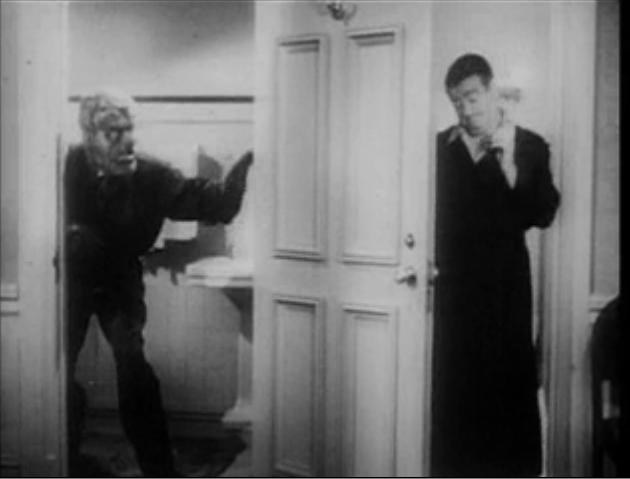
Variety finds comedy and genuine scares in the meeting of Abbott and Costello with Universal’s monsters. It credits Bela Lugosi, Glenn Strange and Lon Chaney with sustaining the menace, praises Charles T. Barton’s direction and predicts strong commercial appeal.
The Evening Star warmly reviews Dracula’s Daughter during its run at Dunedin’s St James Theatre. It praises the film’s acting, visual shadows, sustained suspense and mixture of supernatural menace with psychological explanation. Particular attention goes to Gloria Holden’s restrained performance as the Count’s daughter, with Otto Kruger, Marguerite Churchill, Irving Pichel and Edward Van Sloan also discussed. The review describes the heroine’s unsuccessful attempt to escape her inherited bloodlust and the comic exchanges that relieve the darker scenes. It records an enthusiastic local response to the 1936 sequel. The surrounding newspaper feature contains reviews of other films, which should not be mistaken for part of the Dracula review.
A Wanganui entertainment column promotes Dracula at the Regent Theatre, praising its atmosphere and describing an appreciative full house. The notice identifies Tod Browning as director and names Bela Lugosi, Helen Chandler, David Manners, Edward Van Sloan and the supporting cast. It connects the screen production with the stage play and Bram’s novel, illustrating how the adaptation was introduced to local audiences in 1931. The item combines publicity language with screening information rather than offering a sustained independent critical review. Its statements about final performances are not entirely consistent, so no exact closing date is inferred from them.
TIME finds Broadway’s Dracula effective at frightening audiences despite uneven acting and stage mechanics. Its playful review places the adaptation among the week’s new Manhattan productions.
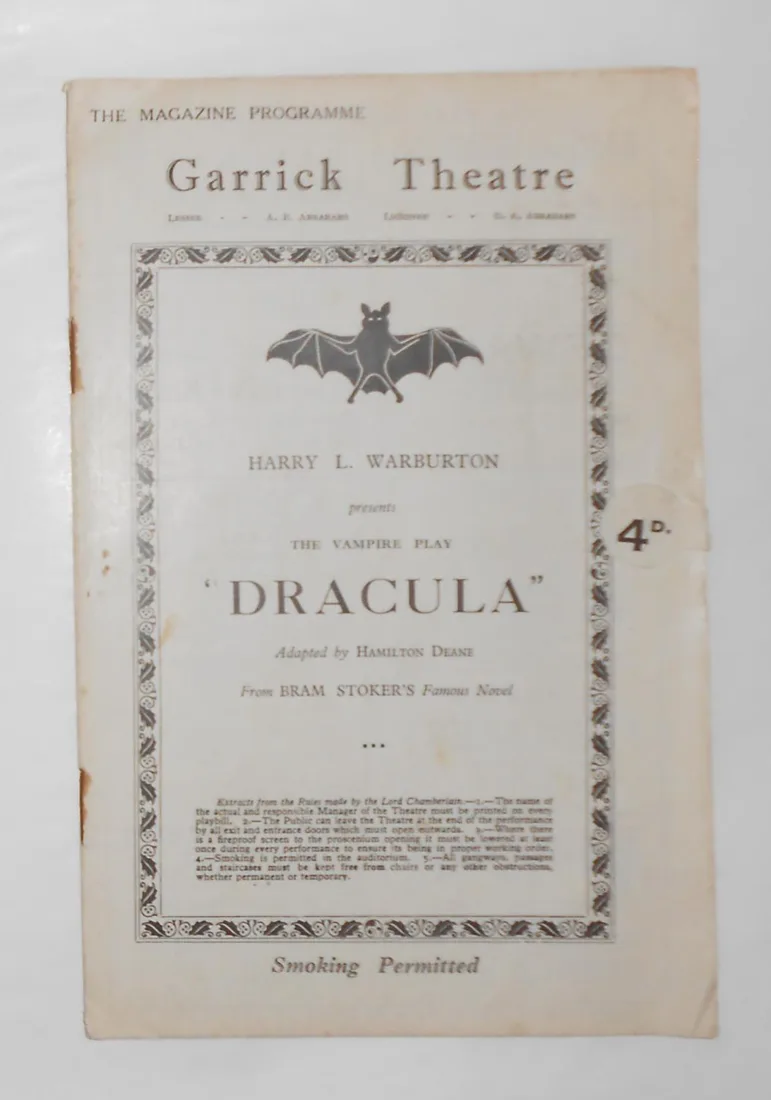
Charles Brackett finds the Deane–Balderston stage version of Dracula genuinely frightening despite its theatrical contrivances. Reviewing the Fulton Theatre production, he recognises how radically the adaptors have simplified Bram’s novel, then follows Van Helsing’s investigation and the contest for Lucy’s life. He praises Edward Van Sloan, Bernard Jukes and Dorothy Peterson, while suggesting that some stage tricks are unnecessary to the play’s effect. The notice captures the Broadway production’s early reception before the 1931 film made the story still more familiar. It forms the opening section of a longer theatre column reviewing several other plays.
This literary column uses Bram’s Personal Reminiscences of Henry Irving to enliven a discussion of Shakespeare and Fletcher’s Henry VIII. It recalls Tennyson emphatically doubting Shakespeare’s authorship of Wolsey’s farewell, then considers competing critical judgements. The writer also draws on Bram’s comic reply to a parent offering a real baby for the Lyceum’s christening scene: theatrical realism would entail an increasingly absurd series of practical consequences. The extracts show Bram’s memoir continuing to supply anecdotes about literature and performance after his death. This is a 1927 discussion quoting the memoir, rather than a newly discovered interview or contemporary record of the original conversations.
The Evening Star repeats a literary note from John o’ London’s Weekly connecting a new edition of The Jewel of Seven Stars with the contemporary fascination for Tutankhamen. It describes Bram as Irving’s manager and friend, praises Dracula as a powerful thriller and suggests that it would make a successful film. The note also speculates that a diary might survive and eventually provide material for reminiscences. That speculation is evidence of what the writer hoped might be found in 1923, not proof that the diary had then been inspected. The item documents an early Egyptian-discovery context for renewed interest in Bram’s novel.
In the extract transcribed by filmportal.de, Hans Wollenberg welcomes Nosferatu as an unusual experiment in cinematic horror. He contrasts it with familiar romances and mechanical adventure stories, placing its treatment of fear alongside literary precedents. Mountains, rough seas, clouds and old buildings are praised as active parts of the film’s atmosphere. Wollenberg urges exhibitors to make the film available beyond the small audience at its premiere. This account covers the institutional extract: filmportal.de visibly marks an omission, and the complete newspaper review has not been checked.
The reviewer, signing “ej.”, presents Nosferatu as a distinctly cinematic work, describing its spectral movement, carefully composed settings and Max Schreck’s vampire. The notice also considers the performers, the tragic love story and Hans Erdmann’s music, in an immediate response to the Berlin presentation.
R.W. finds the film’s strongest effects in its uncanny atmosphere rather than its dramatic construction. The review criticises the elaborate premiere entertainment and thin psychological motivation, while assessing Max Schreck and the other principal performers.
The production report transcribed by filmportal.de describes a night shoot for Nosferatu at the Jofa studios. A constructed harbour, sailing ships and dockside workers create an ominous setting, while an aircraft propeller supplies wind for the vessels’ sails and flags. The account emphasises Albin Grau’s preparation of scenes through drawings, costumes, gestures and movement before director F.W. Murnau films them. It praises the pair’s attention to visual detail and its intended effect on the audience. This is an account of the institutional German transcription, not a collation against a recovered original newspaper page.
A short fiction-list notice announces Dracula’s Guest and Other Stories by Bram Stoker, published by Routledge. BramStoker.org identifies the clipping as The Observer of 19 April 1914; the date is not visible in the cropped notice itself.
Jessie Mackay traces the serpent-woman through classical legend, European folklore, Keats and Oliver Wendell Holmes before turning to Bram’s treatment. Her final paragraph describes an inhuman woman associated with an ancient snake-haunted landscape, without naming The Lair of the White Worm. Mackay finds Bram’s horror less artistically softened than that of her literary comparisons. The article is therefore useful as an early critical response to his later fiction within a wider history of the Lamia. It calls his novel posthumous, although The Lair of the White Worm was published in 1911, before his death; the Estate does not repeat that description as fact.
A notice centred on Stoker’s Dublin years and theatre career, preserved through a centenary reprint. Original notice of 23 April 1912; the linked collection includes the 23 April 2012 reprint.
A surviving clipping emphasises Stoker’s association with Henry Irving. The clipping stamp appears to read 22 April, but the exact day remains unconfirmed.
Westminster Gazette, April 1912 · Trinity College Dublin. Courtesy of the Bram Stoker Estate.
A surviving clipping recalls Stoker’s theatre management and personal qualities. The clipping stamp appears to read 22 April, but the exact day remains unconfirmed.
Drawing on the Lyceum’s American tours, Stoker considers the strengths and circumstances of American acting. The essay broadens the archive’s view of his journalism beyond his best-known novel.
The Dominion reports R. A. Scott-James’s objection to Bram’s argument for censoring fiction. Drawing on a discussion in the Daily News and on G. K. Chesterton, it asks why sexual content should be treated as uniquely harmful while books encouraging greed, pride or other damaging conduct escape the same standard. Scott-James argues that a censor’s personal judgements could suppress moral criticism and protect popular errors. This is a response to Bram’s Nineteenth Century essay, containing quotations from it, rather than the complete essay itself. It preserves contemporary opposition to a position Bram publicly advocated and helps place his argument within an active literary debate.
Bram argues that literary freedom depends on writers exercising moral restraint. He treats reticence as a quality of the highest art, then compares the regulation of performed drama with the freedom enjoyed by printed fiction. His argument concentrates on sexual suggestion and what he regards as the commercial exploitation of harmful material, while recognising imagination’s value as a means of teaching. He says that he would prefer another effective remedy to formal censorship, but accepts censorship if authors’ self-restraint and existing protections prove inadequate. This is a controversial statement of Bram’s own position, not the Estate’s endorsement of it. The complete September 1908 essay is reproduced in the nine-page periodical scan below. It can be read alongside the Dominion’s report of R. A. Scott-James’s opposing argument.
Bram visits William De Morgan at The Vale in Chelsea to discuss his late start as a novelist, Evelyn’s encouragement and the making of Joseph Vance. Their conversation ranges from ceramics and a patented bicycle gear to the struggle of shaping plots and characters. De Morgan describes writing without a scenario and preferring the quiet of Florence.
A Dominion theatre column recounts an anecdote about Edward German’s fee for the Lyceum production of Henry VIII. Having accepted the music, Irving asks Bram what Sullivan had been paid for Macbeth and offers German the same sum. The story presents Bram as the person able to supply the company’s financial precedent and Irving as a generous employer. It is a brief item within a much longer column reviewing plays and reporting theatrical news, rather than an interview with Bram or a separate article about him. Its interest lies in a specific glimpse of Lyceum working practice; the anecdote is reported rather than independently corroborated.
Bram interviews Arthur Wing Pinero about the craft of writing plays. Pinero describes finding ideas amid the activity of London, developing them in seclusion, working for three or four hours a day and learning a fresh method for each play. The illustrated page also shows his homes and family.
Bram visits W. S. Gilbert at Grim’s Dyke and asks about writing for the stage. Gilbert contrasts the dramatist’s dependence on actors and audiences with the novelist’s freedom, recalls his partnership with Arthur Sullivan, and considers the place of literary style in a successful play.
Churchill disliked interviews but made an exception for Bram, a friend of his parents and the author of Dracula. Their conversation covers writing, politics and public life. Published in America in October 1907 and London in January 1908.
At Undershaw, Stoker talks with Conan Doyle about childhood, medicine, writing and America. The Estate reading text links the original newspaper versions: The World of 28 July 1907 and the differently worded Daily Chronicle interview of 14 February 1908.
Stoker describes Dublin’s International Exhibition at Herbert Park, considering its architecture and its ambitions for a changing Ireland. The article belongs to the magazine’s special Irish number.
Stoker tours Harland and Wolff, following the organisation and scale of shipbuilding in Belfast. His account describes the yard, its workforce and the construction of the Adriatic before the Titanic era.
1906 1 article
C. A. Buchel, published by Raphael Tuck & Sons (set 6671), c.1905
Stoker looks back at Irving’s career, emphasising persistence, preparation and devotion to acting. His account offers a manager’s perspective on the labour behind theatrical success.
The Evening Star quotes Bram’s appreciation of Irving in the Manchester Guardian. It lists the actor’s knighthood, university honours and recognition at the Royal Academy, then turns to the financial scale of his career. Bram puts British and American box-office receipts since 1878 at more than two and an eighth million pounds and says that the money passed through his hands. The extract matters because it links a contemporary public assessment of Irving with Bram’s direct experience of theatre management. The figure is his reported estimate, rather than a new Estate audit of the accounts. The original Guardian article’s date remains to be traced.
An American notice praises Dracula’s originality, memorable confrontations and ability to make fantastic events persuasive. It places Stoker’s fiction alongside his established association with Henry Irving.
This strongly negative review faults Dracula’s excess and lack of artistic restraint, contrasting it with Stevenson’s horror fiction. Yet the critic admits that the novel holds the reader to the end and leaves an unsettling fear at bedtime.
A New Zealand theatre column reports Bram’s evidence to a House of Lords committee on dramatic copyright. He argues that novelists should control adaptations of their books and that playwrights should likewise control the conversion of plays into novels. The Lyceum’s Faust illustrates how a stage production could increase demand for an existing book; The Dead Heart supplies the reverse example of a novelisation benefiting from a successful play. The item is significant evidence of Bram’s professional interest in authors’ rights during the year Dracula appeared. It is a contemporary report of his position, rather than the verbatim committee transcript.
The Bookman praises a compelling narrative despite its grotesque incidents. Comparing its intricate mystery with Wilkie Collins, it admires the sustained excitement while warning against giving it to nervous children.
The Spectator praises Stoker’s invention and command of vampire traditions but finds the sentiment mawkish. Its reviewer questions the fit between modern recording technology and the medieval methods used to defeat Dracula.
The Saturday Review admires Stoker’s ingenuity, plain storytelling and knowledge of vampire lore. It singles out the transfer of Gothic terrors to modern London, while warning nervous readers about the effect of the story.
Photograph: Jessica. Courtesy of the Bram Stoker Estate
Jane Stoddard discusses Dracula with Stoker soon after publication, asking about vampire traditions, the book’s construction and its possible lessons. Her opening review and the interview can be read together in the Estate transcription.
This sceptical review acknowledges energetic invention and disturbing details but faults the novel’s construction, characterisation and literary subtlety. It finds the opening more promising than what follows.
Punch finds Dracula ingenious but complains that its diaries and journals become wearisome. The reviewer mocks the characters’ questioning and objects to the religious machinery used against the vampire.
The reviewer admires Stoker’s handling of setting and suspense, finding that a complicated plot holds the reader to the end. Yet the accumulation of horrors is judged an artistic mistake: the critic argues that restraint and mystery could make the supernatural more convincing.
The reviewer describes an absorbing late-night reading experience and praises Stoker’s imaginative force and control of suspense. Its enthusiastic response places Dracula beside earlier Gothic fiction.
The New Zealand Herald includes The Shoulder of Shasta among Macmillan’s colonial editions. Its brief plot account follows Esse Elstree’s stay in the Californian mountains, her attachment to Grizzly Dick and her eventual return to San Francisco society and an English artist. The notice shows how Bram’s American-set romance was presented to colonial readers shortly after publication. It is primarily a plot description within a books column, not a substantial assessment of the novel’s literary merits.
The Evening Star welcomes The Watter’s Mou’ in a publications column discussing compact books for railway and steamboat travellers. Its very brief judgement praises the novella’s excitement and dramatic situations, placing Bram alongside other authors issued by Constable. The notice provides contemporary reception evidence for this less familiar book, but should be understood as a short recommendation rather than a detailed review.
A reprinted eyewitness account follows the Lyceum company from St Pancras to a royal command performance at Sandringham. Bram appears repeatedly as the organiser directing performers to their seats, handling the company’s arrival and keeping the journey moving. The writer describes reduced copies of the Lyceum scenery, the improvised theatre, the royal audience and performances of The Bells and the trial scene from The Merchant of Venice. Irving and Ellen Terry receive personal thanks and gifts from Queen Victoria. The account makes the practical labour behind a prestigious engagement unusually visible. This is the Press reprint of an account credited to the Pall Mall Gazette, not the original British printing.
This theatre-news column describes the London farewell to Irving’s company and outlines the forthcoming American tour with Ellen Terry. It reports enthusiastic audiences, the advance shipment of scenery and the actors’ planned separate New York debuts in The Bells and Much Ado About Nothing. The itinerary then names Philadelphia, Boston, Baltimore, Brooklyn, Chicago, St Louis, Cincinnati and Washington, with a possible later New York farewell. The report helps show the publicity and logistical scale of the first tour. It is an advance announcement: it cannot by itself establish that every proposed engagement occurred on the stated dates. Bram is not named in the relevant passage.
The Cromwell Argus reprints a substantial passage from Under the Sunset under the heading “The Shadow Builder”. A grieving poet crosses the Valley of the Shadow in search of his beloved, finding renewed courage amid desolation when thunder seems to command him onwards. The newspaper attribution identifies Bram and the book, documenting the circulation of his imaginative prose in New Zealand fourteen years before Dracula. The complete newspaper extract is transcribed below and checked against the scanned text. It is not the complete book or a claim that the newspaper heading establishes an otherwise verified story title.
A warmly appreciative review asks whether adults may value these stories as much as children. It praises Stoker’s imaginative allegory and tenderness, compares the tales with Andersen and Alice in Wonderland, and welcomes their sympathy for animals. The book’s illustrations are also commended.
Journal of the Statistical and Social Inquiry Society of Ireland
Charlotte M. B. Stoker
Bram’s mother urges public support for deaf children’s education, comparing provision in Ireland with arrangements abroad. Delivered on 13 May 1863 and published that December, the paper reveals her reforming interests. The linked transcription retains the original period language.