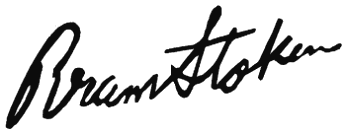
work
Dracula
Published in London by Archibald Constable on 26 May 1897, Dracula brings an ancient supernatural threat into a world of trains, telegrams, medicine and recorded testimony. Its 130th anniversary falls in May 2027.
The story
A newly qualified solicitor, Jonathan Harker, travels to Transylvania to help Count Dracula buy property in England. Hospitality turns to imprisonment as he begins to understand his host. When the Count reaches England, a circle of friends must piece together the evidence of a danger they scarcely know how to name.
The story moves between castle, coast and city. Its tension comes not only from the vampire, but from the struggle to recognise what is happening and act together. New readers can follow the introduction below without learning the ending.
Meet the characters
- Count Dracula – an aristocratic vampire whose apparent courtesy conceals his purpose.
- Jonathan Harker – a solicitor whose professional journey takes him into the Count’s power.
- Mina Murray, later Mina Harker – a skilled organiser of information whose work helps the group assemble the story.
- Lucy Westenra – Mina’s friend, whose mysterious illness brings the threat into the lives of those around her.
- Professor Abraham Van Helsing – a doctor whose learning crosses the boundary between scientific knowledge and older beliefs.
- Dr John Seward – a doctor and recorder of events, working at an asylum near one of Dracula’s English properties.
- Arthur Holmwood and Quincey Morris – Lucy’s friends and suitors, drawn into the struggle alongside Seward.
- R. M. Renfield – Seward’s patient, whose behaviour and words offer disturbing clues.
A story assembled from evidence
No single narrator tells Dracula. Diaries, letters, newspaper reports, a ship’s log and accounts recorded on a phonograph bring its events together. Characters know different things at different times. Mina’s work arranging their records helps turn separate experiences into a shared understanding.
Reading the novel means joining that investigation: dates, journeys and fragments matter. The modern tools that preserve information sit beside traditions that seem to belong to another age.
Ways to read Dracula
The novel invites different readings. Science and medicine offer ways to investigate danger, while religious belief and folklore supply other forms of knowledge. Its women act within, and sometimes challenge, the expectations of their society. Travel, borders and the fear of an outsider give further material for discussion. Critics have read the novel in many ways; some of the best-known readings are summarised below, with the scholars who proposed them.
Read or listen
Read the complete novel free on the Estate website, with chapter navigation and a layout for phones, tablets and computers. The reader uses the Project Gutenberg transcription. You can also choose an annotated edition from the Bibliography for background and explanations. When listening, check whether an edition reads the complete novel or adapts it into a drama: each offers a different experience.
Daylight in the novel. Unlike a familiar film convention, sunlight does not burn or destroy Dracula in Stoker’s novel. Van Helsing explains that daylight limits his powers and restricts when he can change form. Read Van Helsing’s explanation of daylight in Chapter 18.
Reading with others, or starting the novel for the first time? Reading Dracula offers a short reading guide and discussion questions, with the ending discussion kept separate.
If you are studying the novel for an exam, coursework or a university course, Studying Dracula offers six chapters, from getting started and understanding the novel to writing and revising essays.
What inspired Dracula
How did Bram imagine Transylvania without visiting it? Explore What inspired Dracula in Resources for his source books, places, research and surviving working notes.
From The Un-Dead to Dracula
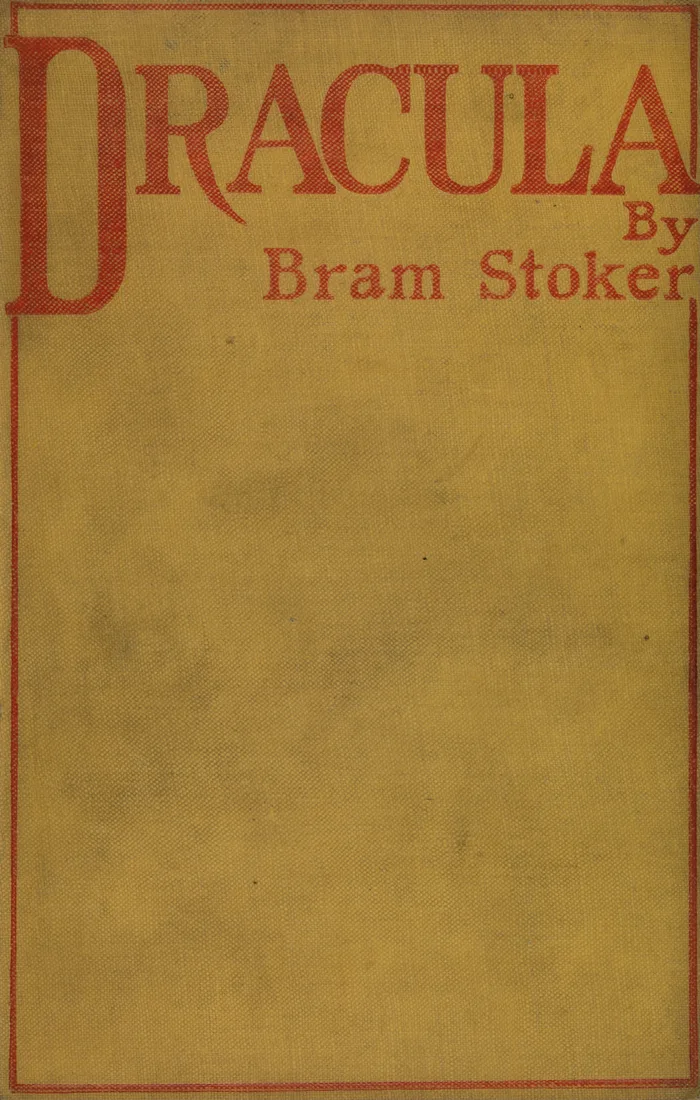
The typescript sent to the publisher bears Bram’s handwritten original title, The Un-Dead. On 18 May 1897, a week before publication, he staged a one-off reading of Dracula: or The Un-Dead at the Lyceum to secure the stage copyright. On 26 May, 3,000 copies in yellow cloth lettered in red went to the bookshops, priced at six shillings.
The novel was dedicated “To my dear friend Hommy-Beg” – Hall Caine.
Reception: read the early reviews
What did the first readers make of Dracula? Here are the full texts of the ten early reviews collected on this website, from Britain in 1897 and the United States in 1899. Read them here in date order; the links beside each give access to its archive record, source reproduction or original scan.
The responses range from delighted admiration to impatience and outright disgust. Reviewers repeatedly ask whether the horrors are convincing, whether the documents sustain the story, and whether so much terror is good entertainment. Several critics who object to the excess nevertheless admit that they could not stop reading.
These familiar reviews are a selection, not the whole contemporary press. John Edgar Browning’s Bram Stoker’s Dracula: The Critical Feast gathers a much wider body of reviews and notices from 1897–1913; his research challenges the idea that the novel was generally dismissed. The shorter collection below should not be used to make that claim.
The reviews reveal major events and the ending. Historical reviewers also make mistakes and express assumptions of their period. Their words are reproduced as evidence of reception, rather than as corrections to the novel or statements of the Estate’s views.
About the texts. The Manchester Guardian, Punch, Saturday Review and Wave texts have been checked against the saved original page images for this update. Bookman and the complete Spectator review use the Estate’s previously checked transcriptions. The Athenaeum, Daily Mail and San Francisco Chronicle reading texts follow the later Norton reproduction; their source notes distinguish this from a fresh collation against the newspaper. Stoddard’s review follows the existing Estate transcription. Modern editorial introductions and annotations are omitted.
1 June 1897 — Daily Mail
The response. The reviewer describes an absorbing late-night reading experience and praises Stoker’s imaginative force and control of suspense. Its enthusiastic response places Dracula beside earlier Gothic fiction.
It is said of Mrs. Radcliffe that when writing her now almost forgotten romances she shut herself up in absolute seclusion, and fed upon raw beef, in order to give her work the desired atmosphere of gloom, tragedy and terror. If one had no assurance to the contrary one might well suppose that a similar method and regimen had been adopted by Mr. Bram Stoker while writing his new novel “Dracula.” In seeking for a parallel to this weird, powerful, and horrorful story our mind reverts to such tales as “The Mysteries of Udolpho,” “Frankenstein,” “Wuthering Heights,” “The Fall of the House of Usher,” and “Marjery of Quether.” But “Dracula” is even more appalling in its gloomy fascination than any one of these.
We started reading it early in the evening, and followed Jonathan Harker on his mission to the Carpathians with no definite conjecture as to what waited us in the castle of Dracula. When we came to the night journey over the mountain road and were chased by the wolves which the driver, with apparently miraculous power, repelled by a mere gesture, we began to scent mystery, but were not perturbed. The first thrill of horrible sensation came with the discovery that the driver and the Count Dracula were one and the same person, that the count was the only human inhabitant of the castle, and that the rats, the bats, the ghosts, and the howling wolves were his familiars.
By ten o’clock the story had so fastened itself upon our attention that we could not pause even to light our pipe. At midnight the narrative had fairly got upon our nerves; a creepy terror had seized upon us, and when at length, in the early hours of the morning, we went upstairs to bed it was with the anticipation of nightmare. We listened anxiously for the sound of bats’ wings against the window; we even felt at our throat in dread lest an actual vampire should have left there the two ghastly punctures which in Mr. Stoker’s book attested to the hellish operations of Dracula.
The recollection of this weird and ghostly tale will doubtless haunt us for some time to come. It would be unfair to the author to divulge the plot. We therefore restrict ourselves to the statement that the eerie chapters are written and strung together with very considerable art and cunning, and also with unmistakable literary power. Tribute must also be paid to the rich imagination of which Mr. Bram Stoker here gives liberal evidence. Persons of small courage and weak nerves should confine their reading of these gruesome pages strictly to the hours between dawn and sunset.
Historical review as reproduced in Dracula: A Norton Critical Edition, edited by Nina Auerbach and David J. Skal, pp. 363–364. The original newspaper page has not yet been collated. Modern editorial introduction and footnotes are omitted; paragraphing and typography are adapted for reading.
Review and source details in the press archive · View the source reproduction ↗ · Source note
15 June 1897 — Manchester Guardian
The response. The reviewer admires Stoker’s handling of setting and suspense, finding that a complicated plot holds the reader to the end. Yet the accumulation of horrors is judged an artistic mistake: the critic argues that restraint and mystery could make the supernatural more convincing.
A writer who attempts in the nineteenth century to rehabilitate the ancient legends of the were-wolf and the vampire has set himself a formidable task. Most of the delightful old superstitions of the past have an unhappy way of appearing limp and sickly in the glare of a later day, and in such a story as Dracula, by Bram Stoker (Archibald Constable and Co., 8vo, pp. 390, 6s.), the reader must reluctantly acknowledge that the region for horrors has shifted its ground. Man is no longer in dread of the monstrous and the unnatural, and although Mr. Stoker has tackled his gruesome subject with enthusiasm, the effect is more often grotesque than terrible. The Transylvanian site of Castle Dracula is skilfully chosen, and the picturesque region is well described. Count Dracula himself has been in his day a mediæval noble, who, by reason of his “vampire” qualities, is unable to die properly, but from century to century resuscitates his life of the “Un-Dead,” as the author terms it, by nightly draughts of blood from the throats of living victims, with the appalling consequence that all those once so bitten must become vampires in their turn. The plot is too complicated for reproduction, but it says no little for the author’s powers that in spite of its absurdities the reader can follow the story with interest to the end. It is, however, an artistic mistake to fill a whole volume with horrors. A touch of the mysterious, the terrible, or the supernatural is infinitely more effective and credible.
Manchester Guardian, 15 June 1897. Complete Dracula review, transcribed from the original clipping reproduced by The Guardian in 2012. The modern introduction is not reproduced.
Review and source details in the press archive · View the source reproduction ↗ · Source note
26 June 1897 — Athenaeum
The response. This sceptical review acknowledges energetic invention and disturbing details but faults the novel’s construction, characterisation and literary subtlety. It finds the opening more promising than what follows.
Stories and novels appear just now in plenty stamped with a more or less genuine air of belief in the visibility of supernatural agency. The strengthening of a bygone faith in the fantastic and magical-view of things in lieu of the purely material is a feature of the hour, a reaction—artificial, perhaps, rather than natural—against late tendencies in thought. Mr. Stoker is a purveyor of so many strange wares that ‘Dracula’ reads like a determined effort to go, as it were, “one better” than others in the same field. How far the author is himself a believer in the phenomena described is not for the reviewer to say. He can but attempt to gauge how far the general faith in witches, warlocks and vampires—supposing it to exist in any general and appreciable measure—is likely to be stimulated by this story. The vampire idea is very ancient indeed, and there are in nature, no doubt, mysterious powers to account for the vague belief in such beings. Mr. Stoker’s way of presenting his matter, and still more the matter itself, are of too direct and uncompromising a kind. They lack the essential note of awful remoteness and at the same time subtle affinity that separates while it links our humanity with unknown beings and possibilities hovering on the confines of the known world. ‘Dracula’ is highly sensational, but it is wanting in the constructive art as well as in the higher literary sense. It reads at times like a mere series of grotesquely incredible events; but there are better moments that show more power, though even these are never productive of the tremor such subjects evoke under the hand of a master. An immense amount of energy, a certain degree of imaginative faculty, and many ingenious and gruesome details are there. At times Mr. Stoker almost succeeds in creating the sense of possibility in impossibility; at others he merely commands an array of crude statements of incredible actions. The early part goes best, for it promises to unfold the roots of mystery and fear lying deep in human nature; but the want of skill and fancy grows more and more conspicuous. The people who band themselves together to run the vampire to earth have no real individuality or being. The German man of science is particularly poor, and indulges, like a German, in much weak sentiment. Still, Mr. Stoker has got together a number of “horrid details,” and his object, assuming it to be ghastliness, is fairly well fulfilled. Isolated scenes and touches are probably quite uncanny enough to please those for whom they are designed.
Athenaeum, 26 June 1897. Reading text transcribed from the later Norton Critical Edition reproduction, pages 364–365; the original periodical page 835 was already saved separately and remains linked below. Modern editorial introduction and annotations are omitted.
Reading note. The reviewer calls Van Helsing German; in the novel he is Dutch.
Review and source details in the press archive · View the original page (PDF) · Source note
26 June 1897 — Punch
The response. Punch finds Dracula ingenious but complains that its diaries and journals become wearisome. The reviewer mocks the characters’ questioning and objects to the religious machinery used against the vampire.
“I wants to make your flesh creep,” might Mr. Bram Stoker well say as a preface to his latest book, named Dracula, which he has given in charge of the Constables (& Co.) to publish. The story is told in diaries and journals, a rather tantalising and somewhat wearisome form of narration, whereof Wilkie Collins was a past-master. In almost all ghostly, as in most detective stories, one character must never be absent from the dramatis personæ, and that is The Inquiring, Sceptical, Credulous Noodle. The Inquiring Noodle of Fiction must be what in comedy “Charles his friend” is to the principal comedian, “only more so,” as representing the devoted, admiring slave of the philosophic astute hero, ever ready to question, ever ready to dispute, ever ready to make a mistake at the critical moment, or to go to sleep just when success depends on his remaining awake. “Friend John” is Mr. Bram Stoker’s Noodle-in-Chief. There are also some secondary Noodles; Noodles of no importance. This weird tale is about Vampires, not a single, quiet, creeping Vampire, but a whole brood of them, governed by a Vampire Monarch, who is apparently a sort of first cousin to Mephistopheles. Rats, bats, wolves and vermin obey him, but his power, like that of a certain well-advertised soap, “which will not wash clothes,” has its limits; and so at last he is trapped, and this particular brood of vampires is destroyed as utterly as would be a hornets’ nest when soused with hot pitch. It is a pity that Mr. Bram Stoker was not content to employ such supernatural anti-vampire receipts as his wildest imagination might have invented without rashly venturing on a domain where angels fear to tread. But for this, the Baron could have unreservedly recommended so ingenious a romance to all who enjoy the very weirdest of weird tales.
The Baron de B.-W.
Punch, 26 June 1897, p. 327. Complete Dracula passage from “Our Booking-Office”, continuing from the foot of the left column to the top of the right. Signed “The Baron de B.-W.”.
Review and source details in the press archive · View the original page (PDF) · Source note
1 July 1897 — British Weekly
The response. Jane Stoddard discusses Dracula with Stoker soon after publication, asking about vampire traditions, the book’s construction and its possible lessons. Her opening review and the interview can be read together in the Estate transcription.
One of the most interesting and exciting of recent novels is Mr. Bram Stoker’s “Dracula.” It deals with the ancient mediaeval vampire legend, and in no English work of fiction has this legend been so brilliantly treated. The scene is laid partly in Transylvania and partly in England. The first fifty-four pages, which give the journal of Jonathan Harker after leaving Vienna until he makes up his mind to escape from Castle Dracula, are in their weird power altogether unrivalled in recent fiction. The only book which to my knowledge at all compares with them is “The Waters of Hercules,” by E.D. Gerard, which also treats of a wild and little known portion of Eastern Europe. Without revealing the plot of the story, I may say that Jonathan Harker, whose diary first introduces the vampire Count, is a young solicitor sent by his employer to Castle Dracula to arrange for the purchase of a house and estate in England.
From the first day of his starting, signs and wonders follow him. At the “Golden Krone” at Bistritz the landlady warns him not to go to Castle Dracula, and, finding that his purpose is unalterable, places a rosary with a crucifix round his neck. For this gift he has good cause to be grateful afterwards. Harker’s fellow-passengers on the stage-coach grow more and more alarmed about his safety as they come nearer to the dominions of the Count. Kindly gifts are pressed upon him: wild rose, garlic, and mountain ash. These are meant to be a protection against the evil eye. The author seems to know every corner of Transylvania and all its superstitions. Presently in the Borgo Pass a carriage with four horses drives up beside the coach. “The horses were driven by a tall man with a long brown beard, and a great black hat which seemed to hide his face from us. I could only see the gleam of a pair of very bright eyes, which seemed red in the lamplight as he turned to us…. As he spoke he smiled, and the lamplight fell on a hard-looking mouth, with very red lips and sharp-looking teeth as white as ivory. One of my companions whispered the line from Burger’s ‘Lenore’: ‘Denn die Todten reiten schnell’ (‘For the dead travel fast’).”
This is the famous king vampire, Count Dracula, in ancient times a warlike Transylvanian noble. Jonathan Harker is conscious from the first that he is among ghostly and terrible surroundings. Even on the night journey to the Castle, wolves which have gathered round the carriage disappear when the terrible driver lifts his hand. On his arrival the guest is left waiting, and presently a tall old man, whom he suspects from the beginning to be none other than the driver himself, bids him welcome to his house. The Count never eats with his guest. During the day he is absent, but during the night he converses, the dawn breaking up the interview. There are no mirrors to be seen in any part of the ancient building, and the young solicitor’s fears are confirmed by the fact that one morning, when the Count comes unexpectedly to his bedroom and stands looking over his shoulder, there is no reflection of him in the small shaving glass Harker has brought from London, and which covers the whole room behind. The adventures of Jonathan Harker will be read again and again; the most powerful part of the book after this is the description of the voyage of the Demeter from Varna to Whitby. A supernatural terror haunts the crew from the moment that they leave the Dardanelles, and as time goes on one man after another disappears. It is whispered that at night a man, tall, thin, and ghastly pale, is seen moving about the ship. The mate, a Roumanian, who probably knows the vampire legend, searches during the day in a number of old boxes, and in one he finds Count Dracula asleep. His own suicide and the death of the captain follow, and when the ship arrives at Whitby, the vampire escapes in the form of a huge dog. The strange thing is that, although in some respects this is a gruesome book, it leaves on the mind an entirely wholesome impression. The events which happen are so far removed from ordinary experience that they do not haunt the imagination unpleasantly. It is certain that no other writer of our day could have produced so marvellous a book.
Jane Stoddard, writing as “Lorna”, British Weekly, 1 July 1897. Complete opening review from “Mr Bram Stoker: a chat with the author of Dracula”; the interview follows on its own Estate page.
3 July 1897 — Saturday Review
The response. The Saturday Review admires Stoker’s ingenuity, plain storytelling and knowledge of vampire lore. It singles out the transfer of Gothic terrors to modern London, while warning nervous readers about the effect of the story.
We had thought that vampires were extinct, but Mr. Bram Stoker has set himself to prove to us the contrary. Or rather he has recreated them with considerable ingenuity and a distinct gift for story-writing of the blood-curdling order. Count Dracula is a vampire of the most exalted kind, for he has lived his life in death for many centuries in his castle in the Carpathians. But Mr. Bram Stoker was not content with the small honour he could have gained by leaving him in an out-of-the-way corner of Europe. That would have been merely to revert to the Mrs. Radcliffe style of fiction. So Count Dracula is brought to London, and Jonathan Harker, a quite ordinary every-day solicitor, has a very bad time with him indeed, both in the Carpathians and in England. The vampire Count is hunted down with all the paraphernalia of modern science, combined with the charms and exorcisms of an earlier age, and there is a tremendously exciting pursuit before he is finally cornered. Then his throat is cut, his heart pierced, and his body crumbles into dust. We ourselves confess to a sigh of relief when we knew that so dangerous and literally bloodthirsty a person had ceased to exist, and that Mina Harker was no longer in danger of becoming a vampire like her friend Lucy. Mr. Bram Stoker cannot boast of any elegance of style, but at least he is plain and straightforward, and tells his story without any of the vulgar claptrap and magniloquent balderdash with which some writers of this class of fiction disfigure their books. Moreover he has been at the pains to get up very carefully all that can be gathered of vampire lore, and has made his book a complete treatise on the habits and customs of these strange beasts. There are many readers who like to sup full of horrors and to feel their flesh creep, and “Dracula” is undoubtedly the book for their money. Nervous persons, young children and sufferers from delirium tremens, will do well not to look within its covers.
Saturday Review, 3 July 1897, p. 21. Complete Dracula review in “New Fiction”, transcribed from the saved original page.
Review and source details in the press archive · View the original page (PDF) · Source note
31 July 1897 — The Spectator
The response. The Spectator praises Stoker’s invention and command of vampire traditions but finds the sentiment mawkish. Its reviewer questions the fit between modern recording technology and the medieval methods used to defeat Dracula.
Mr. Bram Stoker gives us the impression—we may be doing him an injustice—of having deliberately laid himself out in Dracula to eclipse all previous efforts in the domain of the horrible,—to “go one better” than Wilkie Collins (whose method of narration he has closely followed), Sheridan Le Fanu, and all the other professors of the flesh-creeping school. Count Dracula, who gives his name to the book, is a Transylvanian noble who purchases an estate in England, and in connection with the transfer of the property Jonathan Harker, a young solicitor, visits him in his ancestral castle. Jonathan Harker has a terrible time of it, for the Count—who is a vampire of immense age, cunning, and experience—keeps him as a prisoner for several weeks, and when the poor young man escapes from the gruesome charnel-house of his host, he nearly dies of brain-fever in a hospital at Buda-Pesth.
The scene then shifts to England, where the Count arrives by sea in the shape of a dog-fiend, after destroying the entire crew, and resumes operations in various uncanny manifestations, selecting as his chief victim Miss Lucy Westenra, the fiancée of the Honourable Arthur Holmwood, heir-presumptive to Lord Godalming. The story then resolves itself into the history of the battle between Lucy’s protectors, including two rejected suitors—an American and a “mad” doctor—and a wonderfully clever specialist from Amsterdam, against her unearthly persecutor. The clue is furnished by Jonathan Harker, whose betrothed, Mina Murray, is a bosom friend of Lucy’s, and the fight is long and protracted. Lucy succumbs, and, worse still, is temporarily converted into a vampire. How she is released from this unpleasant position and restored to a peaceful post-mortem existence, how Mina is next assailed by the Count, how he is driven from England, and finally exterminated by the efforts of the league—for all these, and a great many more thrilling details, we must refer our readers to the pages of Mr. Stoker’s clever but cadaverous romance.
Its strength lies in the invention of incident, for the sentimental element is decidedly mawkish. Mr. Stoker has shown considerable ability in the use that he has made of all the available traditions of vampirology, but we think his story would have been all the more effective if he had chosen an earlier period. The up-to-dateness of the book—the phonograph diaries, typewriters, and so on—hardly fits in with the mediæval methods which ultimately secure the victory for Count Dracula’s foes.
The Spectator, 31 July 1897, pp. 150–151. Complete Dracula section of “Recent Novels”; transcribed against the original issue scan.
Review and source details in the press archive · View the original page (PDF) · Source note
August 1897 — Bookman
The response. The Bookman praises a compelling narrative despite its grotesque incidents. Comparing its intricate mystery with Wilkie Collins, it admires the sustained excitement while warning against giving it to nervous children.
Since Wilkie Collins left us we have had no tale of mystery so liberal in matter and so closely woven. But with the intricate plot, and the methods of the narrative, the resemblance to stories of the author of “The Woman in White” ceases; for the audacity and the horror of “Dracula” are Mr. Stoker’s own. A summary of the book would shock and disgust; but we must own that, though here and there in the course of the tale we hurried over things with repulsion, we read nearly the whole with rapt attention. It is something of a triumph for the writer that neither the improbability, nor the unnecessary number of hideous incidents recounted of the man-vampire, are long foremost in the reader’s mind, but that the interest of the danger, of the complications, of the pursuit of the villain, of human skill and courage pitted against inhuman wrong and superhuman strength, rises always to the top. Keep “Dracula” out of the way of nervous children, certainly; but a grown reader, unless he be of unserviceably delicate stuff, will both shudder and enjoy from p. 35, when Harker sees the Count “emerge from the window and begin to crawl down the castle wall over that dreadful abyss, face down, with his cloak spreading out around him like great wings.”
The Bookman, August 1897, page 129. Reading text collated against the original page; line-end hyphenation is joined.
Review and source details in the press archive · View the original page (PDF) · Source note
9 December 1899 — The Wave
The response. This strongly negative review faults Dracula’s excess and lack of artistic restraint, contrasting it with Stevenson’s horror fiction. Yet the critic admits that the novel holds the reader to the end and leaves an unsettling fear at bedtime.
When an Englishman, or, for that matter, anyone of Anglo-Saxon blood, goes into degenerate literature of his own sort, he reveals a horrible kind of degeneracy. The works of the French degenerates possess a verve, a Gaelic attractiveness, indefinable but yet definite, the same subtle quality which, in another line, makes every Frenchwoman, young or old, attractive with a charm that pertains to the soul and not to the body or the mind. Now it goes without saying that the Anglo-Saxon has no such quality. When he becomes degenerate, it is degeneracy of a terrible sort—coarse, brutal, unlovely; its only attraction the fascination of horror. The difference is that between Whitechapel and the Moulin Rouge. I make no doubt that the existence of a Moulin Rouge in its midst is a greater menace to a people than the existence of a Whitechapel, but between the relative attractiveness of the two there can be no comparison at all. Swift and Hogarth are two very horrible examples of the Anglo-Saxon method of treating those things which our modern conventionalities decree shall be hidden.
Dracula, by an Englishman who calls himself “Bram Stoker,” is an awful example. Here is a man who has taken the most horrible theme he could find in ancient or modern literature, the tradition regarding ghouls, or vampires, the beings, neither living nor dead, who creep in by night to suck the blood and damn the souls of their victims. He has then gone on to carry the thing out to all possible lengths. The plain horror were enough, perhaps, but now the author goes farther, and adds insane asylums, dissecting rooms and unnatural appetites galore. No detail is too nauseating. In the first seventy pages, there are four cases of deaths caused by the preying of human vampires, one murder, one suicide, one lunatic with homicidal mania and a habit of eating flies, one somnambulist, one shipwreck, extent of fatalities not fully reported, one death by hysterical fright. Pleasant, isn’t it? Well, these are only a sort of foretaste of incidents which I, being of a tender conscience, will forbear to harness on the imaginations of others.
There are two reasons for extended mention of this literary failure. The first is that the main cause of the failure shows so prominently as to furnish a beautiful object-lesson. This fault is the lack of artistic restraint. Stevenson, the century’s greatest artist in fiction, happens to have used in two instances a theme like this one—in Dr. Jekyll and Mr. Hyde, and on the powerful short story Olalla. And anyone who wishes the lesson should put these two masterpieces, where the horror is suggested, hinted at, written around except for the one moment of the climax when it is brought home with an added force derived from the very fact that it has been hidden so long against this systematic piling-up of all the unwholesome and unpleasant things in the world. The other thing which makes the book worthy of notice is the fact that, in spite of it all, it holds to the end. It is true that the fascination is the same as that which would be possessed by a dissecting room, but it is there nevertheless.
If you have the bad taste, after this warning, to attempt the book, you will read on to the finish, as I did,—and go to bed, as I d’d [sic], feeling furtively of your throat.
I.
The Wave, 9 December 1899, p. 5. “The Insanity of the Horrible”, signed “I.”. Transcribed from the saved original page; an apparent misprint in the final sentence is marked [sic].
Reading note. The reviewer calls Bram English; he was born in Dublin. The period’s racial and moral judgements are the reviewer’s, not the Estate’s.
Review and source details in the press archive · View the original page (PDF) · Source note
17 December 1899 — San Francisco Chronicle
The response. An American notice praises Dracula’s originality, memorable confrontations and ability to make fantastic events persuasive. It places Stoker’s fiction alongside his established association with Henry Irving.
One of the most powerful novels of the day, and one set apart by its originality of plot and treatment is “Dracula,” by Bram Stoker. The author is well known in the dramatic world for his long connection with Sir Henry Irving as manager. Several years ago he wrote a weird story of Irish life, but this is his first long romance. It is a somber study of a human vampire, the Count Dracula, who uses beautiful women as his agents and compasses the death of many innocent people. Theophile Gautier essayed the same subject, but his vampire, who was a priest by day and ravening wolf by night, was not half so terrible as this malignant Count with the three beautiful female devils who do his bidding. Nothing in fiction is more powerful than the scene at the killing of the vampire in Lucy’s tomb or that other fearful scene at the extinction of the malign power of the Count. The story is told in such a realistic way that one actually accepts its wildest flights of fancy as real facts. It is a superb tour de force which stamps itself on the memory.
Historical review as reproduced in Dracula: A Norton Critical Edition, edited by Nina Auerbach and David J. Skal, pp. 366–367. The original newspaper page has not yet been collated. Modern editorial introduction and footnotes are omitted; paragraphing and typography are adapted for reading.
Reading note. The notice calls this Bram’s first long romance; his earlier novels include The Snake’s Pass (1890). Its account of Gautier’s vampire also conflates details of “La Morte amoureuse”.
Review and source details in the press archive · View the source reproduction ↗ · Source note
Personal responses: Charlotte Stoker and Arthur Conan Doyle
Letters show how people who knew Bram responded to the new book. They belong beside the reviews, while remaining distinct from independent press criticism.
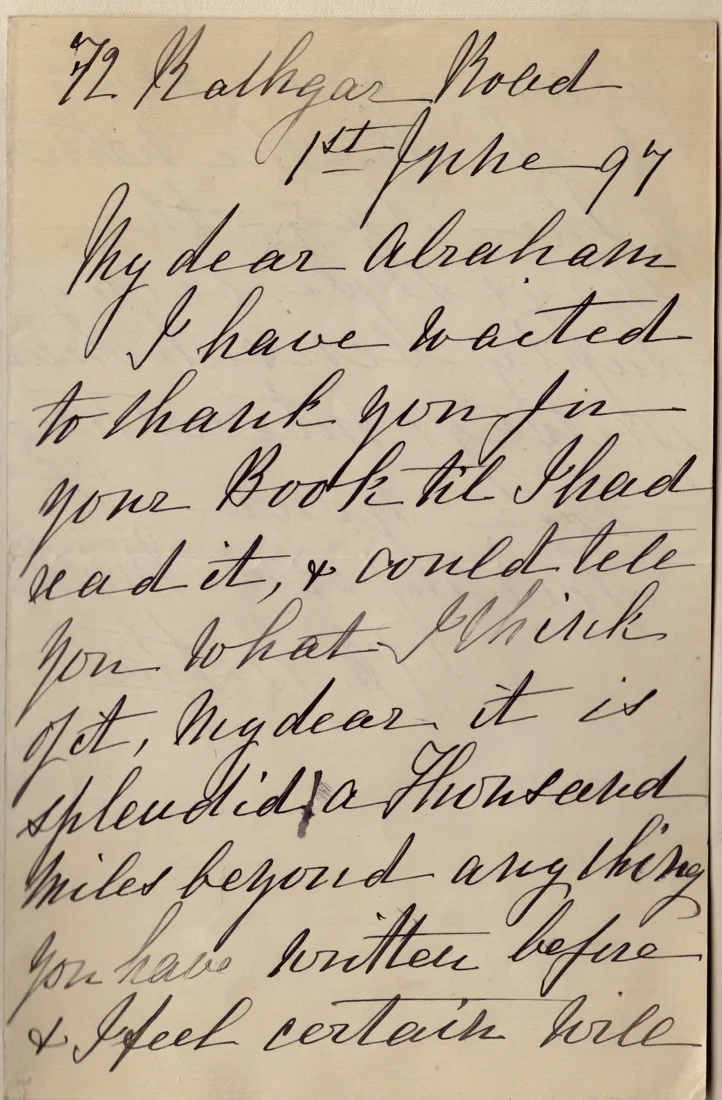
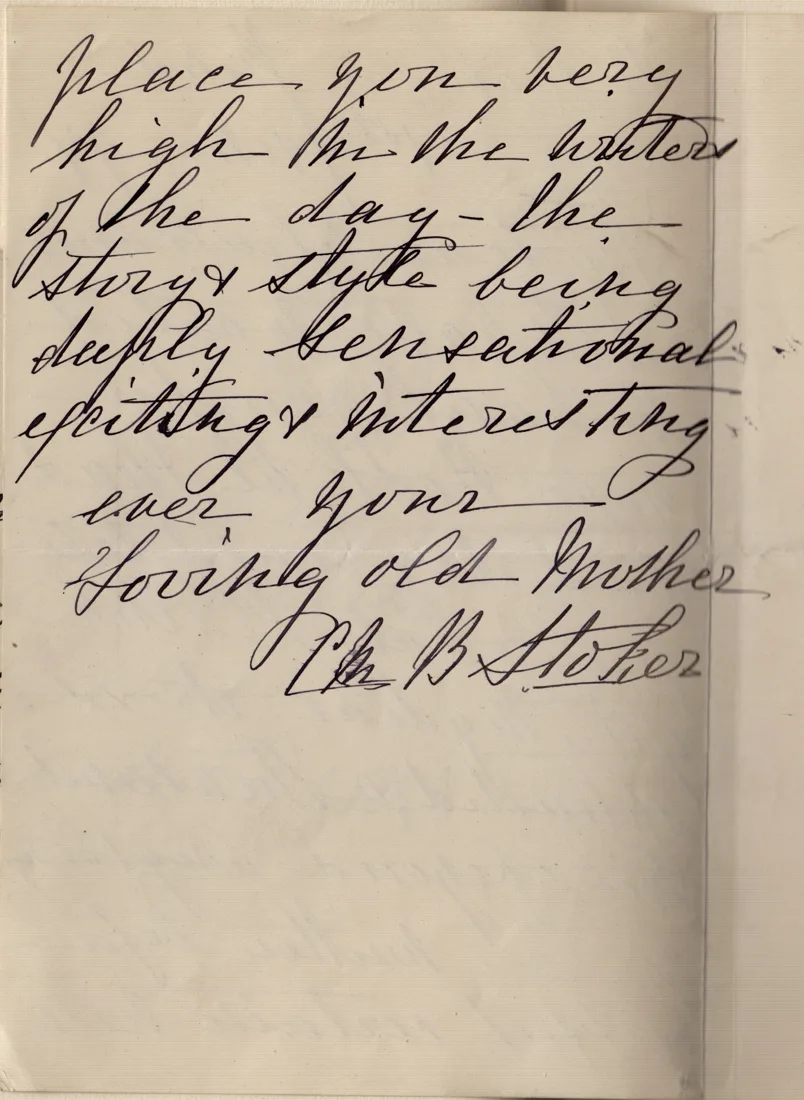
Charlotte Stoker, 1 June 1897. Bram’s mother begins, “My dear, it is splendid”. The surviving letter is a personal response to her son’s achievement. Read the manuscript and transcription; more about Charlotte as a reader.
Arthur Conan Doyle, 20 August 1897. The creator of Sherlock Holmes wrote to congratulate Bram:
My dear Bram Stoker
I am sure that you will not think it an impertinence if I write to tell you how very much I have enjoyed reading Dracula. I think it is the very best story of diablerie which I have read for many years. It is really wonderful how with so much exciting interest over so long a book there is never an anticlimax. It holds you from the very start and grows more and more engrossing until it is quite painfully vivid. The old Professor is most excellent and so are the two girls. I congratulate you with all my heart for having written so fine a book.
With all kindest remembrances to Mrs Bram Stoker and yourself
Yours very truly
A. Conan Doyle
Read the letter with its manuscript images and source notes.
The novel’s afterlife
Florence’s stewardship after Bram’s death helped bring his fiction to new audiences. Her story is told on Florence Stoker; the changing forms and images of the Count are explored on Dracula on stage and screen.
Dracula’s critical reputation developed over time. Later scholarship examined its sources, structure and cultural meanings, sometimes challenging familiar claims about the book’s origins. The Bibliography offers different starting points and distinguishes historically influential studies from current interpretations.
Translations and transformations
Powers of Darkness is part of the complicated early international history of Dracula. It is an Icelandic version of the novel, titled Makt myrkranna, serialised in the Reykjavík newspaper Fjallkonan from January 1900 to March 1901 and published as a book in 1901 under the name of Valdimar Ásmundsson. It presents itself as a translation, but it departs from Stoker’s English text in many ways. Some characters are renamed: Jonathan Harker becomes Thomas Harker, Mina becomes Wilma, and Lucy Westenra becomes Lucy Western. Harker’s stay at Castle Dracula takes up most of the book. There are also scenes that do not appear in the English novel, and the tone is darker and more explicit.
A Swedish version, Mörkrets makter (“Powers of Darkness”), had been serialised in newspapers in 1899–1900, and scholars have connected the two texts. The 1901 book also includes a preface, supposedly by Stoker, dated August 1898. It was largely overlooked until Richard Dalby translated it in 1986. Whether Stoker wrote it is still debated.
The relationship to the English novel, the publication history and the extent of the reworking have prompted substantial research. The Dutch scholar Hans Corneel de Roos recognised in 2014 that the Icelandic text was not a straightforward translation, and he led the team that produced the first English translation, Powers of Darkness: The Lost Version of Dracula (2017). Several explanations have been proposed. Some suggest that Valdimar adapted the novel himself, others that the text reflects an early draft of Dracula, and others that the Swedish version played a part. The Estate does not take a position on which is right.
Readers should therefore approach Powers of Darkness as a distinctive version with its own history, rather than assume it is a translation of the novel Bram published in 1897.
Read the digitised 1901 Icelandic edition · Find the 2017 English translation
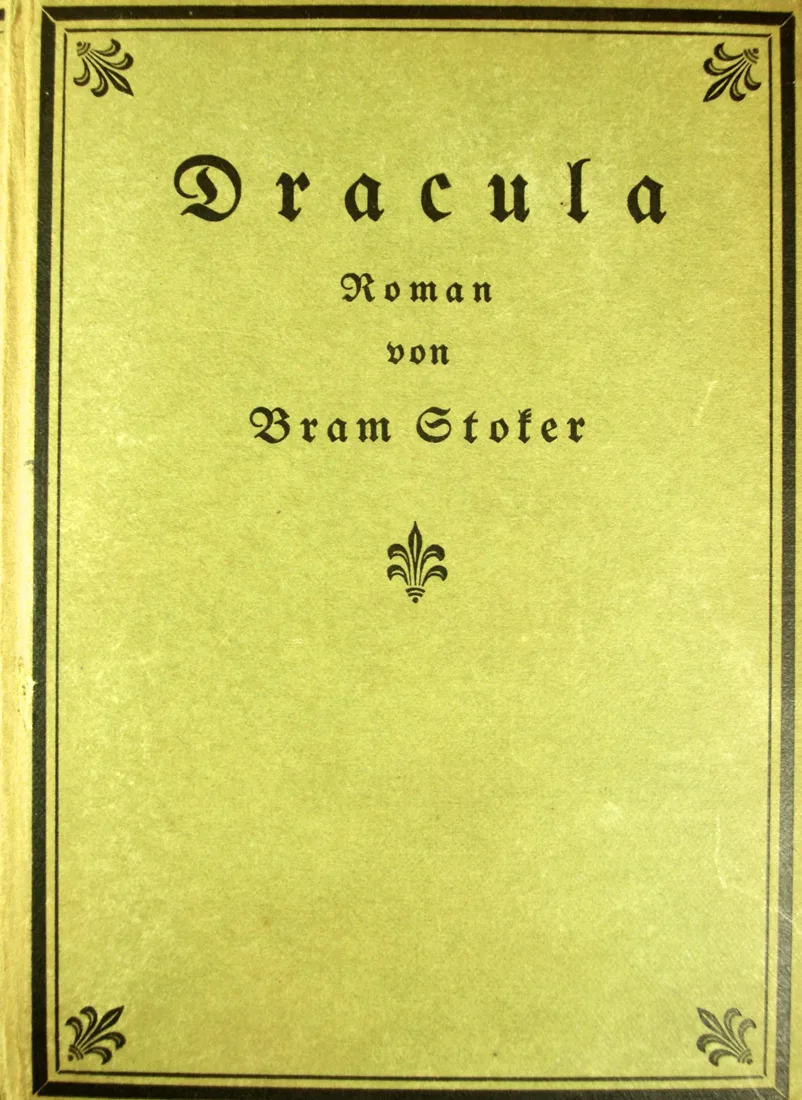
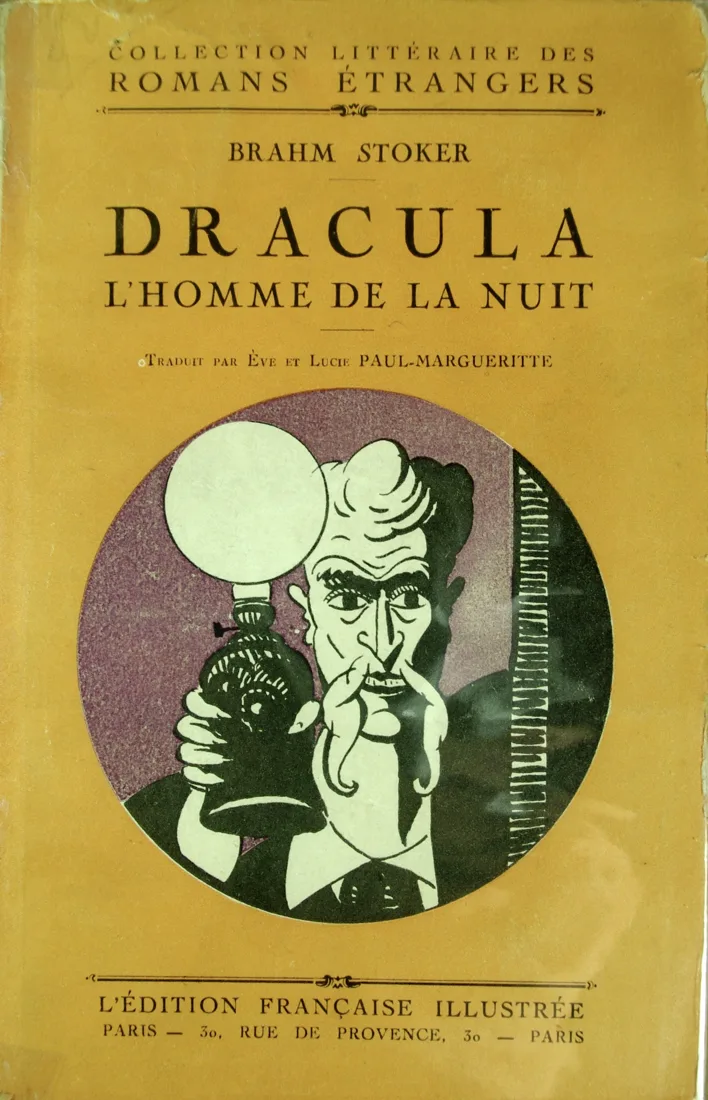
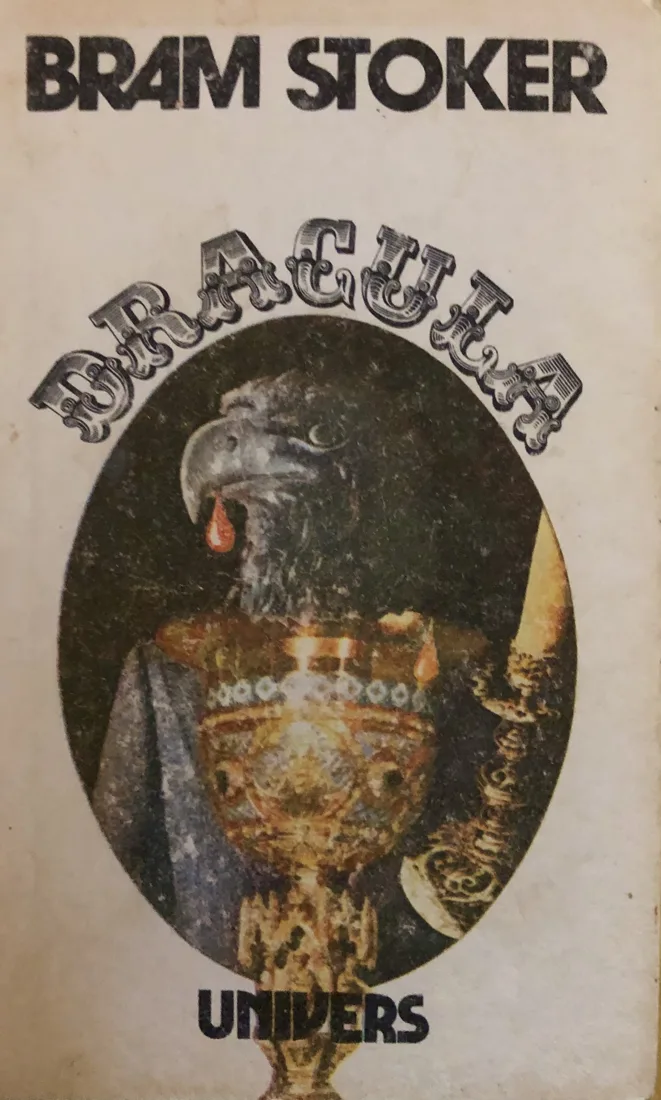
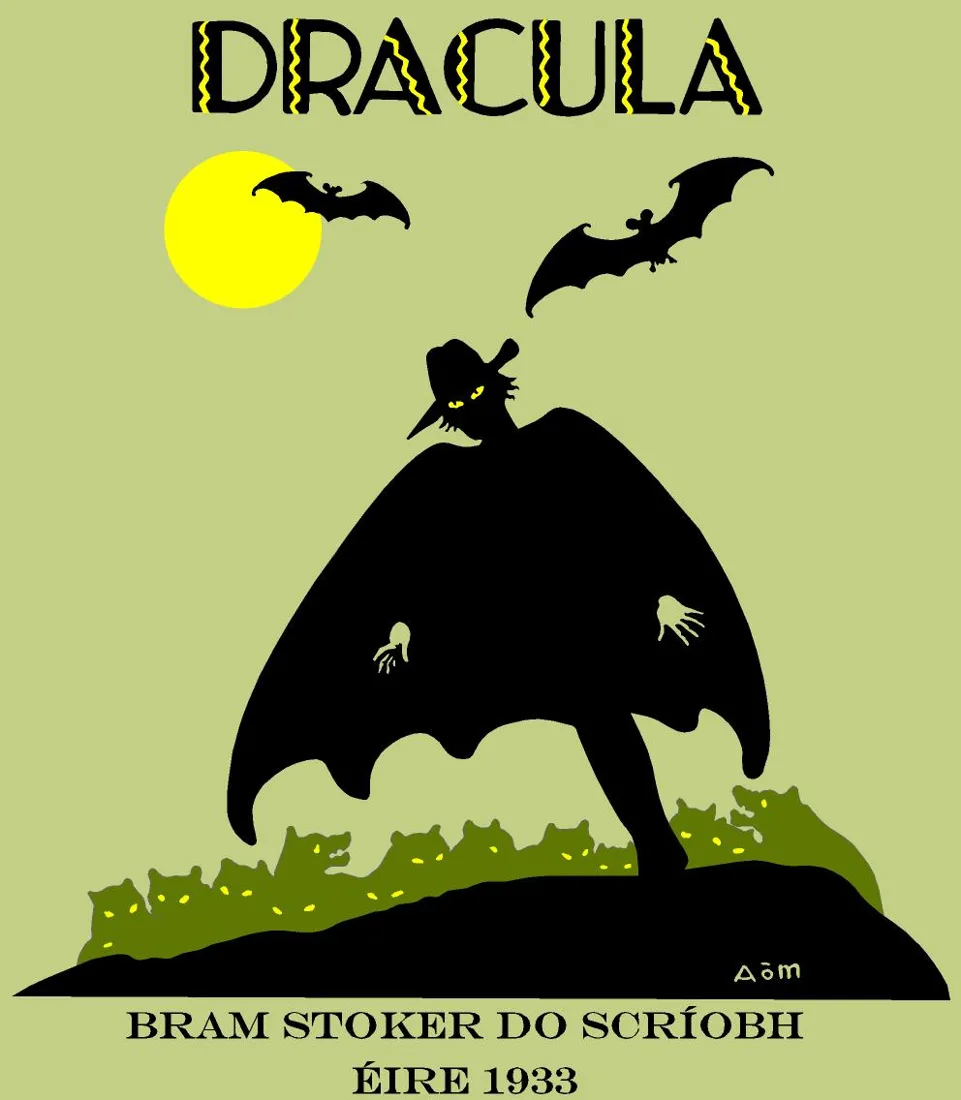
The covers of different editions also tell a visual story. Lettering, colour and illustration introduce the Count to new readers in different languages, sometimes giving the same novel a strikingly different identity.
Read Dracula in translation, with edition links and the authorship debate
Where the original materials are
| Item | Where it is |
|---|---|
| Working notes for Dracula | The Rosenbach Museum and Library, Philadelphia. For catalogue references, access and reproductions see Archives. A facsimile edited by Robert Eighteen-Bisang and Elizabeth Miller was published in 2008. |
| The Un-Dead typescript | Private collection. |
| Letter of 7 July 1897 to “My Dear Williams” mentioning Dracula | Leeds University Library Special Collections (MS 2330). |
| First edition with the author’s cuts for the 1901 abridgement | Private collection. |
Different readings at a glance
Critics offer different interpretations of the novel. These are interpretations to test against the text, rather than settled facts about Bram’s intentions.
Gender and sexuality. Phyllis Roth’s “Suddenly Sexual Women” (1977), Christopher Craft’s “Kiss Me with Those Red Lips” (1984) and Carol Senf’s “Stoker’s Response to the New Woman” (1982) offer influential readings of desire, gender and women’s changing roles. Later critics have challenged interpretations that reduce every vampire encounter to sexual repression.
Empire. Stephen Arata’s “The Occidental Tourist” (1990) connects the Count’s arrival in England with fears about imperial decline and invasion. The multinational group opposing him also complicates a simple English-versus-foreign reading.
Ireland. Critics including Joseph Valente, in Dracula’s Crypt (2002), explore the novel through Anglo-Irish history and identity. Such readings depend on historical parallels; the novel does not set any of its activities in Ireland.
Race and antisemitism. Jack Halberstam’s “Technologies of Monstrosity”, collected in Skin Shows (1995), considers how the monster concentrates racial and sexual stereotypes. Discussing this interpretation requires attention to the period’s prejudices and to the particular language of the novel.
Science and modernity. Jennifer Wicke’s “Vampiric Typewriting” (1992) focuses on the novel’s media and technologies. Daniel Pick’s “Terrors of the Night” (1988) relates it to nineteenth-century ideas of degeneration.
Economics. In “The Dialectic of Fear” (1982), the critic Franco Moretti reads Count Dracula as a figure for capitalism, a power that grows by draining the lives of others and keeps spreading. Consider what this reading explains well, such as the Count’s property deal and his endless hunger, and what it does not explain, such as his aristocratic background and the novel’s concerns with sexuality, religion and fear of outsiders.
A useful discussion weighs competing interpretations and identifies the passages supporting each one. The Bibliography offers further routes into the scholarship.
Dracula as a love story
Dracula is usually read as a horror novel, but love drives much of its plot. Lucy Westenra writes to Mina of “THREE proposals in one day”, from Dr John Seward, Quincey Morris and Arthur Holmwood, and half-jokes that a girl should be allowed to marry them all. When Lucy falls under the Count’s power, the men fight for her out of love, and it is Arthur who drives the stake. The novel calls it a “mercy-bearing stake” and says “high duty seemed to shine” in his face. Quincey’s death at the end repays that devotion: “It was worth for this to die”, he says, as Mina’s brow is seen to be clear of the Count’s mark.
The central pairing is Jonathan and Mina Harker. Mina practises shorthand and the typewriter so that she can be useful to Jonathan, and later she types out the journals and assembles the papers that let the group follow the Count. They marry abroad while Jonathan is recovering from his ordeal at the castle, and the novel ends with a note about their son, who shares his birthday with the day Quincey Morris died and carries the names of all the friends. Seen this way, the book sets faithful, practical love against the Count’s hunger.
The Count’s own feeling is harder to read. He lives alone in a ruined castle, with no servants, doing the housekeeping himself. The three young women at the castle tell him he has never loved; he answers, “Yes, I too can love”. Later he tells Mina she will be “flesh of my flesh; blood of my blood; kin of my kin”, and “my companion and my helper”. Whether that is love, appetite or domination is left open. In W. Parker’s essay on the complex legacy of Dracula, the novel is described as full of love stories, including both the courting of Lucy and the friends’ struggle to save the women’s souls.
Francis Ford Coppola’s Bram Stoker’s Dracula (1992) made the love story explicit. It gives the Count a lost wife, Elisabeta, whom he believes is reborn in Mina, and its tagline was “Love Never Dies”. Parker recalls being told at a dinner party that the best love story of all was how the Count became a vampire, which was the film’s opening but not the novel’s. He takes it as a sign of the influence of popular culture on Dracula’s legacy, and says that conflating the novel with the film is “an apt metaphor” for it.
Whether Bram intended a love story is another question. One can read the book as an affirmation of faithful love, as a story of dangerous desire, or as both. The Estate welcomes both readings of our ancestor’s work.
How Dracula came to be studied
Substantial early criticism of Dracula appears in Dorothy Scarborough’s The Supernatural in Modern English Fiction (1917), pp.163–165, and Edith Birkhead’s The Tale of Terror (1921), pp.173 and 225. Later studies included Bacil Kirtley’s “Dracula, the Monastic Chronicles and Slavic Folk-Lore” (1956), Harry Ludlam’s A Biography of Dracula: The Life Story of Bram Stoker (1962), and Richard Wasson’s “The Politics of Dracula” (1966). Read the longer critical history and its sources.
The 1970s brought a wider range of biographical, historical and theoretical studies. These examined the novel’s sources alongside questions of gender, sexuality, empire and belief. Later scholarship has revisited the evidence behind influential claims and continues to test competing interpretations.
Surviving letters, working notes and theatre papers let readers consider these interpretations alongside the evidence of Bram’s life. The readings above introduce several approaches; the Bibliography offers further starting points.
Editions and texts
The first British edition was published by Archibald Constable and Company in 1897. The first American book edition followed from Doubleday & McClure in New York in 1899. It should be identified separately when comparing wording or citing an edition.
Read the Smithsonian Libraries scan of the 1899 American edition. Its catalogue supplies the publication details and DOI 10.5479/sil.404927.39088006741904. For close textual comparison, use page images rather than assuming that every modern electronic text follows the same edition.
Florence published “Dracula’s Guest” in 1914, after Bram’s death, and described it as material removed from the novel. Whether it represents a deleted opening chapter in the form sometimes claimed remains debated. Read the story as a separately published text, and identify any modern edition that adds it to the novel.
Source references
Bram Stoker: life and writing – Trinity College Dublin · Dracula’s contemporary reception – John Edgar Browning, The Critical Feast · Powers of Darkness: the 2017 English translation – publisher’s record · “Kiss Me with Those Red Lips” – Christopher Craft, 1984 · “Stoker’s Response to the New Woman” – Carol Senf, 1982 · “The Occidental Tourist” – Stephen Arata, 1990 · “Technologies of Monstrosity” – Jack Halberstam, Skin Shows, 1995 · “Vampiric Typewriting” – Jennifer Wicke, 1992 · “Terrors of the Night” – Daniel Pick, 1988 · Dracula: the 1899 American edition – Smithsonian Libraries scan · Dracula’s Guest – Bram Stoker, Project Gutenberg edition
Continue studying
Studying Dracula – editions, characters, context, writing and revision.