Help us improve this website

work

Theatre and the Lyceum

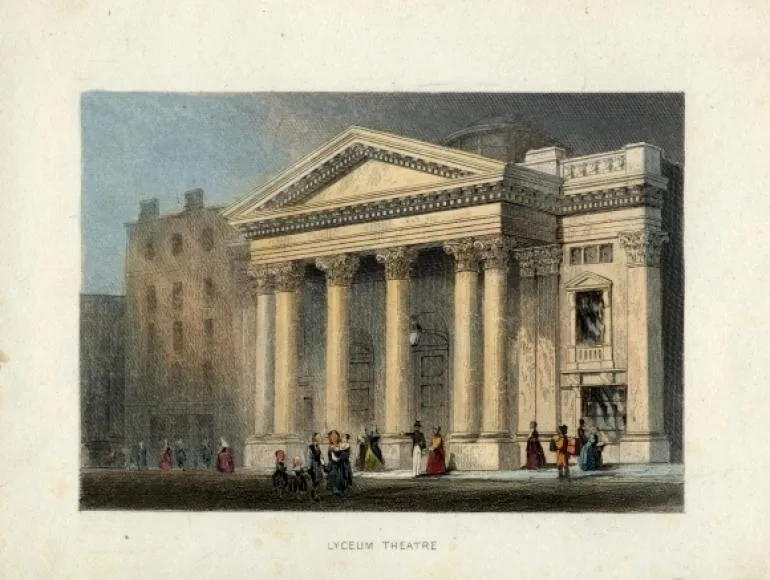
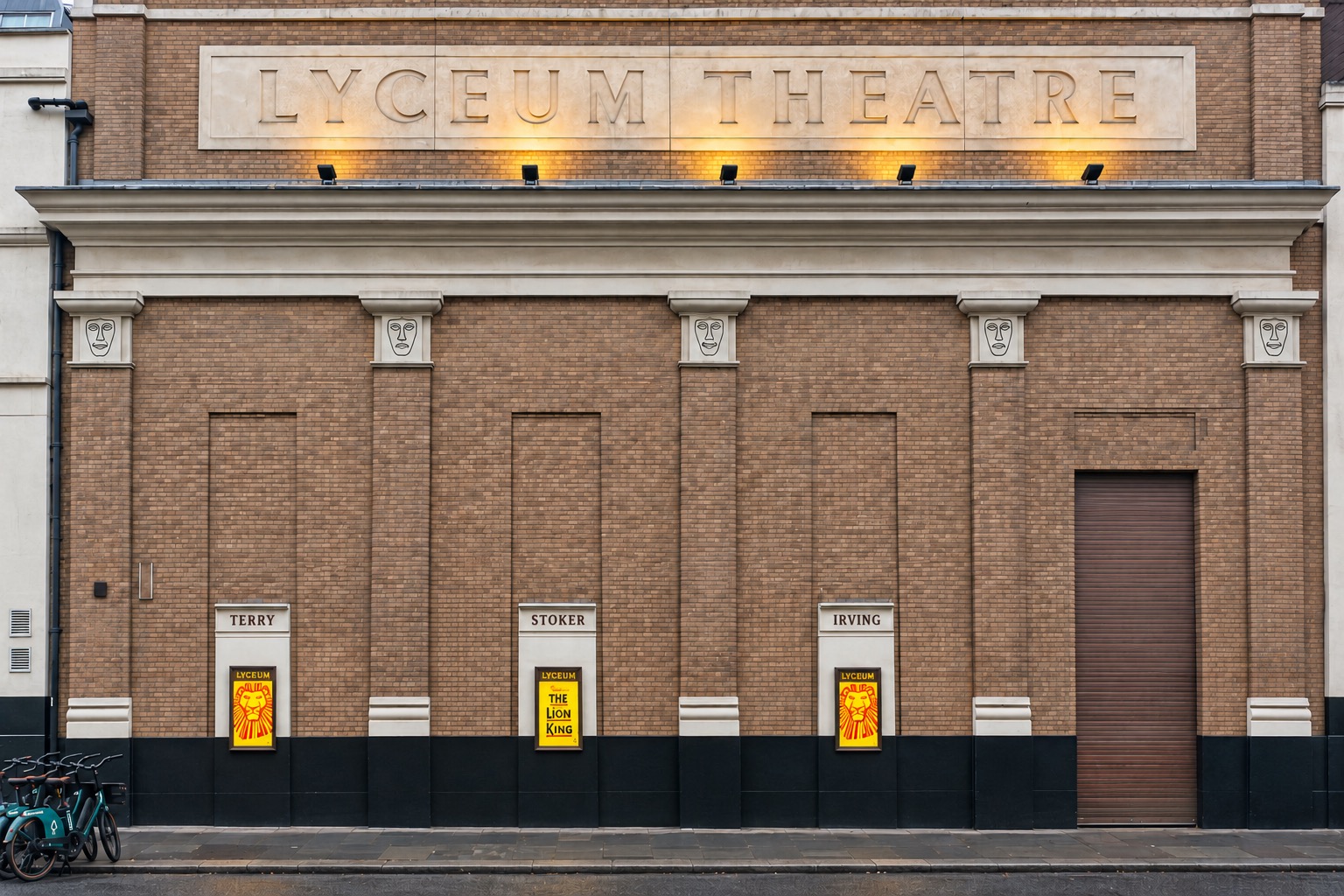
Working for Henry Irving was Bram’s principal occupation for 27 years, from 1878 until Irving’s death in 1905, and for most of that time Irving’s company was based at the Lyceum. In those years the Lyceum was one of the most fashionable theatres in London, and Bram was the man who made it run.

The Dublin critic

Bram’s Dublin theatre criticism led to the friendship with Irving that transformed his working life. See Biography for the review, dinner and move to London; here the focus is the company he helped run.

Making the Lyceum work

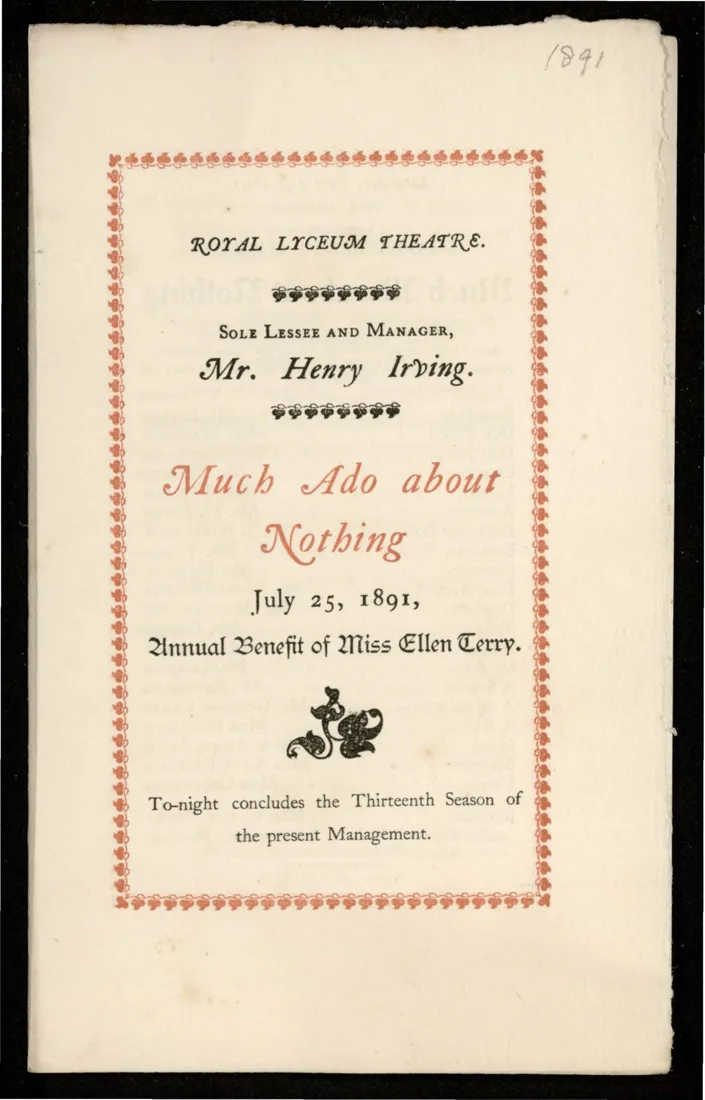
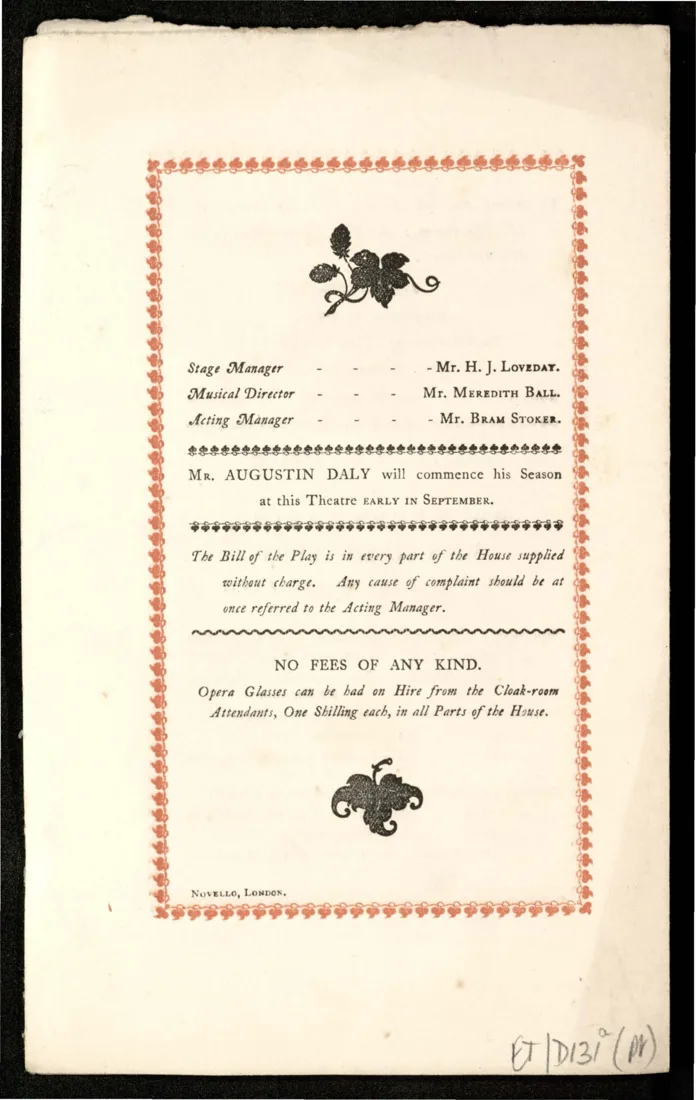
A Lyceum programme could put Bram’s name before the audience without putting him on the stage. The programme for Much Ado About Nothing on 25 July 1891 identifies him as Acting Manager. Behind that title lay the daily work of accounts, correspondence, arrangements for performers and the many practical decisions on which a London season depended. Archive programme record.

The surviving letters show him dealing with Irving’s business rather than merely accompanying a celebrated actor. Some were written on Lyceum paper; others followed the company on its American tours. They connect the theatre’s public achievements with a less visible working life of appointments, requests, explanations and decisions. Archive correspondence catalogue.

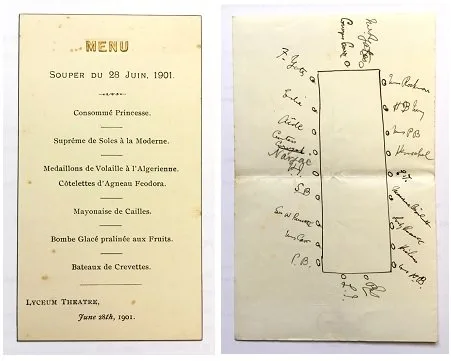
Hospitality was part of that work. Programmes, menus and invitations in the Bram Stoker Collection at the Shakespeare Birthplace Trust preserve the Lyceum’s social world as well as its performances. Suppers brought writers, artists and public figures together around the company. Bram’s position placed him at the meeting point between front of house, backstage and the people whose interest helped sustain the theatre. Archive collection account.

His own memoir gives that administrative life a more physical dimension. Rehearsal problems could call on his strength and ingenuity as well as his pen. For a scene in Romeo and Juliet he helped test ways in which an actor might carry a body; his brother George supplied a method drawn from wartime medical experience. The practical answer still had to look right on stage. Reading edition.

Bram continued working with Irving until the actor’s death in 1905, after Irving’s period in control of the Lyceum had ended. The distinction matters: a twenty-seven-year professional partnership was longer than one uninterrupted management of a single building. The archive lets us follow both the institution and the work that travelled beyond it. Reading edition.

Read about Bram’s work at the Lyceum.

Before the doors opened

Bram’s nightly routine included a check of the front-of-house staff before the Lyceum admitted its audience. Standing in the centre of the stalls, he called each person by name, including those working in the dress circle, upper circle and gallery. He then gave a loud call of “Open!” The routine had a practical purpose: staff would recognise his voice and authority if a fire required him to direct an evacuation.

Source: Audrey Anne Keith McIntosh, The Business Manager at Irving’s Lyceum (University of Glasgow, M.Litt thesis, 1991), p. 44. Read the thesis.

The American tours

Between 1883 and 1904 Bram organised eight Lyceum tours of North America. By his own estimate he spent more than four years in the USA and travelled over 50,000 miles by rail, visiting every major city. American newspapers credited much of Irving’s success to Bram, and he was welcomed into New York’s artistic and musical society. The organisation of each tour was a huge amount of work: Bram himself booked ferries, hotels, theatres and trains.

The 1895–96 tour provides an example. Based on The Theatre: A Monthly Review and Magazine, volume 26, 1 September 1895, the tour began in Montreal in September 1895 and ended in New York in May 1896. The route is shown on the map, with dots and a line marking the cities in the order printed in the schedule. The line is a schematic connection between cities, not a railway route.

US map · 1897

Tap a dot to read more.

More detail (January–May dates are in 1896):

  • September 16th to September 21st, Montreal Academy of Music
  • September 23rd to September 28th, Toronto Grand Opera House
  • September 30th to October 26th, Boston Tremont Theatre
  • October 28th to December 21st, New York Abbey’s Theatre
  • December 23rd to January 4th, Philadelphia Chestnut Street Opera House
  • January 6th to January 11th, Baltimore Academy of Music
  • January 13th to January 18th, Washington
  • January 20th to January 25th, Richmond, Charleston, Savannah and Atlanta
  • January 27th to February 1st, New Orleans Grand Opera House
  • February 3rd to February 8th, Memphis, Nashville and Louisville
  • February 10th to February 15th, St Louis Grand Opera House
  • February 17th to February 22nd, Cincinnati Grand Opera House
  • February 24th to March 21st, Chicago, Columbia Theatre
  • March 23rd to March 28th, Indianapolis and Detroit
  • March 30th to April 4th, Cleveland and Buffalo
  • April 6th to April 11th, Pittsburgh
  • April 13th to April 18th, Philadelphia, Chestnut Street Opera House
  • April 20th to April 25th, Boston, Tremont Theatre
  • April 27th to May 2nd, Providence, Worcester, Springfield, Hartford, and New Haven
  • May 4th to May 16th, New York Abbey’s Theatre

A company at work

Programmes, touring schedules, correspondence and supper menus preserve different sides of the Lyceum. On stage, the public saw Irving, Terry and the company’s productions. Behind them were the practical decisions about people, scenery, travel and money that made the performances possible.

The 1895–96 tour, for example, ran from Montreal in September to New York in May, taking in Toronto, Boston, Philadelphia, Washington, New Orleans, St Louis, Chicago and many smaller cities. The repertoire included Macbeth, The Merchant of Venice, Becket, Faust, The Bells and King Arthur.

The end of an era

Irving became the first actor to be knighted in 1895. But the Lyceum’s fortunes then declined: a fire destroyed its stored scenery in 1898, and in 1899 Irving handed the theatre to a syndicate. Irving died on tour in Bradford on 13 October 1905, and was the first person to be buried in Westminster Abbey after cremation.

Bram’s two-volume Personal Reminiscences of Henry Irving (1906) is still the fullest first-hand account of Irving’s life and work. Afterwards Bram managed the American baritone David Bispham’s production of The Vicar of Wakefield (1906) and wrote on theatre for the monthly reviews, including “The Censorship of Stage Plays” (Nineteenth Century and After, 1909) and “Americans as Actors” (Fortnightly Review, 1909).

Bram’s own stage work

  • Dracula: or The Un-Dead (1897), Bram’s stage version, read once at the Lyceum to secure copyright.
  • Miss Betty (1898) and The Mystery of the Sea (1902), also adapted by Bram for copyright readings.
  • Bram also wrote prologues, recitations and occasional pieces for Lyceum events.

Dracula comes home

Irving never staged Dracula, and Bram’s 1897 reading was its only performance at the Lyceum in his lifetime. Among the young actors who joined Irving’s company in 1899 was Hamilton Deane, who met Bram there and a quarter of a century later wrote the licensed stage version. See Dracula on stage and screen.

In 1939 Deane revived his play in London, this time playing the Count himself. It opened at the Winter Garden Theatre on 20 March and transferred to the Lyceum on 25 April, running there until 13 May 1939 – the year the old Lyceum closed its doors. Forty-two years after the copyright reading, Dracula returned to Bram’s theatre as a commercial production.

Read Bram’s and others’ theatre writing

“Americans as Actors”. In this 1909 essay for the Fortnightly Review, Bram draws on more than four years spent in the United States with Henry Irving, on eight tours between 1883 and 1904. He asks why a country with so many theatres still had too few native actors. He admires American workmen and their adaptability, but argues that the specialist habits and strenuous self-reliance that serve a nation well can stand in the way of the self-forgetful passion that great acting needs.

“Henry Irving’s Fight for Fame”. Written for Success Magazine in February 1906, not long after Irving’s death, this is Bram’s account of what made Irving’s career. His answer is tenacity of purpose: talent decides the direction, but only dogged persistence supplies the force. Bram follows Irving from a Cornish boyhood and a London clerk’s desk to the knighthood of 1895 and burial in Westminster Abbey.

Reviews of Personal Reminiscences. Bram’s two-volume Personal Reminiscences of Henry Irving appeared in 1906. These contemporary reviews, among them one from the New York magazine The Theatre in December 1906, welcome it as the inside account of Irving’s business manager. They praise the energy and generosity it shows in Irving and quote its anecdotes, from Irving’s finances to Tennyson and Gounod, while noting that some detail could have been left out.

“Henry Irving: Another View”. The actor Max Montesole, who worked briefly at the Lyceum, remembered Irving in The West Australian in 1934 as the head of his profession but intolerant, and wholly absorbed in the theatre. He wondered whether vanity sometimes lay behind Irving’s perfectionism. His recollections are a counterpoint to Bram’s admiring memoir, and are best read alongside it.

Historic theatre cuttings

Mr Bram Stoker on theatres

West Gippsland Gazette · 11 January 1910

MR. BRAM STOKER ON THEATRES

Mr. Bram Stoker, Irving’s late manager, writes on “Deadheads” in the “Fortnightly Review” for October. He makes the interesting calculation that out of London’s 6 1/2 million residents that there are 1,300,000 playgoers, with an average yearly attendance at the theatre of eight performances, making 10,000,000 attendances a year. To these he adds 50,000 transient visitors to London, who probably see two plays a week, making a yearly attendance of 5,000,000 performances. These added together make 15,000,000 persons who attend a performance. In London, Mr. Stoker says, there are fifty-eight theatres. Giving these six performances a week and fifty weeks, he arrives at a yearly total of 20,000 performances. This gives for all the theatres an average audience of some 754 paying persons.

West Gippsland Gazette , Warragul, Vic. Australia Tues. Jan 11, 1910

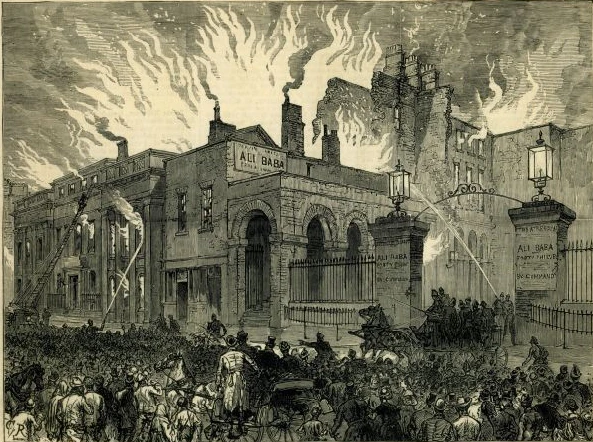
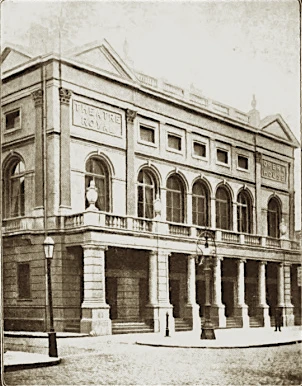
How the Dublin theatre was burned

The London Review; reproduced by Fire Engineering

How the Dublin Theatre Was Burned, from The London Review and FireEngineering.com

The destruction of the Dublin theatre is an instance where every precaution that had been taken to provide against fire were rendered of no account by the carelessness of a workman. The particulars that follow we glean from The London Review : The Dublin Theatre Royal was destroyed by fire on February 9, 1880, at mid-day; the manager, Mr. Egerton, losing his life in an endeavor to check the flames. Through the inquest on the remains of Mr. Egerton we have arrived at the facts connected with the origin of the fire, and they are instructive. The arrangements of this theatre were excellent in every way for extinction or prevention of fires ; candles were not allowed in the place; for the management of the gas there was a gas engineer; for the protection of property, and the safety of the public, there were hydrants and hose inside the building, sufficient to command the premises. As a further protection, one of the Firemen of the corporation brigade was on duty during each night’s performance, and remained all night in possession of the building until relieved in the morning by the hall porter of the stage entrance. Finally, there were mops and buckets ready for immediate use; the lessee was morbidly afraid of fire, and the Chief of the brigade, Captain Ingram, made a practice of frequently going all over the house in front and behind.

Here comes the irony of fate. The theatre was burned down at mid-day whilst being got ready for a charitable object – the fund for the relief of the distressed in Ireland ; and Her Grace the Duchess of Marlborough was to attend, supporting by her presence any effort to increase such funds. The box for the Lady-Lieutenant had to be properly decorated with hangings; and in order to place hangings a gas bracket had to be removed which should afterwards be screwed on again. In this instance an upholsterer did the work ; the gas-bracket was removed and the hangings were put up : the gas engineer was not apprised of the work wanted in his department, and no bracket was screwed on again ; the door of the box was locked and probably the gas not on. In order to light up, the meters were turned on, and on coming to the box of the Lord-Lieutenant the lighter-up perceived the smell of gas ; he got over the front with his spirit-lighter and set fire to the hangings and to the insidious current of escaping gas. This was a day performance and there were no Firemen on the premises, no Chief of brigade making his rounds. It was noon, and no men were in the building ; it wanted an hour of the opening of the doors and no one was at his post. Every precaution suggested by skill or experience was nullified. The theatre burned itself down at noonday, when every precaution had been taken to prevent it from catching fire at night; and the only life lost was that of the one person who had control over all detail, animate and inanimate, inside the theatre. The building had an existence of sixty years.

My Table-cloths: a few reminiscences

Ethel Alec-Tweedie · George H. Doran Company · 1916

My Table-cloths; a Few Reminiscences

Bram Stoker, that delightful, jovial Irish gentleman, who was for so many years Irving’s right-hand man, wrote to me soon after the great actor’s death:

“Irving had so mastered his individuality – crushed it, if you will – that some of his remorseless self-command was bound to have effect on others who came within the sphere of his work. I remember an incident which much struck me in this connection. We had had several important business dealings with a man of some ability but with a ‘get-rich-quick’ weakness. After a somewhat painful interview between the three of us, the stranger went away. We two being left alone, Irving said to me:

“’ I have made up my mind to tell him what I think of him.’

“Much as I valued and respected Irving’s judgment of character, I thought it wise to say:

“’ May you not be mistaken? As yet we have no proof of any wrongdoing – nothing but a suspicion, however just it may be.’

“’ My dear fellow, this is no mere suspicion with me: I know.’

“’ How on earth can you know?’

“’ Because,’ Irving answered, with one of his illuminating smiles, ’ I have played too many villains not to know the heart of one. It seems to me that I can look through that man as if he were glass. He is a crook.’

“Surely enough, though we never had any proof that might be considered legal, all of us who were aware of his transactions had finally, from many unmistakable indications, to agree with our chief. I give this as an illustration of the way characters act and react on each other. Irving the man was endowed with a trusting simplicity of character almost without flaw; Irving the artist, who had had to study human nature, had learned its sad truths so thoroughly that they had bitten deep into his own being.”

It was rumoured that Irving’s production of Henry VIII. a sumptuous play, cost £16,000 to mount, but none of his great costume plays ever cost more than from £3,000 to £10,000 each. Yet, though artistic effect and magnificent pictures were his unceasing cult, nothing in the way of detail was ever too small for his notice. He was completely wrapped up in his work. On the stage nothing mattered to him but the play.

“I remember,” Bram Stoker once told me, “on the first night of his playing Othello with Edwin Booth, he found his throat parched and his powers of voice and articulation consequently crippled. He was always a bad first nighter, for with the responsibility of the play as well as his own work as an actor, such an occasion was apt to strain even his nerves. In one of the great scenes I heard him tell one of the stage workers to bring him some water – quick. The man set off for the dressing-room, but Irving called him back and told him to get it from one of the fire plugs which were on the stage.

“’ Don’t wait for a glass,’ he said, ’ bring it in anything you can lay your hands on.’

“The man filled a jam-pot which he had found somewhere or other. When Irving had drunk and his voice was restored, the lady playing with him, who was rather a dainty creature, said:

“’ Oh, how can you drink such water and out of such a pot?’

“To which he at once answered:

“’ If it would help the play – and I could get nothing else – I would drink the slops.’

“It was part of his belief – on which all his work was based – that an actor should, whilst on the stage, preserve his self-mastery and suffer whatever danger or pain might be involved. On one occasion when a lime light tank under the stage exploded and actually lifted part of the stage, not for a moment did Irving lose the thread of his speech, nor did his voice falter, nor his face change colour. In New York one evening, when he was playing Hamlet, one of the spirit torches used for the scene got overheated, and the flaming spirit overflowed and set the draperies on fire. In an instant there would have been a panic; the people were rising in their seats in preparation for a stampede; but he never even looked round. He appeared and spoke as though the matter was no concern of his – or of anyone else. The men and women sank back into their seats; danger was averted. The only recognition of the incident was in the heartiness and prolongation of the applause which greeted him when he had to take an extra call before the curtain at the end of the act.”

Of lesser occasions of self-control there were numerous instances, for the working of a great play in a big theatre affords many contretemps. Once in Faust he was carried up almost out of sight by the drop curtain catching his Mephistopheles’ cloak. He calmly waited till the curtain was lowered again from the prompt sufficiently to allow his being seized by the anxiously waiting carpenters and placed in safety on his feet.

Personally, I agree with the American critic who said: “I do not consider Irving a great actor, but he was the greatest dramatic artist I ever saw.”

It is said that Irving found the part of King Lear the most physically trying in his whole repertory. After ten consecutive weeks it completely broke down his strength, and thenceforward he always spoke of it as the one part in Shakespeare which could not be played six times a week with impunity. He recalled a curious experience in connection with the part.

“As I stood in the wings on the first night before Lear makes his entrance,” he related to me, “ I had a sudden idea which revolutionized the impersonation and launched me into an experience unattempted at rehearsals. I at once tried to combine the weakness of senility with the tempest of passion, but soon found as I proceeded that this was an impossible task. One should never alter a scheme of performance at the last moment. Stage art is too serious to take risks.”

Henry Irving once had the unique experience of performing at Archbishop’s House, Westminster. The play was Becket, and an invitation was extended to him by Cardinal Vaughan to give a reading at his official residence. The invitation was accepted, and Sir Henry Irving read – or rather acted – Tennyson’s best play to a select audience of clergy, peers, and representative laymen, presided over by the Cardinal himself.

His love of animals, and also of children, was one of Irving’s pleasantest characteristics.

“Always since I knew him,” Bram Stoker once said to me, “ he had constantly by him a friend in the shape of a dog or a cat. From the time of taking the Lyceum into his own hands he had two dog friends, Trin and Fussy. Trin, a rough terrier, had been given to him by the Baroness Burdett-Coutts, and the little creature repaid the great manager’s affection with a whole-souled devotion and shared his life day and night, never being absent from him. When Trin died, after some years of companionship, Ellen Terry replaced him with Fussy, a fox terrier. He had been picked out of a litter by Fred Archer, the great jockey, who diagnosed his character thus: ‘He is absolutely faithful and you cannot lose him.’ Some years afterwards this judgment was proved to be sound. In one of his journeys to America, where Irving was going with his company for a tour, by some mischance Fussy got lost at Southampton, and the party had to start without him. All sorts of persons helped to look for the little dog, or for traces of him, in vain. But some three or four days later Fussy was found one morning outside the door of Irving’s rooms in London. He was weak and famished. His nails were worn down, and his paws covered with coagulated blood. He had found his way alone from Southampton to Bond Street.

“Fussy was killed in Manchester years afterwards by falling from the mezzanine floor to the cellar of the Theatre Royal. I believe, myself, he must have committed suicide. He was very old for a dog, he had rheumatism, and for him all pleasures had passed, and all joys save being with the master whom he loved and to whom he was so devoted. Irving was inconsolable, and for a time he chose no other familiar pet. When he got back to London, however, he was himself adopted by a cat. This was also a clever creature who knew how to control its own destiny. It strayed into the theatre one day, and was placed on the staff. That very evening of Irving’s return from his tour, on entering his dressing-room he saw a big grey cat sitting – of all places – on the pincushion on his table. She at once went up to him, purring, and from that time she attached herself to him as her own.”

Sir Henry was cremated by his own special desire. After this had been done it was suddenly decided that he should be buried in Westminster Abbey – an honour which the nation wished to bestow on the greatest theatrical manager and play producer of his day. When the authorities at Westminster Abbey discovered that this comedian – for he was far finer in comedy than in tragedy – had been cremated they were aghast. Somewhere in the archives of the Abbey there is a direction that “the corpse should be decorously borne into the church,” and so on.

There was no corpse. It had been reduced to white ashes and was reposing in a beautiful casket.

What was to be done? All sorts of cogitations took place. There was no precedent to go upon; nobody liked to take the initiative; and for a couple of days it seemed as if Henry Irving could not be buried there after all. Lo, some wiseacre hit upon an excellent device.

“Let us have a small coffin,” he said,” let the ashes be placed inside; let a cloth cover the top, and let the pallbearers hold its ends. That will meet the requirements of the situation.“

Accordingly, Irving’s remains were buried in a miniature coffin in Westminster Abbey. His were the first cremated ashes to repose in that noble pile, and although many people were horrified for the moment, the ultimate result was a complete reversal of the attitude of the Abbey authorities towards cremation. Some seven years later it was decided that no further burial should take place there unless the body had previously been reduced to ashes. For long the only woman in the Council of the Cremation Society of England, I have naturally a strong interest in cremation – inherited, no doubt, for Sir Henry Thompson was an old friend of my father, and when Sir Henry started the Cremation Society in 1874, my father was one of the first people to write and preach its doctrines.

A striking tribute at Irving’s funeral was the wreath sent by Queen Alexandra. The empty catafalque, beside which I was sitting with Sir Francis Burnand under the lantern, was covered with purple cloth, surrounded by tall brass candlesticks with long tapers burning. At the foot rested a large cross of Madonna lilies and libes-of-the-valley, bearing the inscription:

“Sir Henry Irving, with deepest regrets, from the Queen.

‘Into Thy hands, O Lord, Into Thy hands.’”

These were the last words which, as Becket, he ever spoke on the stage.

By Mrs. Alec-Tweedie (Ethel), George H. Doran Company, 1916 Great Britain- 320 pages

Bram Stoker and the Lyceum Theatre in America

Paul Murray, From the Shadow of Dracula

Bram Stoker and the Lyceum Theatre in America

Stoker estimated that, between 1883 and 1904, he spent more than four years in the USA on eight theatrical tours with the Lyceum, during which they visited every great town in the Union. Involving travel of more than fifty thousand miles on American railways, these tours became something of a fix for the Lyceum’s wider difficulties, with the profits being used to subsidise its London activities, although the mushrooming of expenses which so afflicted Irving as time went on also reduced his net takings in America. The Americans themselves credited much of Irving’s success in the United States to Stoker, no doubt reflecting, to some extent at least, his superb media-handling skills... In the 1890s, the New York Commercial Advertiser declared that ‘Bram Stoker, manager for Henry Irving, is rapidly achieving social prominence in this city. He is an eminently good-natured gentleman and handsome, and has received a cordial welcome in New York’s highest musical and artistic circles.’

From Paul Murray’s From the Shadow of Dracula :

Today in America: studies for the Old World and the New

Joseph Hatton · Harper & Bros. · 1881

Today in America: Studies for the Old World and the New

……. While controlled by good judgment and great thoughtfulness, Mr. Irving’s management is lavish in every department. He pays the highest salaries in London. His chiefs of departments are skilled and experienced men. Expense is no consideration where an outlay is considered desirable. His orchestra is the best we have; his theatre the most comfortable. When Mr. Gladstone went behind the scenes on the first night of “The Cup” he was introduced to Mr. Bram Stoker, Mr. Irving’s chancellor of the exchequer. “And do you find that all these great expenses yield you a proportionate return?” asked Queen Victoria’s Chancellor of the Exchequer. “We do,” was Stoker’s prompt reply, and he gave the Premier some interesting financial examples in point. Mr. Gladstone was much interested in the figures. Indeed, it may be said for the Premier that everything interests him. There is not a more versatile mind in the empire.

By Joseph Hatton, Harper & Bros. 1881

The American Audience

Henry Irving and Bram Stoker · The Fortnightly Review · 1 February 1885

An example of what was a major part of Bram’s Lyceum work – ghostwriting for his boss. Read “The American Audience” in full.

What is the difference between and English and an American audience? That is a question which has frequently been put to me, and which I have always found it difficult to answer. The point of dissimilarity are simply those arising from people of a common origin living under conditions often widely different. It is, therefore, only possible for me to indicate such traits in the bearing of the American playgoer as have come under my personal notice, and impressed me with a sense of unfamiliarity.

Excerpt from “The American Audience,” by Henry Irving and Bram Stoker. Published under Irving’s name in The Fortnightly Review, February 1, 1885.

Americans as Actors

Bram Stoker · Fortnightly Review 91 · 1 February 1909

Excerpt from Bram Stoker’s article, “Americans as Actors.” Read “Americans as Actors” in full

If we wish to understand the idiosyncrasies of American character and life sufficiently to make some kind of forecast of possibilities of the future, we must primarily have a truthful estimate of the present. The United States of America, as it exists to-day, is a nation of specialists. This does not imply that each individual deliberately sets himself or herself to a chosen task at the beginning of life, and follows it on to the logical end. Rather does it refer to the conclusions of work and life; a sort of survival of the fittest for special endeavour, each adapting himself to special needs and following the path on which he has begun, with evergrowing ardour as new possibilities develop themselves.

“Americans as Actors”, Fortnightly Review 91, 1 February 1909

More pictures

Browse more theatre photographs.

Productions and research records

ProductionPeriod or recordResearch route
HamletIrving and Terry’s Lyceum association began in 1878.Programme and correspondence catalogue
The Cup1881; Bram’s account describes Gladstone’s visit.Read the existing account
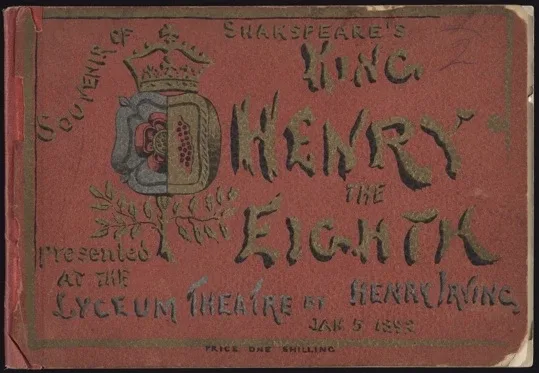
Henry VIIISee the souvenir of the 1892 production above.See the contemporary programme
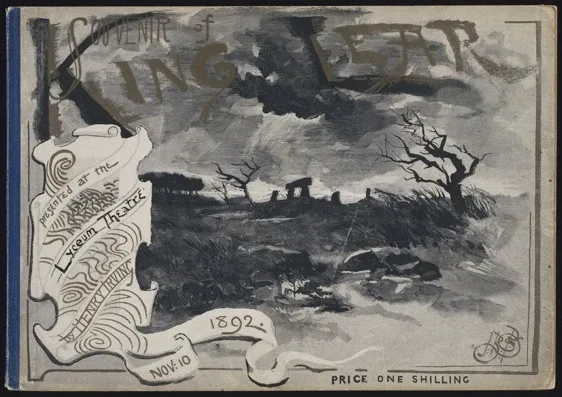
King Lear10 November 1892 programme reproduced below.See the contemporary programme
North American touring repertoireThe documented 1895–96 schedule includes Macbeth, The Merchant of Venice, Becket, Faust, The Bells and King Arthur.Read the schedule and its publication details

The Ellen Terry and Edith Craig Database identifies programme, letter and production records, and where they are held. The Irving Society provides another research route. Ask the holding institution for permission before reproducing a programme or archive image.

The Lyceum repertoire in Bram’s account

Chapter VII of Bram’s Personal Reminiscences of Henry Irving lists more than forty productions during Irving’s management. The selection includes:

GroupPlays
ShakespeareHamlet; The Merchant of Venice; Othello; Romeo and Juliet; Much Ado About Nothing; Twelfth Night; Macbeth; Henry VIII; King Lear; Cymbeline; Richard III. Coriolanus belonged to the later Lyceum Company agreement.
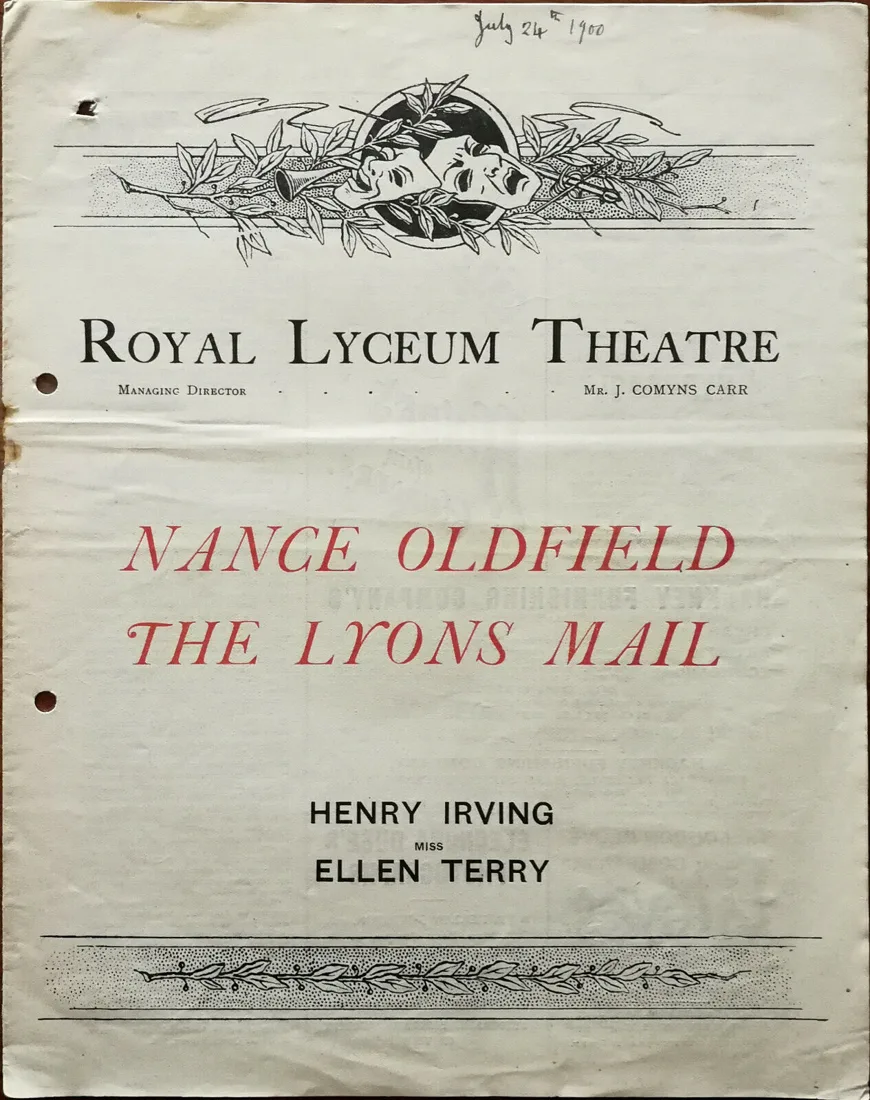
Earlier Irving successes revivedEugene Aram; Richelieu; Louis XI; The Lyons Mail; Charles I; The Bells.
Other established playsThe Lady of Lyons; The Iron Chest; The Corsican Brothers; The Belle’s Stratagem; Two Roses; Olivia; The Dead Heart; Robert Macaire.
New productions and reworkingsFaust; Werner; Ravenswood; Iolanthe; The Cup; The Amber Heart; Becket; King Arthur; Madame Sans-Gêne; Peter the Great; The Medicine Man; Robespierre; Waterloo; Nance Oldfield; Don Quixote.

This list follows Bram’s retrospective account. A revival, a first Lyceum performance and a touring performance are different events; performance totals should be checked against a dated programme or run record before comparison.

North American touring records

Date or seasonRecord
1883–84First tour. Bram describes the opening reception for The Bells in New York on 29 October 1883.
1884–85Second tour, identified by Bram alongside the first in his account of studying American life.
1895–96The published itinerary reproduced on this page begins in Montreal and continues through Toronto, Boston and other North American cities.
25 March 1904Bram identifies Irving’s American farewell at the Harlem Opera House.

Read Bram’s account. These dated records provide anchors for the touring history; programmes and itineraries establish the details of each season.

Sources

Folger: Stoker’s letters on Irving’s business, 1891–1903 – Folger Shakespeare Library, record 227056, Stoker’s letters concerning Irving’s business, 1891–1903.

Bram Stoker, Personal Reminiscences of Henry Irving – Bram Stoker, Personal Reminiscences of Henry Irving (1906), volume I, pp.96–98 for George’s carrying demonstration; Project Gutenberg 68779.

Ellen Terry and Edith Craig Database: Much Ado programme, 25 July 1891, ET-D131a – Much Ado About Nothing, Lyceum Theatre, 25 July 1891, ET-D131a; Ellen Terry and Edith Craig Database, record 7798.

SBT: Bram Stoker collection, correspondence and Lyceum ephemera – Shakespeare Birthplace Trust, Bram Stoker Collection: correspondence and Lyceum ephemera.

Cadbury Research Library: the 1927 transfers and 1939 revival

Paul Murray: Hamilton Deane, The Green Book 20 (2022)

Michael Kilgarriff: Henry Irving and Bram Stoker: A Working Relationship – an Irving Society essay, available as an archived PDF.

Source references

The Business Manager at Irving’s Lyceum – Audrey Anne Keith McIntosh, M.Litt thesis, 1991 · Ellen Terry and Edith Craig – programme and correspondence catalogue · Henry Irving research resources – The Irving Society