
life
Bram’s siblings and descendants
Bram was the third of seven children of Abraham Stoker and Charlotte Thornley. His six siblings are introduced below in order of age, followed by his son Noel and the family nurse Ellen Crone. Their lives connect the family with medicine, art, public service and the theatre.
William Thornley Stoker
6 March 1845–1 June 1912
Bram’s eldest brother, usually known as Thornley, became a leading Dublin surgeon. He studied medicine at Queen’s College, Galway, graduating in 1866, and combined surgical practice with teaching and research. He served as President of the Royal College of Surgeons in Ireland from 1894 to 1896 and was knighted in 1895. He was created a baronet in 1911.
Thornley also took an active interest in the arts, serving as a governor of the National Gallery of Ireland and supporting the Royal Hibernian Academy. He and his wife Emily lived at Ely House, a Georgian residence near St Stephen’s Green in Dublin. Thornley and Emily moved in Dublin’s artistic, literary and medical circles, which connected several members of the family. Thornley collected art, furniture and antiques.
Thornley’s medical knowledge offers a context for Renfield’s surgery and Lucy Westenra’s blood transfusions in Dracula. Family accounts associate him with Bram’s interest in contemporary medicine, although this does not establish that Van Helsing was a portrait of Thornley.
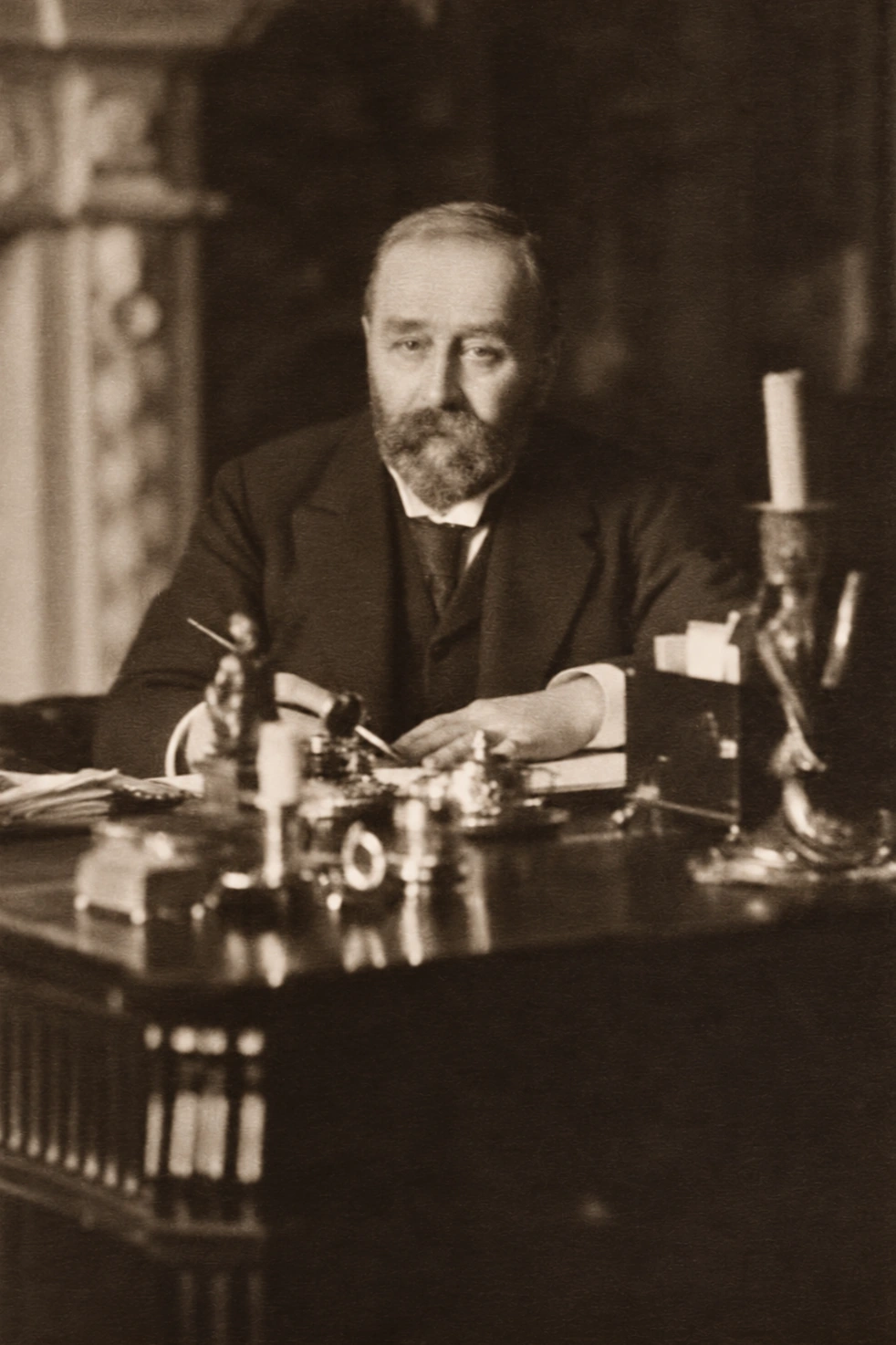
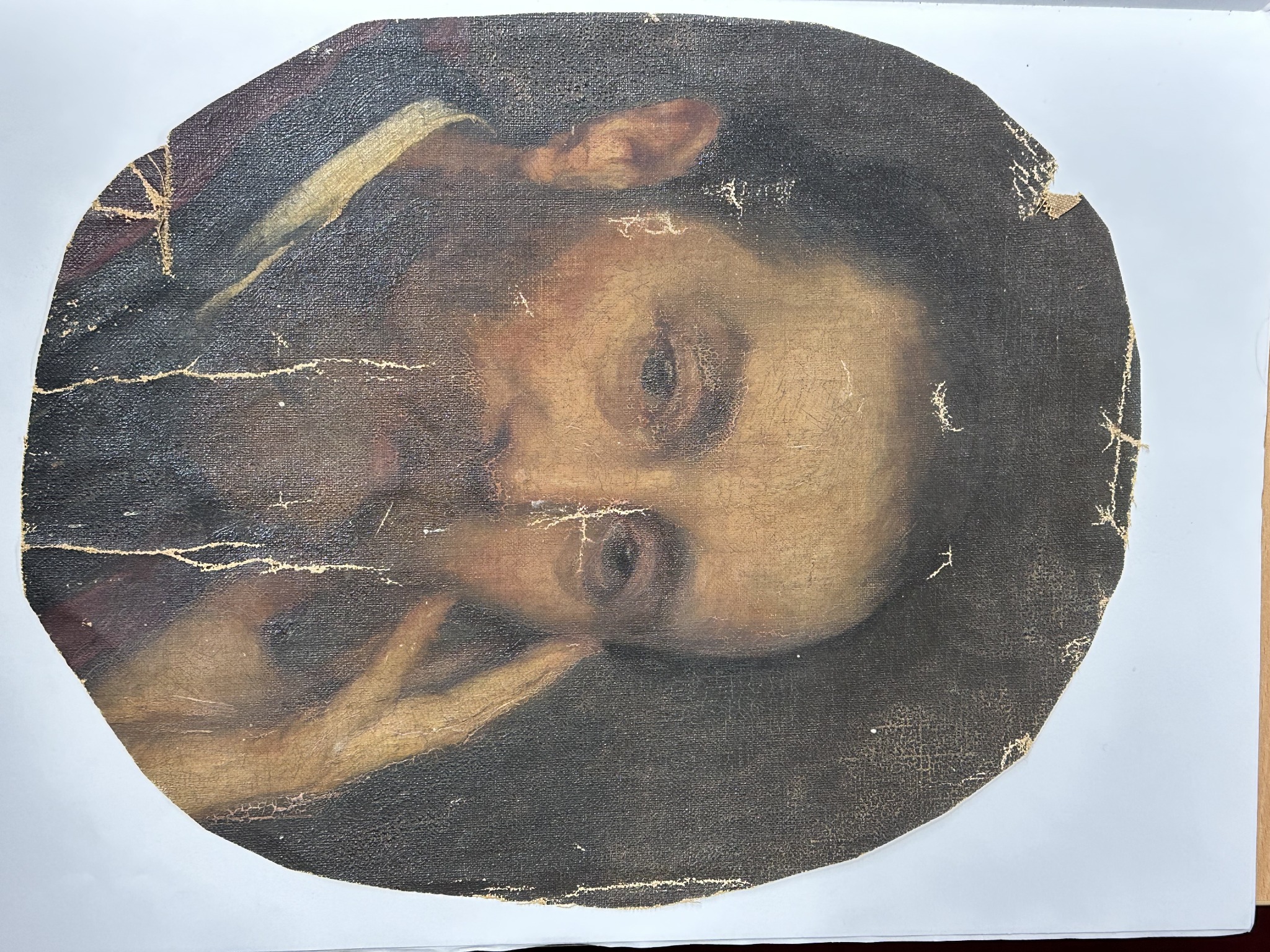
Read more details of Thornley’s family record and see copies of historical documents.
Charlotte Matilda Stoker
9 June 1846–22 March 1920
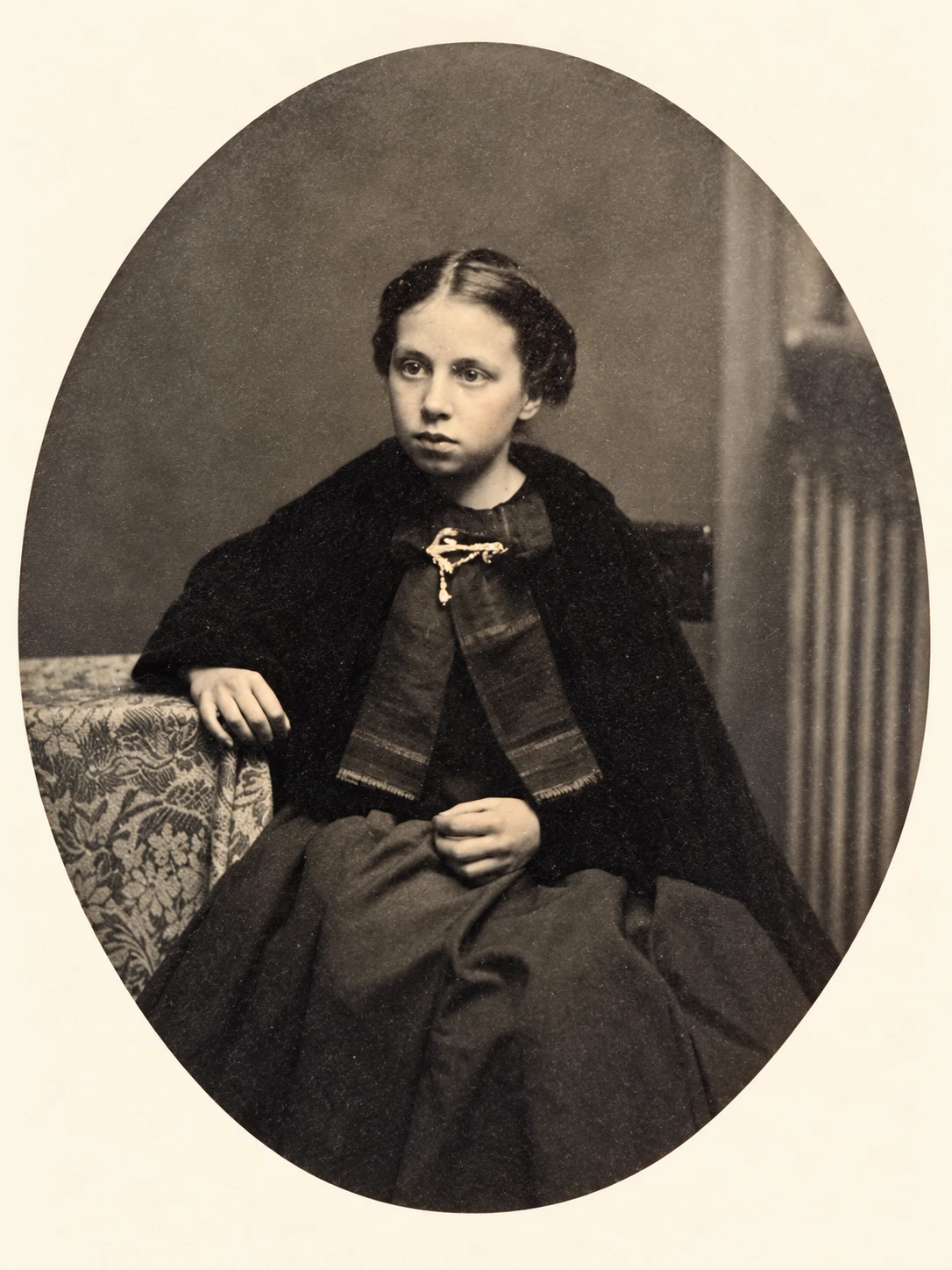
Known as Matilda, Bram’s elder sister was born in Clontarf, Dublin. She travelled abroad with her parents and her younger sister Margaret in 1872, and also spent time with Bram and Florence in London.
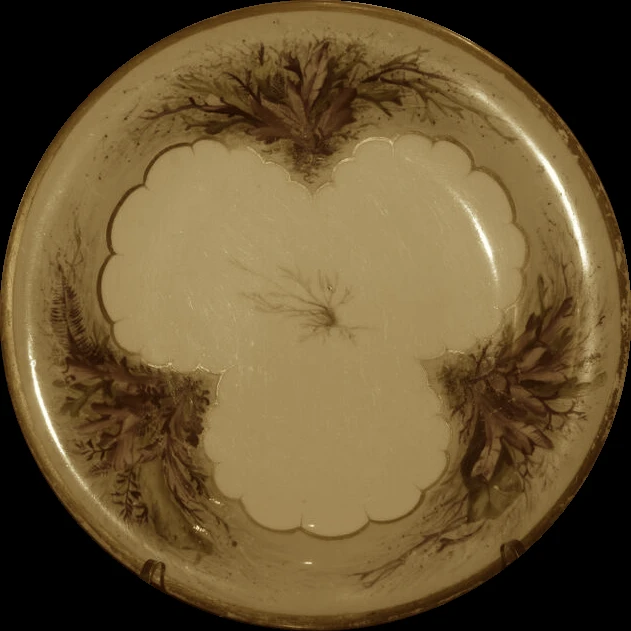
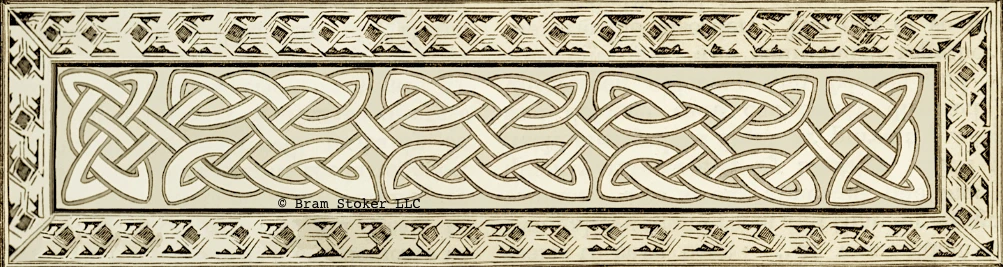
Matilda painted and designed decorative work. A plate in the family collection is signed “Designed and painted by Matilda Stoker, 1870”. Her surviving work also includes a Celtic design, shown below.
On 3 March 1889 she married Charles Auguste Petitjean at Rathfarnham Church in Dublin. She died in Sierre, Switzerland, in 1920.
Thomas Stoker
20 August 1849–14 June 1925
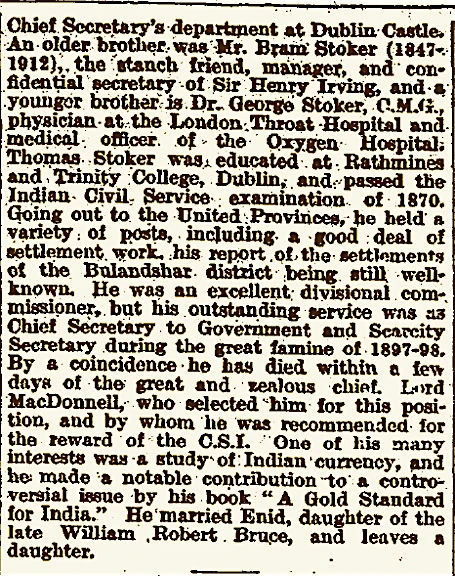
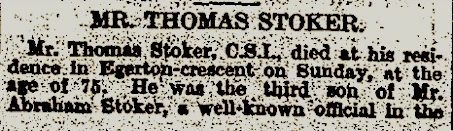
Thomas, known as Tom, was born at Artane Lodge in Dublin. He attended Rathmines School and Trinity College Dublin before joining the Bengal Civil Service in India in 1872. The family remembers calling him “The Pundit” for his scholarly interests and knowledge of Indian administration.
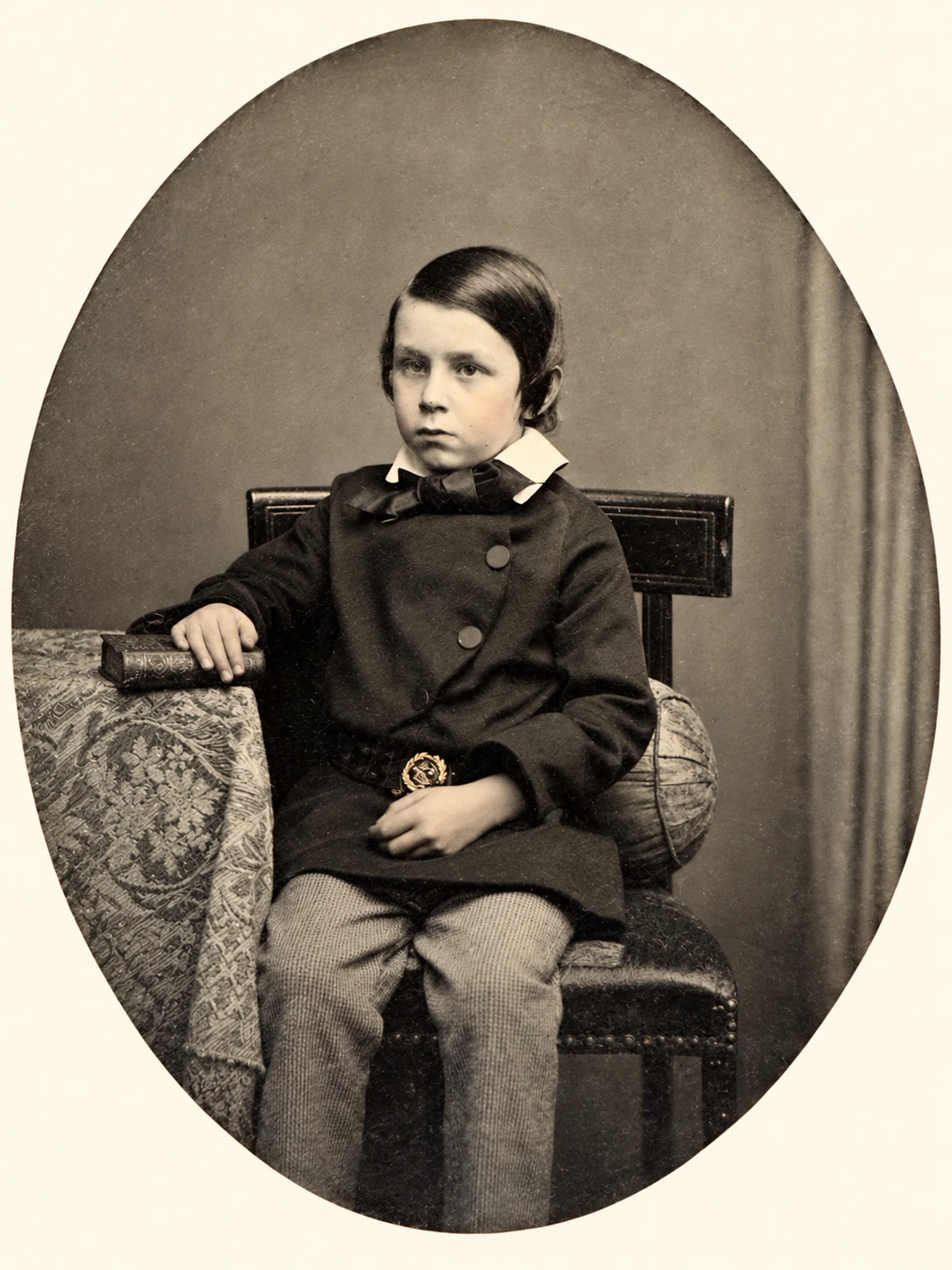
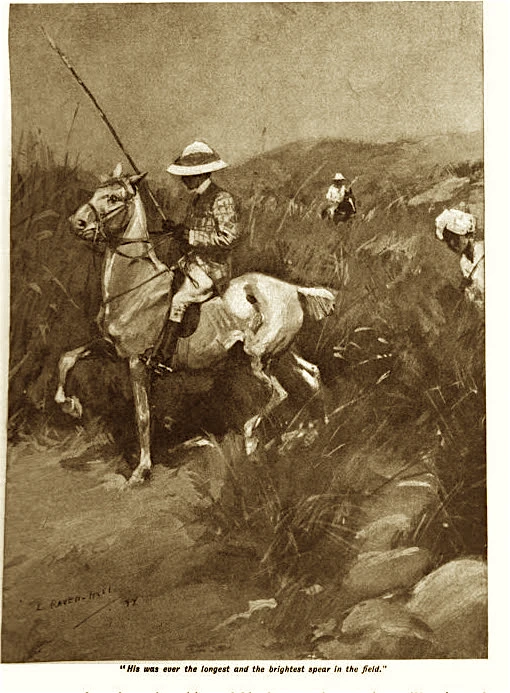
Tom rose to become Chief Secretary to the Government of the North West Provinces and Oudh. He retired in 1899 after nearly three decades in the Bengal Civil Service and subsequently lived with his wife Enid at 42 Egerton Crescent in London. He died in 1925, aged 75.
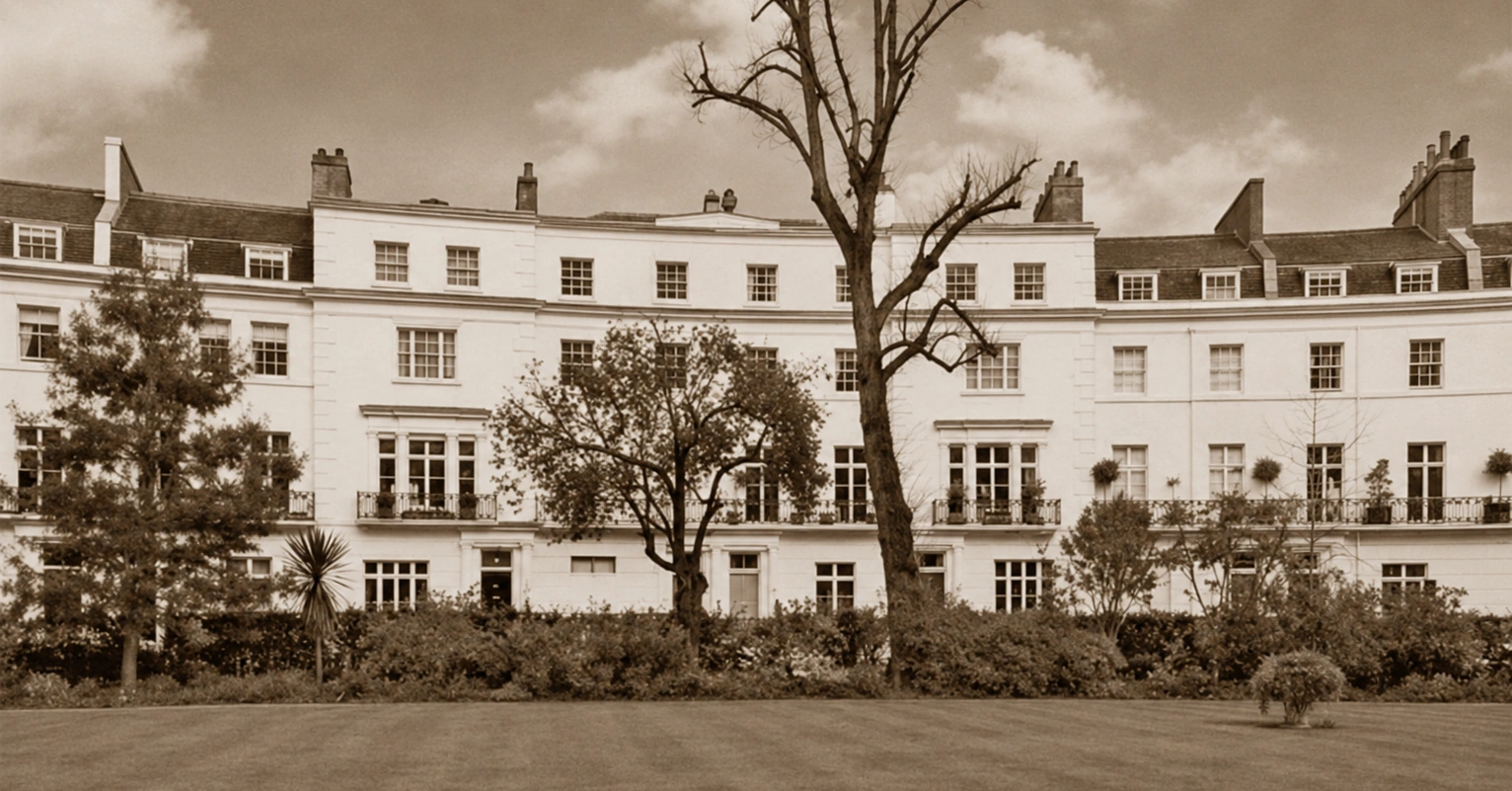
Tom produced economic writing as well as fiction. His writings included The Pundit and Justice of the Raj. The India Office List also credits him with A Gold Standard for India and the Bulandshahr settlement report. The Stoker family remembers A Gold Standard for India appearing in 1898 and recalls that Tom drew on his experiences in India for his fiction.
Richard Nugent Stoker
31 October 1851–14 June 1931
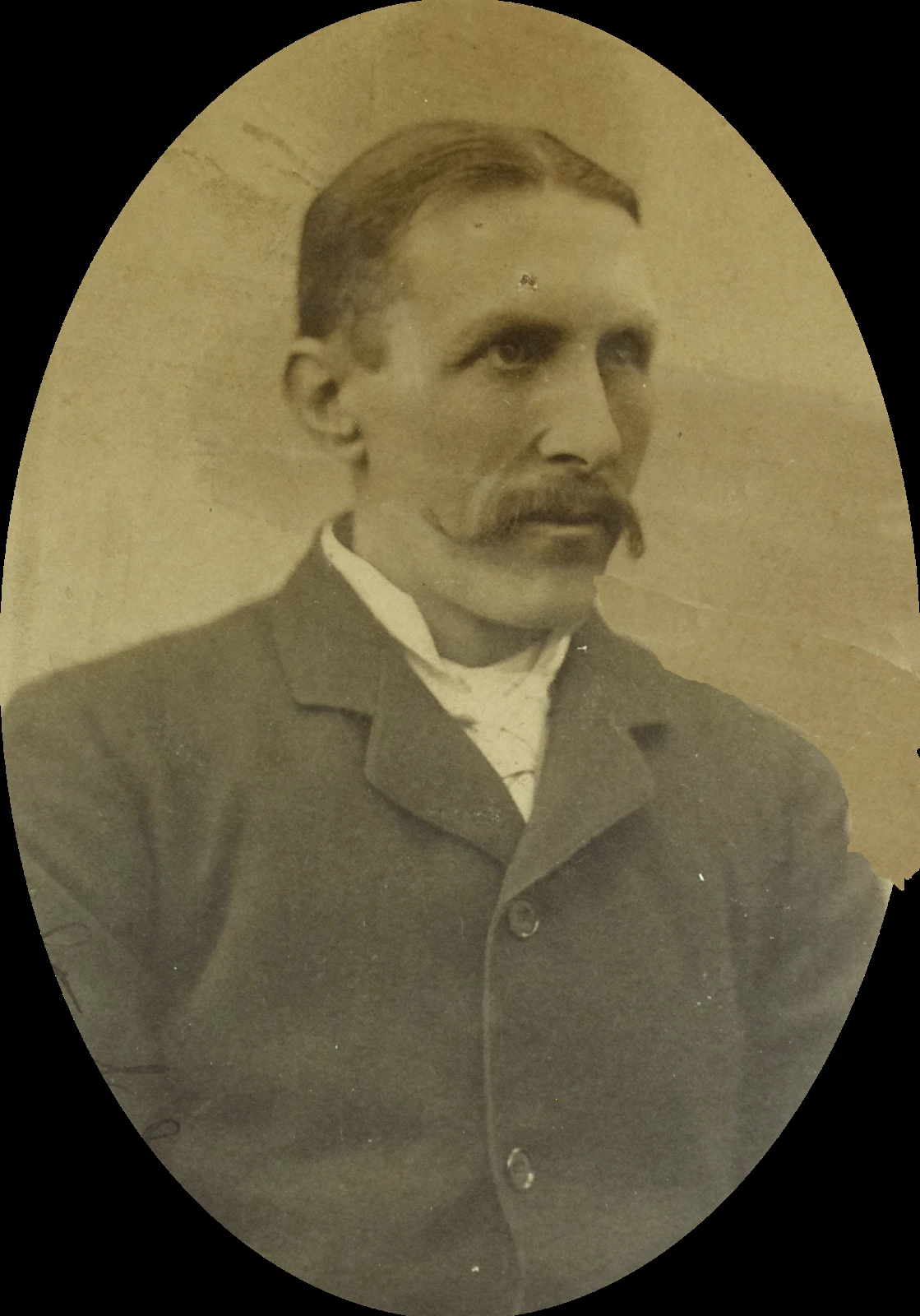
Richard, known in the family as Dick, was born at Artane Lodge, Dublin and educated at Rathmines School. He qualified in medicine and surgery in Dublin before entering the Indian Medical Service in 1874. He married Susan Harden of Raheny in 1875.
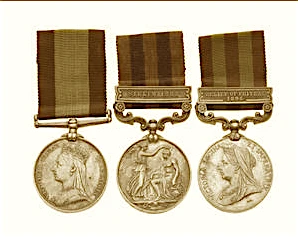
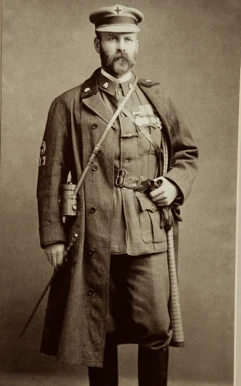
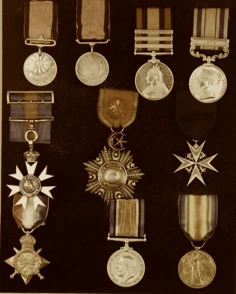
His service took him to Afghanistan, Fort Attock and the north-east frontier of India. He became a Surgeon Lieutenant Colonel in 1894 and retired in 1900. His surviving medals record the Afghanistan, Sikkim and Chitral campaigns.
Richard was also a naturalist and an artist. He sent specimens and detailed observations to specialists, and his descriptions of birds appeared in Stray Feathers. His sketches preserve a more personal voice: one drawing is labelled “A grass cricket half painted, for he would not stay quiet”.
Richard and Susan settled on Vancouver Island, British Columbia. They spent winters at Maple Bay and summers beside Lake Cowichan, where they developed a rhododendron garden. The family account connects their planting with the later Finnerty Gardens at the University of Victoria. Stoker Park at Lake Cowichan was named in the family’s honour in 2010.
This account draws on W. Parker’s family perspective (2018) and Tyler Clarke’s report in the Lake Cowichan Gazette (18 October 2010).
Margaret Dalrymple Stoker
20 March 1853–23 May 1928
Margaret was born at Artane Lodge. In 1872 she travelled abroad with her parents and Matilda. After her father’s death in 1876, she remained with her mother in Italy for a time before returning to Dublin to live with Thornley and Emily.
On 27 June 1878 she married the surgeon William Thomson at St Peter’s Parish in Dublin. His knighthood in 1897 made her Lady Thomson. During the Boer War, while her husband worked at the Irish Hospital in South Africa, Margaret organised gifts and supplies for the hospital. Her younger brother George served there as Thomson’s second in command.
A later institutional history quoting The Lancet in 1907 records that Margaret was knocked down by a motor car near her home in St Stephen’s Green, Dublin. Staff from nearby St Vincent’s Hospital came to her assistance; despite severe bruising, she was not seriously injured. She died in Dublin in 1928, aged 75.
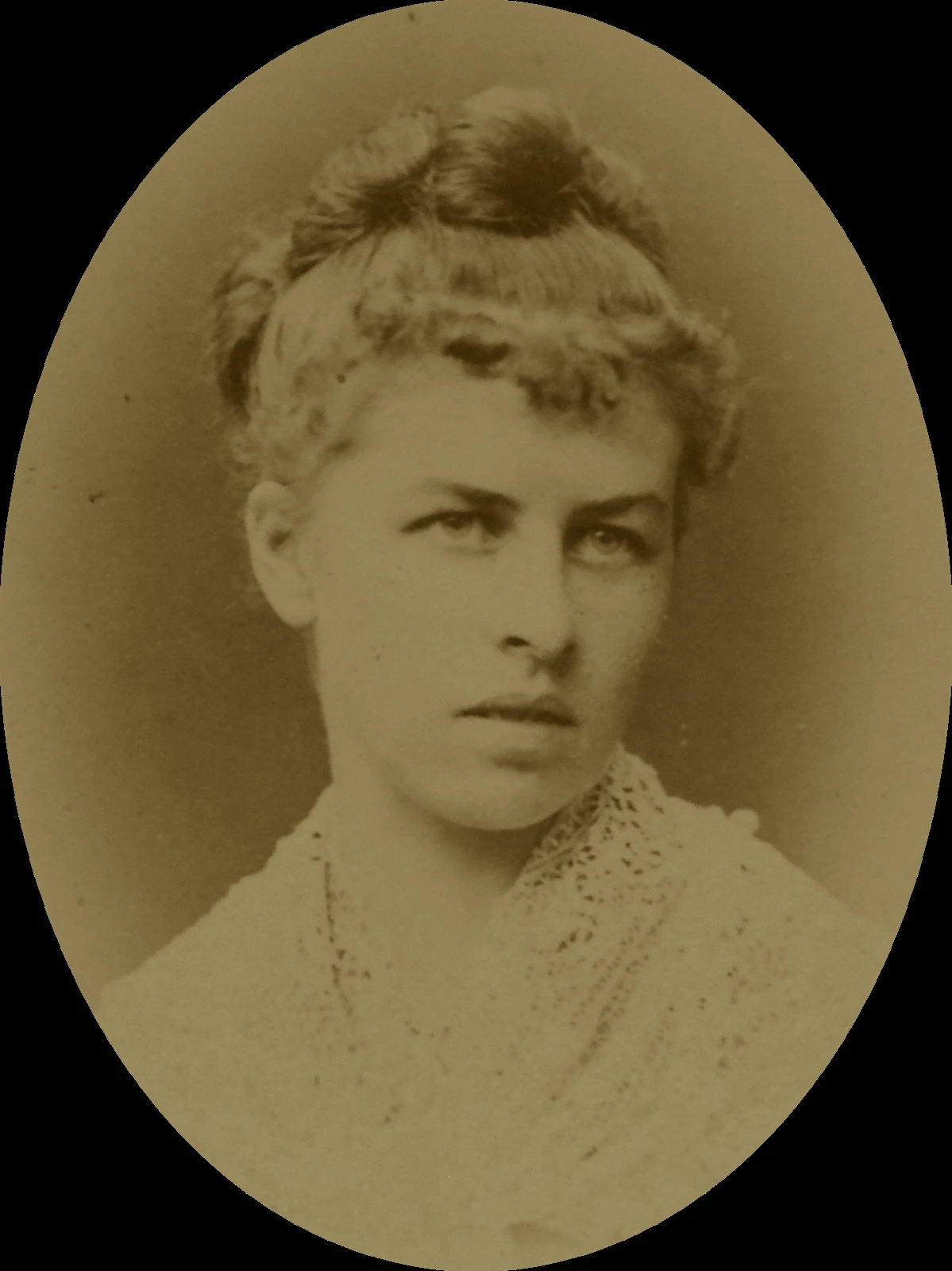
Read Margaret’s family record and the biography of Sir William Thomson.
Sources: The Story of the Mageough, quoting the 1907 Lancet report; Family account and retained photographs, Estate Margaret page; William Thomson, Dictionary of National Biography (1912).
George Stoker
20 July 1854–23 March 1920
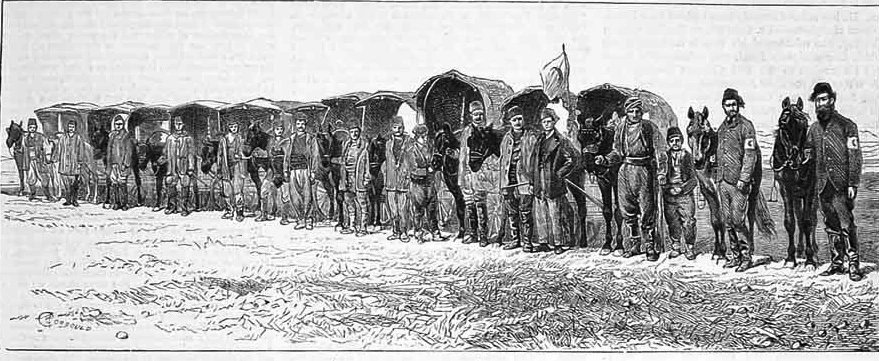
George, the youngest Stoker brother, brought a medical career into close contact with Bram’s theatrical world. He served with the Ottoman forces during the Russo-Turkish War and published With “the Unspeakables”; or, Two Years’ Campaigning in European and Asiatic Turkey in 1878. His later service included the Irish Hospital in South Africa, where his brother-in-law William Thomson led the medical mission. Library catalogue.
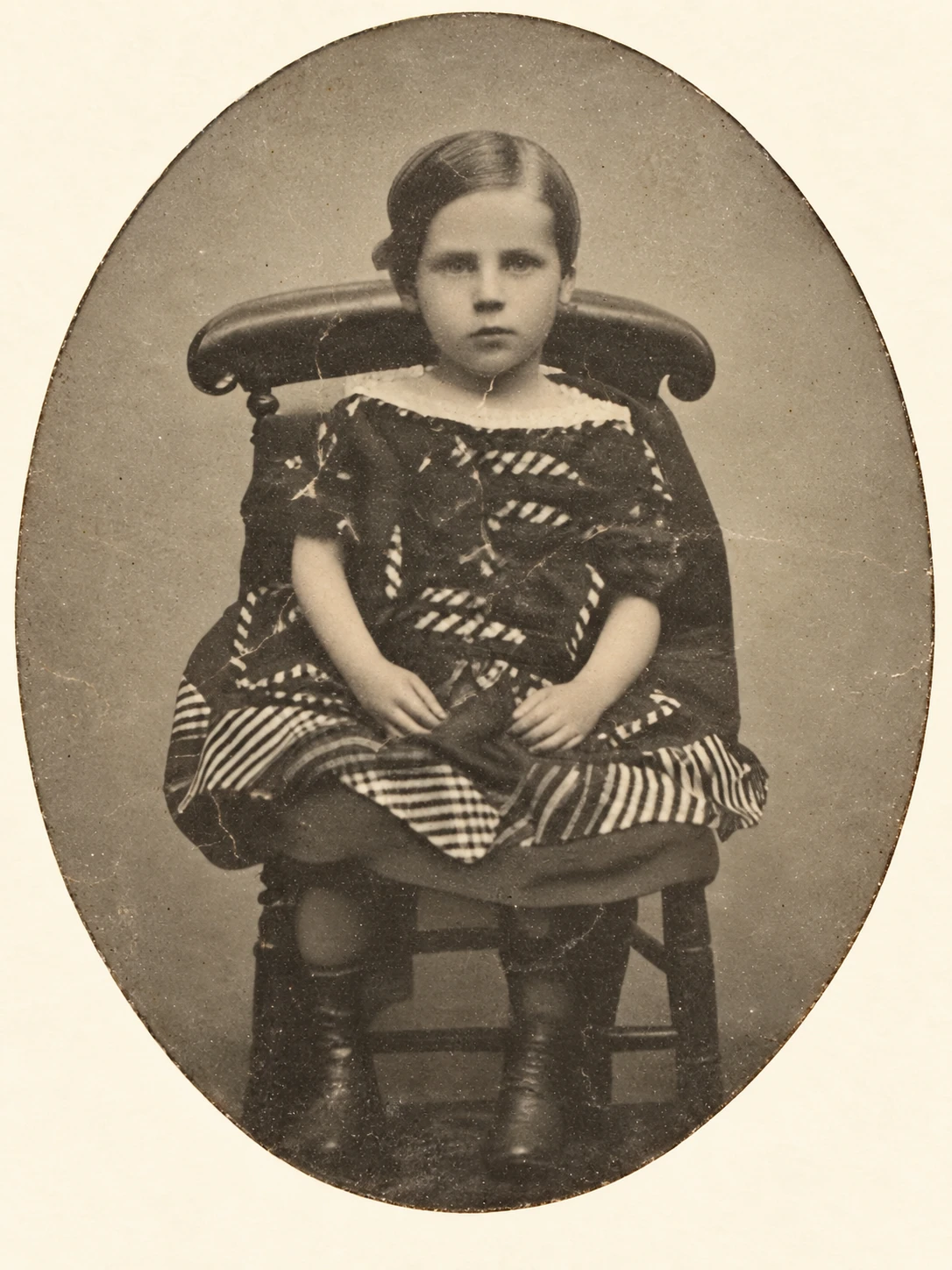
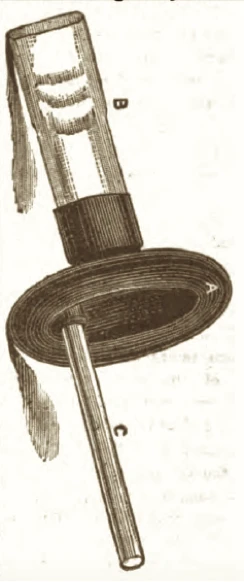
George also designed a portable vapour inhaler. An illustrated notice describes a flexible cover that could be fitted to a household cup or jug, with a glass mouthpiece and a tube carrying air through the medicated liquid. Read the notice and its source details.
Bram’s Personal Reminiscences of Henry Irving records one memorable meeting between these worlds. During preparations for Romeo and Juliet, Irving wanted a convincing way to carry the dead Paris into the tomb. When George visited the theatre, Irving asked for the easiest method. Bram lay down to serve as the body, and George demonstrated a way of carrying him derived from practical experience. It worked; its appearance was another matter. Irving laughed and eventually chose a different stage solution. Reading edition.
Ellen Terry remembered George in a more urgent role. While she was playing Viola in Twelfth Night, an infected thumb became increasingly painful. George lanced it between scenes. Terry later wrote that the doctors believed his prompt action had saved her arm. Her account is both a personal tribute and evidence of how closely the Stokers were involved in the company’s everyday life. Reading edition.
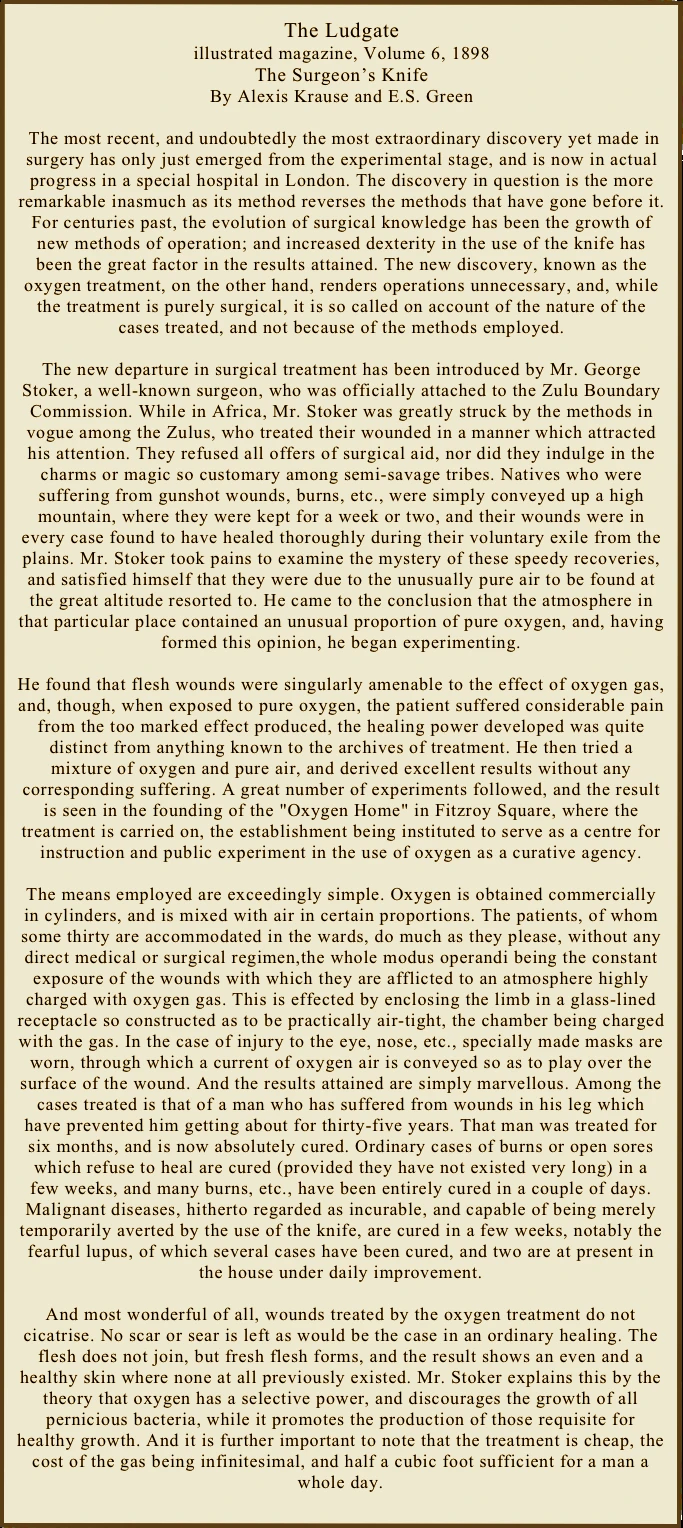
George’s published work reveals a continuing interest in medical invention and treatment. An article in the British Medical Journal in 1896 describes his use of oxygen in the treatment of wounds and ulcers. Read alongside his wartime book, the family photographs and his instruments, it gives a fuller record of a working doctor than medals alone can provide. Original medical journal article.
Sources: With “the Unspeakables” (1878): complete digitised book; George Stoker, The Economy of the Treatment of Wounds and Ulcers by Oxygen Gas, BMJ, 2 May 1896, pp.1087–1088; Bram Stoker, Personal Reminiscences of Henry Irving; Ellen Terry, The Story of My Life (1908); William Thomson, Dictionary of National Biography (1912).
Irving Noel Thornley Stoker
30 December 1879–16 September 1961
Irving Noel Thornley Stoker was Bram and Florence’s only child. In the family, he was always called Noel Thornley Stoker, and at work he was NTS. He was called Noel because he was born at Christmas, on 30 December 1879. Henry Irving was his godfather, and his childhood belonged to the world of the Lyceum.
When Noel was about seven, Bram took him backstage between the acts of Faust to see his godfather in his dressing room. Irving picked up a dark pencil and transformed the boy into a small Mephistopheles, with high-arched eyebrows, a pointed moustache and a sneer at the corners of his mouth. Bram remembered Noel as “simply entranced with delight”, and thought Irving was just as enchanted. Bram recalled the visit in Personal Reminiscences of Henry Irving, volume II, p. 90.
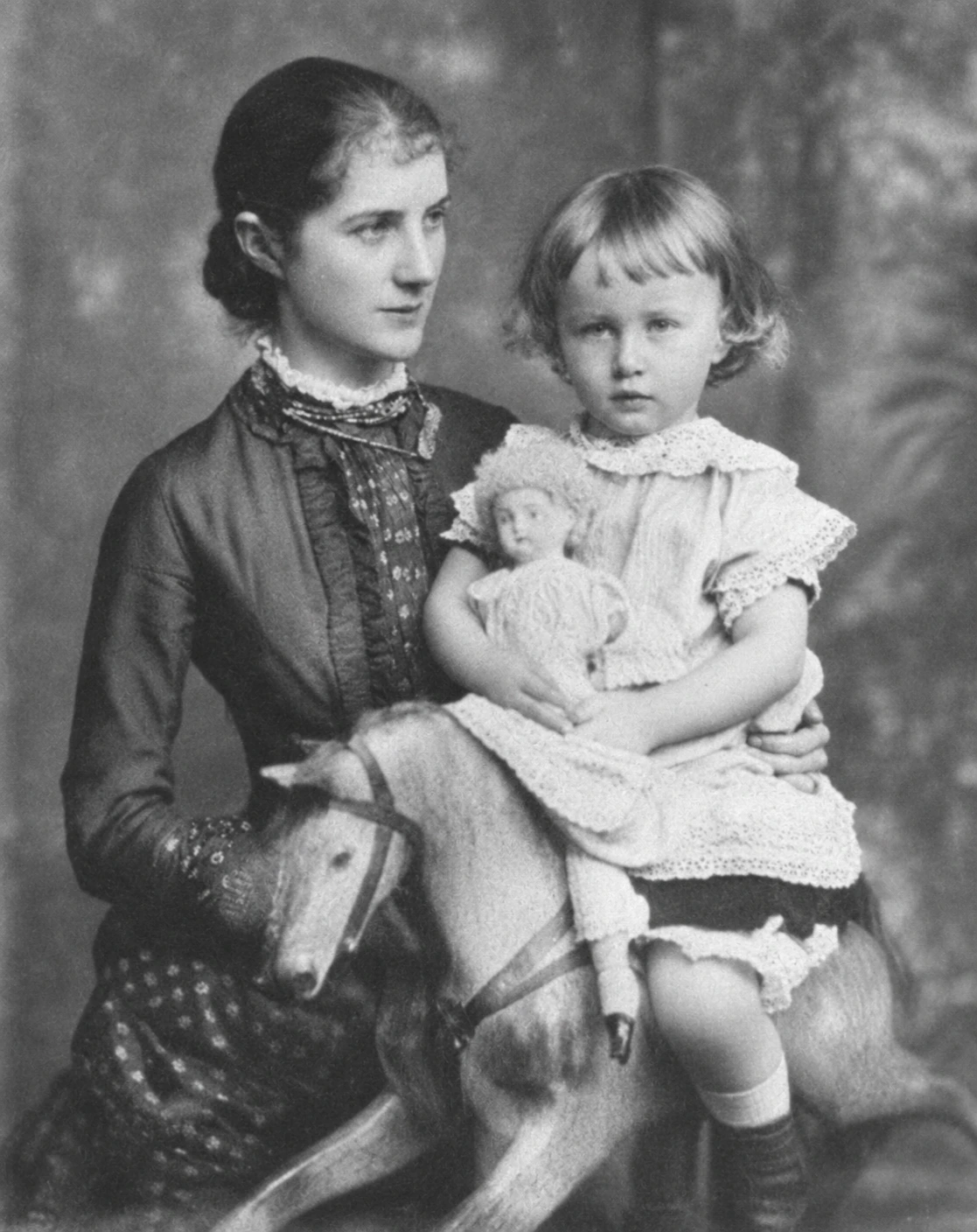
Noel attended Summer Fields, Winchester College and New College, Oxford. His grandson’s memoir associates his departure from Oxford with pressure on Bram’s finances. He trained as a chartered accountant and became a partner in Williams Stoker & Co., in Holborn. He also had a long association with the Skinners’ Company.
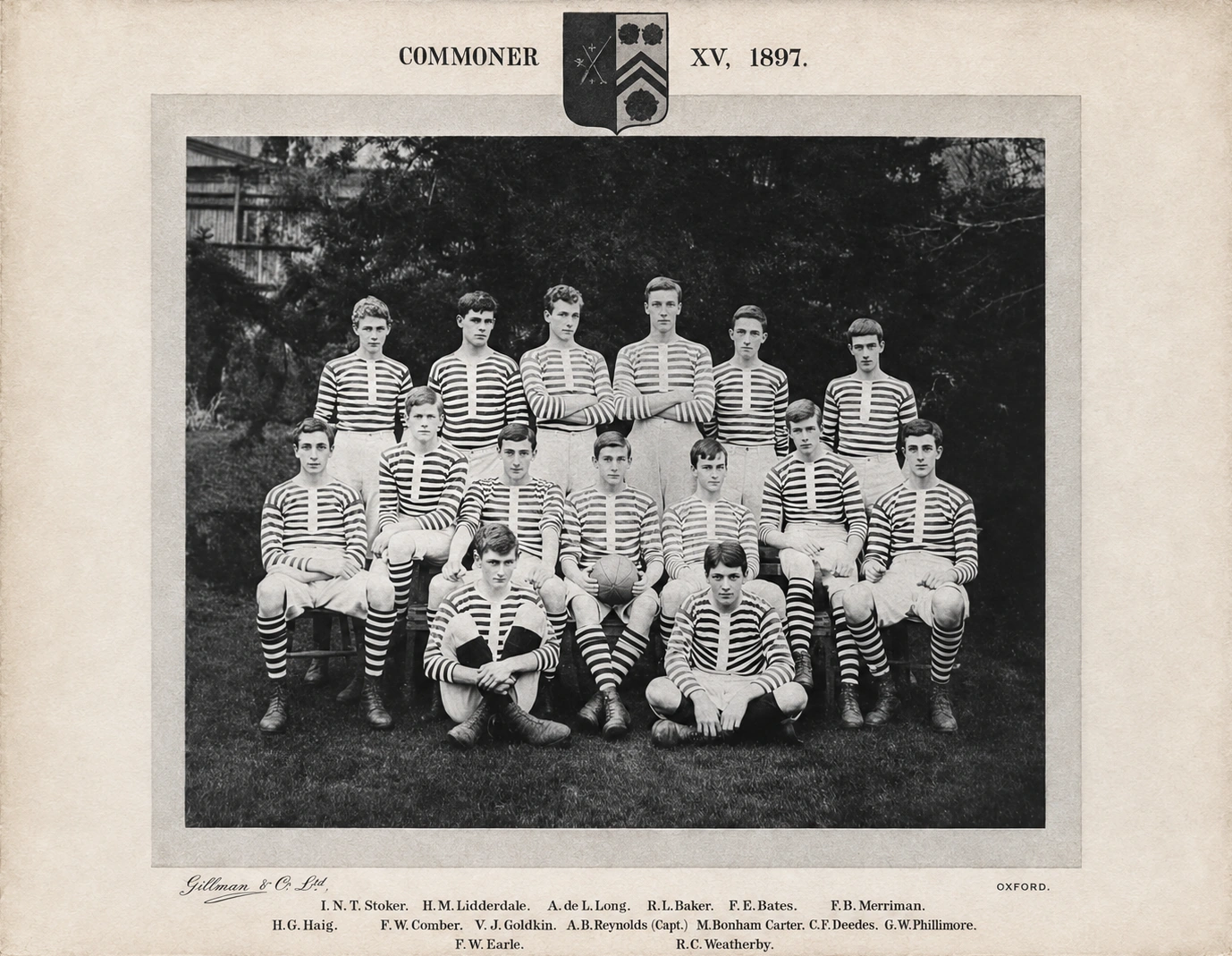
In 1910 he married Neelie Moseley Deane Sweeting. Their only child, Ann, was born in 1916. After Ann’s husband died in a flying accident in 1939, Noel and Neelie took responsibility for their young grandsons, Richard Noel and Jamie. Richard Noel’s account remembers their affection and generosity, a protected wartime childhood in Seaview, and Noel’s support for the boys’ education.
The memoir also recalls a fluent reader of French, an enthusiastic collector of railway tickets and books, and a grandfather who read Walter Scott aloud and travelled by train to Scotland. Its interpretations of Bram, Florence and Henry Irving remain attributed to the grandson who wrote them.
Read Remembering Noel Stoker, the complete edited memoir by Richard Noel, dated 1 May 2020.
Ann Elizabeth Stoker
12 March 1916, London – 15 June 1998, Farnham, Surrey
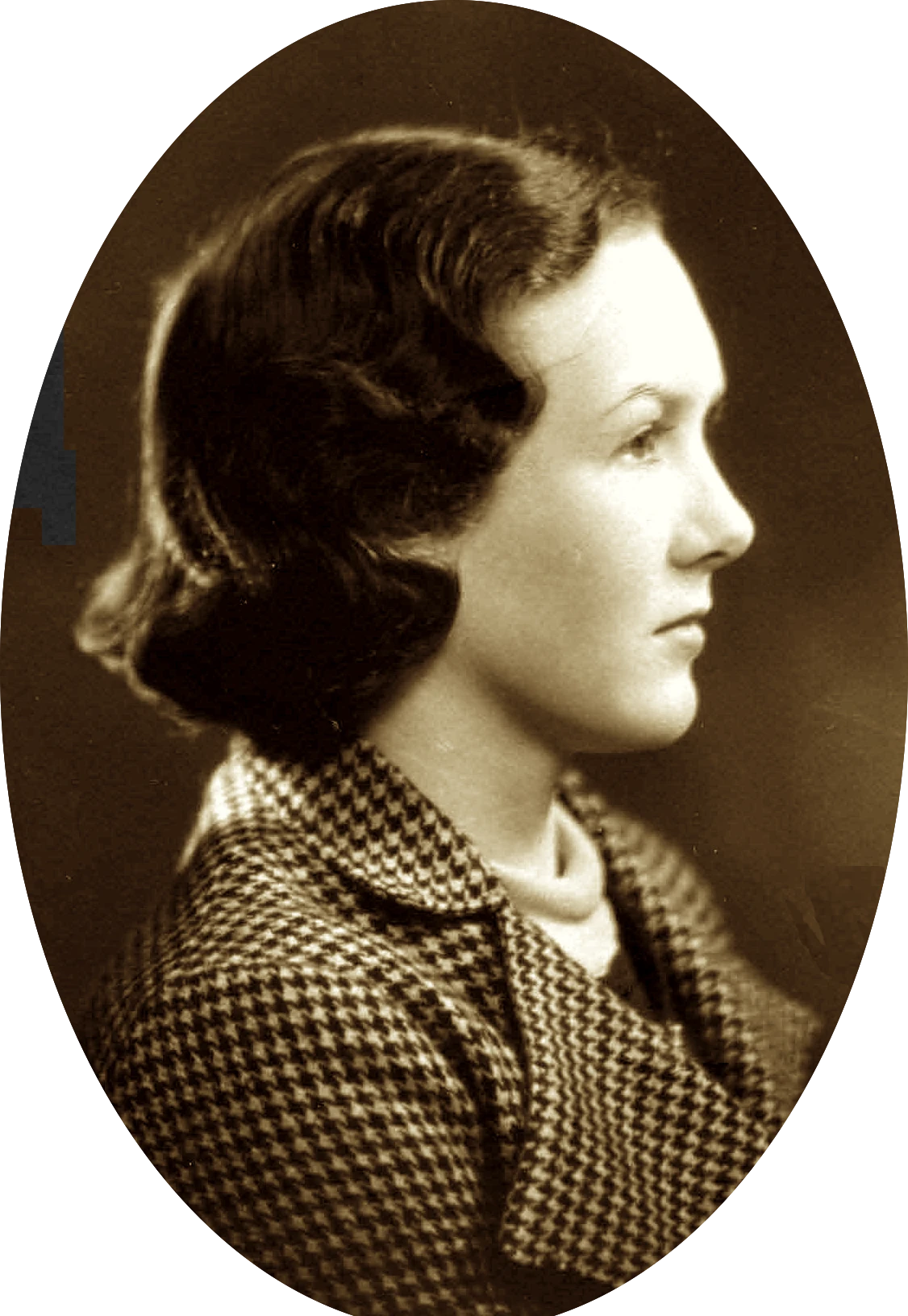
Ann Elizabeth Stoker was the only grandchild of Bram Stoker, the daughter of his only son, Irving Noel Thornley Stoker, and Noel’s wife, Neelie (née Sweeting). She was born in 1916 and married twice. Her descendants include members of the family who today manage the Bram Stoker Estate.
Ellen Crone
Ellen Crone was the nurse who cared for the Stoker children. The family account records a memorial to her as their devoted nurse and friend. Her place in their lives belongs alongside the family biographies: she helped care for the household in which Bram and his siblings grew up.