resources
Resources for teachers: Dracula
Lesson planning and classroom materials for teachers: twelve archive activities, discussion questions by reading stage, lesson schemes, printable sheets and separate teaching notes for the nine example essays. These resources are open to everyone.
Choose UK and Irish A–F or US Grades 11–12 A–F. The US route includes AP reader guidance and separate teaching notes for the same literary examples.
US classroom and summer-reading suggestions connect the archive activities with local assignments and AP preparation.
The student guide runs from A: Getting started to F: Practising and revising. For course requirements, marking, official papers and general examiner feedback, use Chapter C. The worked preparations, essays and response-specific feedback are in Chapter E.
Choose a teaching resource
- Younger readers and primary classes. Studying Dracula for younger readers includes children’s editions, reading questions and activities, with Meet Bram Stoker for Years 3–6 as an author introduction.
- Archive activities. Twelve activities use working notes, letters, the interview, contemporary reports and maps.
- Sequences of lessons. Three schemes of work address narrative method, the Gothic, and context and interpretation.
- Discussion and preparation. Questions by stage, the writing guide and practice resources support different stages of study.
Twelve activities using the archives
Use one activity as a short investigation, or combine several around a question about evidence. Activity 12 compares Bram’s obituaries and asks how a reputation changes.
| Activity | What students do | They produce | Estate material | Serves |
|---|---|---|---|---|
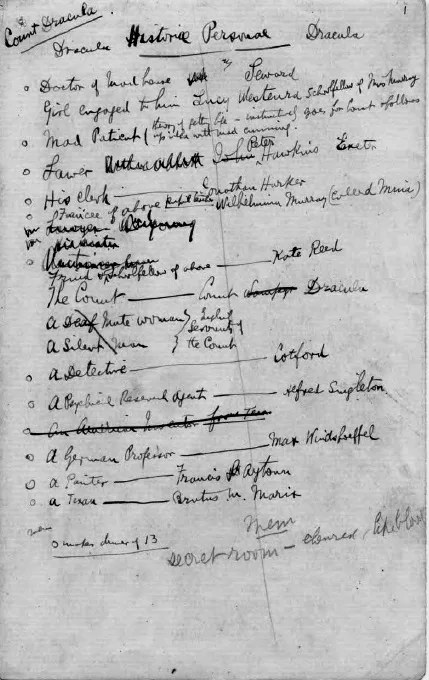
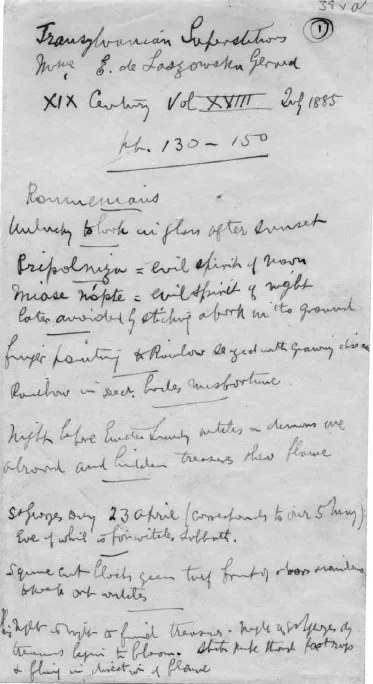
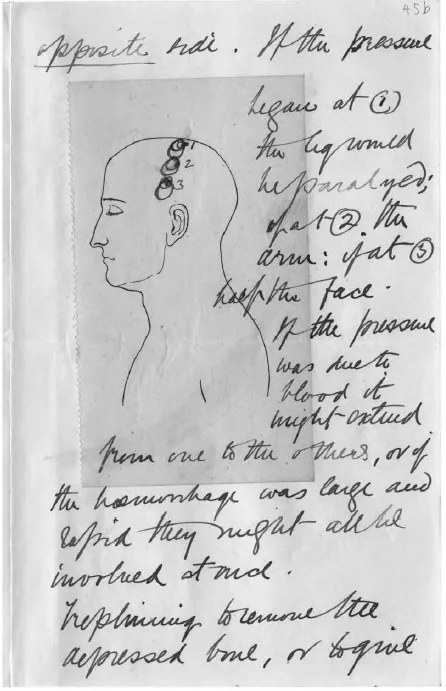
| 1. Plan against page | Compare a page of Bram’s working notes (cast list, chronology or reading extract) with the matching passage of the finished novel. What was kept, cut or transformed? Why might he have moved the story from Styria to Transylvania? | A two-column “plan and page” sheet and a paragraph of inference | Working notes: cast list, reading extracts and Renfield’s injury sketch · 2008 facsimile edition | AO3 context, AO2 method |
| 2. The author said / the critic says | Read Jane Stoddard’s interview of 1 July 1897. List what Bram actually claimed (three years’ writing; “miscellaneous reading”; Gerard and Baring-Gould; no stated moral). Set each claim against one modern critical reading. Where do they agree, and where is the critic going beyond the author? | A table of claim, source and status (stated, reported, inferred) | Stoddard’s 1897 interview · Critical approaches and research | AO5 interpretations |
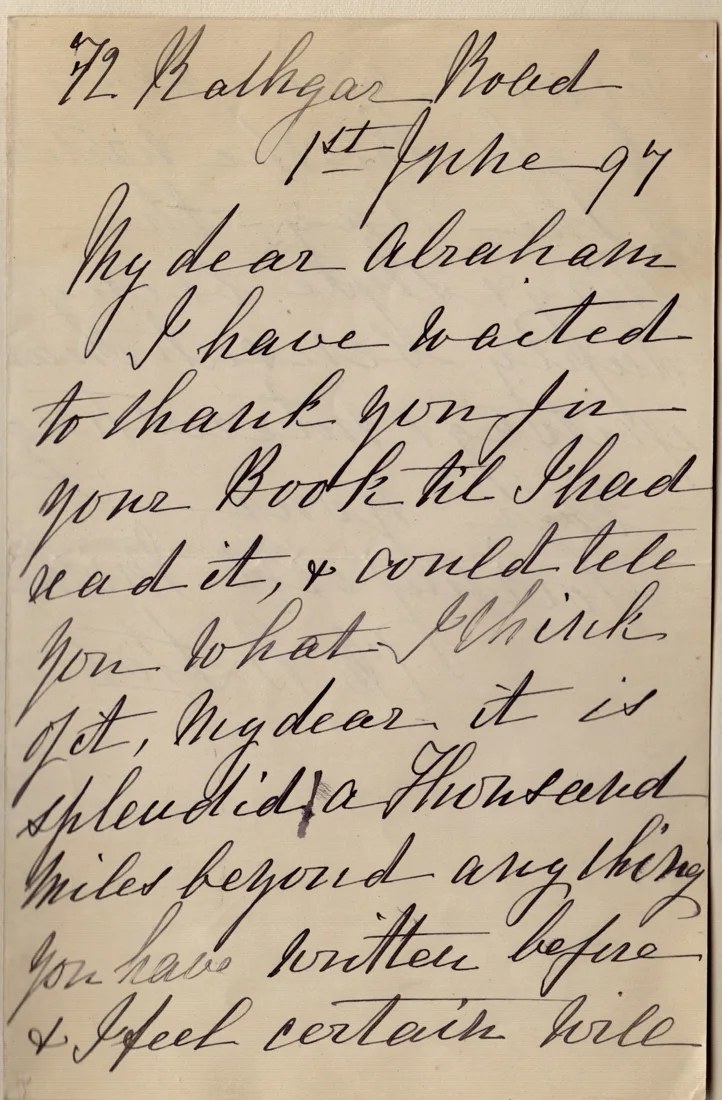
| 3. Reception: 1897 and now | Three first readers: Charlotte Stoker’s letter (“a thousand miles beyond anything you have written before”), Stoddard’s review (“an entirely wholesome impression”) and one review of a recent adaptation. What did each value, and what did each not notice? | A short comparative paragraph | Charlotte’s letter · Stoddard’s full review · All ten collected early reviews · Named adaptations and their reception | AO5, AO3 |
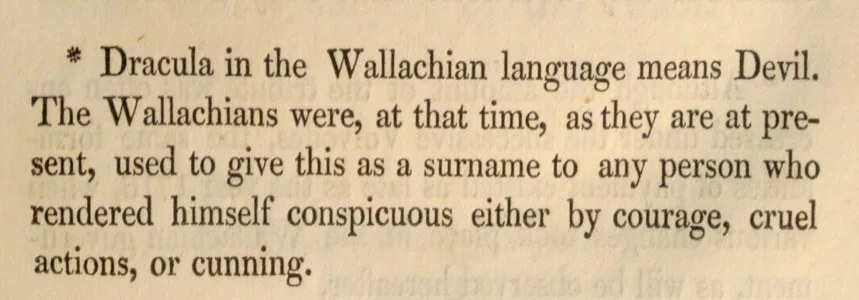
| 4. Naming the book | Compare the corrected typescript’s title The Un-Dead, the first edition’s Dracula, Wilkinson’s footnote and the May 1897 copyright registration headed Dracula; or the Un-Dead. What does each title promise a reader who has never heard of the Count? Distinguish evidence that a title changed from speculation about why Bram chose it. | A 150-word case for each title | The title and publication evidence · RTÉ’s corrected-typescript auction record · Wilkinson’s footnote (1820, p. 19) · Bram’s 1897 copyright registration, using both titles | AO3, AO2 |
| 5. Flies in a bottle | Bram’s early notebook contains the line “I once knew a boy who put so many flies into a bottle that they had not room to die.” Read it beside Seward’s account of Renfield’s flies and spiders in Chapter 6. Discuss the difference between an observation, an idea and a character; then write Renfield’s own account of one day. | A 300-word first-person piece and a note on sources | The Lost Journal · Chapter 6: Seward and Renfield | Creative; AO2 |
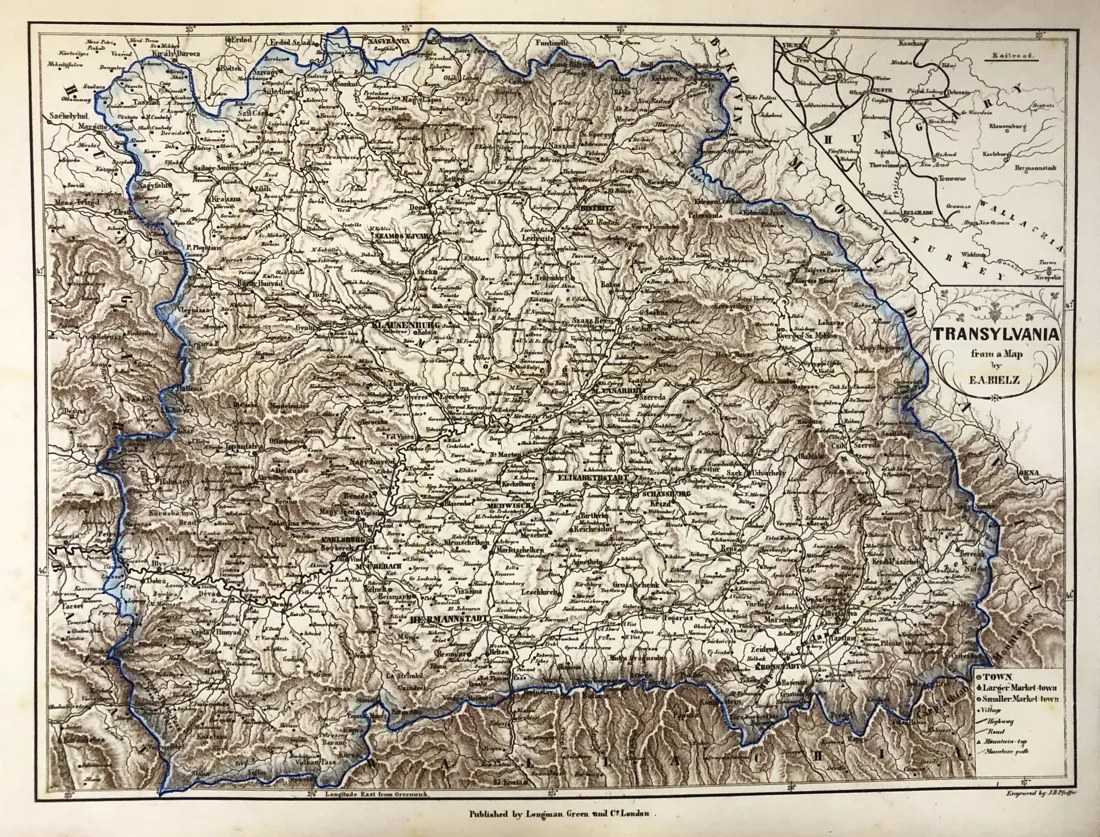
| 6. Finding the castle | Use the interactive terrain map to trace Harker’s route (Klausenburgh, Bistritz, Borgo Pass) and the final pursuit (Galatz, the rivers, Veresti). Why does the novel make the journey precise and the castle unlocatable? Compare the two scholarly readings and the Bran Castle tourist claim. | Annotated map notes and a judgement | Interactive castle map and competing location readings | AO3, AO2 setting |
| 7. Who knew what, when | Using the chapter map, build a wall timeline from 3 May to 6 November. Mark for each character the moment they learn (a) that Harker is alive, (b) what Lucy has become, (c) what the Count is. Where does the reader know first? | A dated timeline with “knowledge gaps” flagged | Chapter map, dates and narrators | AO2 structure |
| 8. Two accounts, one event | Compare the Dailygraph cutting on the storm (Chapter 7) with the log of the Demeter that follows. What can a reporter know, and what can only a dying captain know? Which is more frightening, and why? | A two-column evidence table and a paragraph on form | Chapter 7 and its full-text link · Narrative form and different kinds of evidence | AO2 form, AO1 |
| 9. Books behind the book | Look at Boner’s 1865 map of Transylvania, Gerard’s Land Beyond the Forest and the Wilkinson footnote. Bram never visited Transylvania. Choose one detail from Chapter 1 (food, dress, superstition, landscape) and trace how a traveller’s observation becomes a novelist’s atmosphere. | A short “source to sentence” commentary | Bram’s source books and landscape · Boner’s map · Wilkinson’s footnote | AO3 |
| 10. Book, screen and audio | Compare one scene with one named adaptation (the 1931 Universal film, Hammer’s 1958 Dracula, the 1977 BBC Count Dracula, Coppola’s 1992 film, the 2020 BBC series, or Audible’s 2026 full-cast adaptation). Name three things the adaptation adds, removes or changes, and say what each change does to the novel’s meaning. With the Audible version, ask what happens to a novel made of written documents when every document becomes a voice, and what is gained or lost by making Mina the investigator from the start. | A comparison grid | Dracula on stage, screen and audio · The complete novel | AO5, AO3 |
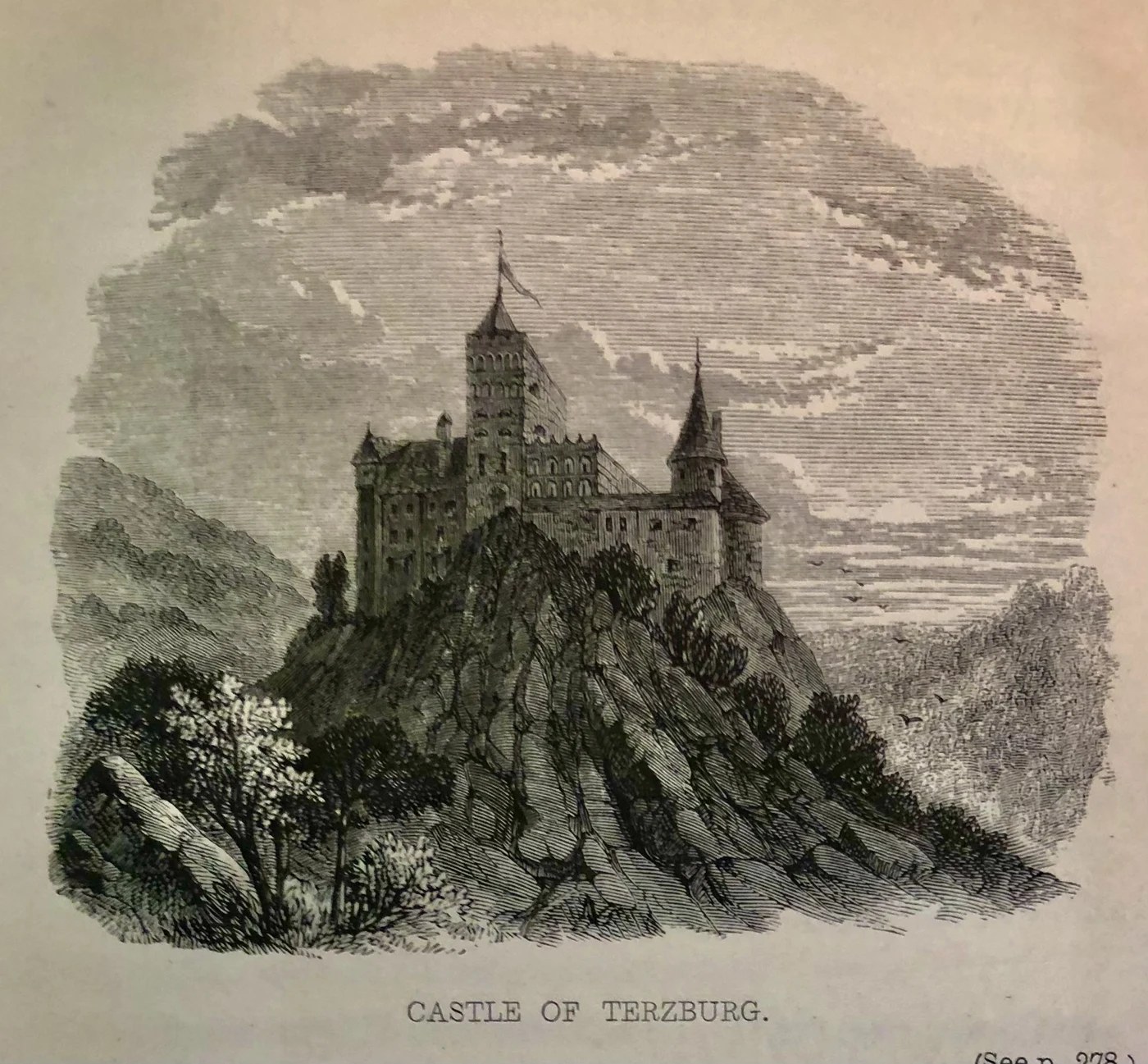
| 11. Dracula’s castle? | Bran Castle, near Brașov, markets itself worldwide as “Dracula’s Castle”. Weigh the claim against the novel’s own descriptions and geography, Bran’s real history, the picture of Bran in Boner’s Transylvania (1865), a book Bram used, and how the label arose through tourism. Then discuss what Bram himself might have made of it, using what he said and did: his 1897 interview, his copyright reading, Florence’s fight against Nosferatu. | A claim-and-evidence table and a reasoned verdict | Dracula’s castle? evidence sheet (PDF) · Castle map · Boner’s Bran Castle engraving · Teacher commentary | AO3, AO5 |
| 12. Who was Bram in 1912? | Compare three obituaries: the Globe’s “Irving’s Boswell”, the New York Times notice and The Literary World’s “The Late Mr. ‘Bram’ Stoker”. What does each put first, omit or predict will last? Test the claim that Bram was remembered chiefly for Irving against the notice that identifies Dracula as his route to fame. | A three-source evidence grid and a 200-word judgement, with a qualification | Obituary transcriptions and original clippings · The 1897–1899 reviews · Activity and teacher notes | AO3 reception; AO5 interpretations; evaluating sources |
Reproduction: the images on the linked pages carry their own credits. Teachers may display them in class from the website. For reproduction in printed or published school materials, check each credit and see Using Bram’s work.
Activity 11: one possible answer
For teachers. Share after students have reached their own verdict. This is a possible reading of the evidence, not the only acceptable answer.
How far does the novel support Bran’s claim? It offers no firm basis for identifying Bran as Castle Dracula. There is, however, a possible visual connection worth investigating.
The geography points elsewhere. Jonathan places the castle in “the extreme east of the country” (Chapter 1), reached from Bistritz through the Borgo Pass. Bran is near Brașov, roughly 200 km south of the Borgo Pass in a straight line. The novel never names it. Compare the novel’s route and landscape.
The description is also a poor fit. Jonathan approaches a “vast ruined castle” with “broken battlements”, and later sees it on “the very edge of a terrible precipice” (Chapters 1–2). Bran is a surviving fortress above a settlement and road. A castle on a rock may suggest the Count’s home to a visitor, but resemblance does not establish the fictional location.
The connection with Vlad III supplies no missing link. There is no firm evidence that he lived at Bran. Bram took the name Dracula and limited historical material from Wilkinson’s 1820 book; his surviving notes do not identify Bran as the Count’s home. See the evidence for the name.
Boner’s Transylvania (1865), a book Bram used, does contain the engraving of Bran as the “Castle of Terzburg”. Bram could have encountered that image. It is therefore a possible visual source, but the engraving alone cannot show that it shaped his castle. No surviving statement by Bram connects the two.
The verdict. Bran’s claim is strongest as a successful tourist association and weakest as an identification of the novel’s actual setting. Keep three different propositions apart: Bran resembles a popular image of Dracula’s castle; Bram may have seen its engraving; Bram set the novel there. The first is a judgement about resemblance, the second a possibility, and the third is not supported by the surviving evidence.
What would Bram have made of Bran’s success? Nobody can know. The following is one possible interpretation from Bram’s family, not a recorded opinion of Bram’s.
As Henry Irving’s manager from 1878 to 1905, Bram understood audiences, publicity and the appeal of a theatrical spectacle. His family likes to imagine that he might have been amused by Bran’s success and appreciated its showmanship. That is a way of thinking about his career, rather than evidence of what he would have said about a later tourist attraction.
His interest in controlling adaptations offers another consideration. He arranged a copyright reading in May 1897; after his death, Florence challenged the unlicensed Nosferatu. Those actions support a discussion of authorship and commercial use, but Florence’s later actions cannot establish Bram’s opinion.
A strong student answer can enjoy that imagined reaction while keeping it separate from the factual verdict. Bran’s success tells us a great deal about the Count’s afterlife; it tells us very little about where Bram put his castle.
Activity 12: who was Bram in 1912?
Aim. Investigate the difference between favourable reviews, an author’s public reputation and a work’s later fame. Allow about 25–35 minutes.
Read three contemporary notices. Use the Globe clipping, “Irving’s Boswell”, and the New York Times and Literary World transcriptions. All are available on the Estate’s obituary page. The Literary World’s exact issue date remains unconfirmed; the supplied identification is volume 96 (1912).
- Record the publication, date and form of each source: original clipping, transcription or later reprint.
- Identify what leads the notice. Which career, relationship or book defines Bram?
- Copy one short quotation showing its assessment of his lasting achievement. Distinguish mentioning a title from praising or predicting its importance.
- Record one omission, but explain the limit: silence in one short notice cannot establish that nobody knew the book.
- Write 200 words answering: “In 1912, Bram was remembered chiefly as Henry Irving’s manager.” How far do these notices support that view? Include evidence that complicates your answer.
Extension. Set the obituary evidence beside the early reviews of Dracula. Does critical enthusiasm establish broad fame, sales or financial security? Which further evidence would each claim require?
A pre-1912 test: Churchill recognises the novelist. Read the opening of Bram’s interview with Winston Churchill, published in the New York World on 5 October 1907 and the Daily Chronicle on 15 January 1908. Bram reports two reasons Churchill gave for making an exception to his dislike of interviews:
When I wrote to Mr. Winston Churchill asking for an appointment to interview him he replied: “I would very much rather not; but if you wish it I cannot refuse you.” When I met him in his library he explained more fully in words: “I hate being interviewed, and I have refused altogether to allow it. But I have to break the rule for you, for you were a friend of my father.” Then he added gracefully another reason personal to myself: “And because you are the author of Dracula.”
How does “because you are the author of Dracula” qualify a claim that Bram was known only for Irving? It establishes recognition by this reader before Bram’s death; it does not establish the extent of his fame or his income. Compare a journalist’s account of an interview with independent obituary judgements.
Teaching note. The Globe gives Irving the central place and omits Dracula; the New York Times lists the novel but calls the Irving memoir Bram’s best-known publication. The Literary World is an important counter-example: it identifies Dracula as the work through which he achieved fame. The defensible conclusion is that his reputation was mixed and often centred on Irving – not that Dracula was unknown.
For another counter-example, follow the discussion of Clement Shorter’s 1912 prediction. Use the notices as evidence of reception; their biographical mistakes are identified on the source page.
Discussion questions by stage
Organised by reading stage, so a class can work up to its current chapter without encountering spoilers from later in the novel. The last group assumes the whole novel.
Harker at the castle (Chapters 1–4)
Content note: Sexual threat from the three women; in Chapter 3 they are given “a half-smothered child”.
- What does Harker notice, and what does he explain away, on the journey east? How does his confidence as an English professional shape what he records?
- Find the exact moment when hospitality becomes imprisonment. What has the reader understood before Harker admits it?
- Harker is a reliable recorder and an unreliable interpreter. Where do the two come apart?
- The Count speaks at length about his ancestors and about London. What does he want, in his own words?
Whitby (Chapters 5–9)
Content note: The Demeter’s captain is found dead, lashed to the wheel (Chapter 7); Lucy’s sleepwalking and the first attack (Chapter 8).
- Compare Mina’s and Lucy’s letters. What do their voices suggest about what each expects from life?
- How does the newspaper report of the Demeter differ from a diary in what it can know and how it can say it?
- What does Seward’s record of Renfield add that no other narrator could supply?
- Mr Swales says the gravestones are “nothin’ but lies of one kind or another” (Chapter 6). How does the Whitby section prepare us to doubt documents?
Lucy’s illness (Chapters 10–16)
Content note: Repeated transfusions; the death of Lucy’s mother (Chapter 11); children as victims (Chapters 13–15); the staking of Lucy (Chapter 16).
- Why does Van Helsing withhold what he suspects? What does his silence cost, and who pays?
- How do medicine and belief compete, then combine, in Lucy’s treatment?
- Compare how Lucy is described before and after her death. What has changed in the language, and what does that suggest about attitudes to women?
- Chapter 16 is the novel’s most discussed scene. Who is it for: Lucy, Arthur, the men, the reader?
The alliance (Chapters 17–22)
Content note: Renfield’s fatal injuries (Chapters 20–21); the Count’s coerced assault on Mina (Chapter 21).
- What changes once Mina types and arranges everyone’s records?
- The men decide Mina must be “kept out of this dreadful business” (Chapter 20, Jonathan’s journal). Trace the consequences through Chapters 18–21.
- Whose voices are absent from the dossier? Whose experience is never written down?
- Why does Renfield matter? What would the novel lose without him?
The pursuit (Chapters 23–27)
Content note: Violent deaths at the climax (Chapter 27).
- How do trains, telegrams, timetables and maps shape the final chase? Who is best at using them?
- How does Mina use her link with the Count? Is she victim, instrument or agent?
- Is the ending a restoration of order? Read Harker’s closing note closely before you answer.
The whole novel
- Is the greatest danger the Count, or the failure to share what one knows?
- Which details does the novel make precise, and which does it leave uncertain? Why might that be a design rather than carelessness?
- Which of your expectations came from films rather than from the book? Name the film.
- Audible’s 2026 adaptation casts Maggie Gyllenhaal as Van Helsing and builds the story around Mina. What do such choices reveal about how each generation rereads the novel, and what in the 1897 text makes them possible?
- Bran Castle, near Brașov in Romania, markets itself to the world as “Dracula’s Castle”. How far does Bram Stoker’s novel support that claim? And what do you think Bram himself would have made of it?
Three short schemes of work
Teachers asked for sequences, not only single lessons. Each scheme assumes students have read the novel in advance, which for a 160,000-word book is the main practical problem. The reading-in-real-time approach below helps.
Six lessons on narrative method (AQA 7707 and any board)
- Who writes what: the document types and what each can know (chapter map; activity 8).
- Dramatic irony: the reader’s knowledge against Lucy’s friends’ (Chapters 5–13).
- The compiler: Mina’s typewriter and the making of the book (Chapter 17; Wicke).
- Exclusion and its cost (Chapters 18–21).
- The final note: authenticity and doubt (Chapter 27).
- Timed essay: an extract question on the significance of a narrator, place or idea, as AQA sets it.
Six lessons on the Gothic (OCR H472, with a partner text)
- Gothic conventions and their 1890s renewal: castle, crypt, asylum, city.
- Transgression: the three women, Lucy, Mina (activity on Chapter 3 and 16).
- The foreign and the modern: Arata and the Count’s London.
- Partner-text day: shared conventions, different ends (for example The Bloody Chamber or Frankenstein).
- Unseen Gothic practice with a Stoker short text: “The Judge’s House” or Gibbet Hill (see Short texts by Stoker for unseen practice), or a passage by another writer from Unseen Gothic passages.
- Comparative essay.
Six lessons on context and interpretation (CCEA AS 2, the Leaving Certificate, NEA)
For Pearson Edexcel 9ET0, use lessons 1, 4 and 5 selectively. Critical interpretations are not separately assessed through AO5 on Paper 2, so adapt lesson 6 to the objectives of that paper.
- Context that explains a detail: the dated context sheet on Quotations and terms.
- Plan against page: the working notes (activity 1).
- The author said: the 1897 interview against the critics (activity 2).
- Degeneration, the New Woman and empire: three readings, three passages.
- Reception then and now (activity 3).
- Essay with critical views.
Reading the novel in real time
Dracula is dated from 3 May to 6 November. Reading the entries on their own dates turns a long novel into a daily habit and makes the structure visible: students notice when weeks pass in silence, when four documents land on one day, and how the gaps create suspense. Dracula Daily, a free email newsletter created by Matt Kirkland, sends each dated entry on its date from 3 May to 7 November, moving passages such as the Demeter log to the days on which they occur; it began in 2021 and has had more than 200,000 subscribers since 2022. The full-cast audio drama Re: Dracula (from 2023) releases the same material as a podcast on the same calendar, with some period slurs altered, so it is not strictly unabridged. The calendar spans the summer holiday, so a school version needs adapting: a class starting in September can read Chapters 1–8 together in the first fortnight, then follow the dates from 1 September (late in Chapter 9) to the end on 6 November, two days before the anniversary of Bram’s birth on 8 November. The chapter map gives the dates. Check the services’ current terms before recommending them to students.
Creative responses
- Write an additional document. Choose a character such as Mrs Westenra, Mr Hawkins, the zoo-keeper’s wife, the captain of the Czarina Catherine or a Szgany driver, and imagine a further letter or report that Mina never received. Mr Hawkins already has a letter quoted in Chapter 2; your document should add a new perspective. Then explain in 100 words what that person could plausibly know.
- Transcribe a cylinder. Seward’s diary was spoken, not written. Record a one-minute entry as audio, then type it as Mina would have, noting what is lost between voice and page.
- Report the wreck. Write the Dailygraph correspondent’s third report from Whitby, a week after the storm, using only what a reporter could have discovered by then.
- Design the first edition. The 1897 book was yellow cloth lettered in red, with no illustration. Propose a cover for a reader who has never heard of Dracula and defend each choice in a short note.
For Key Stage 3 and GCSE: extracts that work
Dracula is not a GCSE set text, but short passages suit Gothic units, unseen fiction practice and narrative writing. Each extract below is complete in itself and avoids the novel’s most explicit material. Word counts are approximate.
| Extract | Chapter | Length | Why it works |
|---|---|---|---|
| The coach to the Borgo Pass: the passengers’ gifts, the driver, the wolves and the blue flames | 1 | 1,500 words | Building dread through a narrator who refuses to be frightened; sentence rhythm and detail |
| The Count climbs down the castle wall, “face down with his cloak spreading out around him like great wings” | 3 | 500 words | A single image of horror; point of view and the impossible |
| The log of the Demeter | 7 | 2,000 words | A found document; a crew disappearing one entry at a time; unreliable and desperate narration |
| Mina finds Lucy in the churchyard at night | 8 | 1,500 words | Setting (Whitby, which students can visit); suspense built from a real place |
| Renfield and the flies | 6 | 1,500 words | Character through a doctor’s notes; voice and clinical language |
| “The Bloofer Lady”: the Westminster Gazette report | 13 | 1,000 words | Newspaper register; how a public document can be frightening by what it leaves out |
For narrative writing, the Chapter 1 journey makes a model: a confident narrator, a sequence of warnings, one unexplained image per paragraph.
For language and attitudes concerning race, nationality, disability and gender, see Age and content. For other writers, use Unseen Gothic passages.
Printable sheets to download
All printable sheets are listed under Downloads.
Source references
Individual references and access notes are maintained in Source materials: studying and teaching Dracula. For Mr Hawkins’s letter to the Count, read Chapter 2 of the novel.
Evidence from the Stoker archives
Most study guides describe the novel. The Stoker archives can show how it was made and how it was first received. Bram’s papers are spread across several collections: the working notes are at the Rosenbach in Philadelphia, letters and manuscripts at Leeds, Trinity College Dublin and elsewhere, and family papers, photographs and books in the Estate’s own collection (see Archives). Each item below links to a page with images or transcriptions; the classroom page turns each into an activity.
| Item | What it is | Use it to |
|---|---|---|
| Bram’s working notes | Plans, cast lists, chronologies, reading extracts and medical observations from 1890 onwards. The originals are at the Rosenbach in Philadelphia; reproductions and a description are on What inspired Dracula. | Compare plan with page: the early Styrian setting, the cast list, the sketch behind Renfield’s injury. See the author choosing. |
| The books behind the book | Wilkinson’s footnote that supplied the name (“Dracula in the Wallachian language means Devil”), Emily Gerard’s The Land Beyond the Forest, Charles Boner’s 1865 map of Transylvania. | Trace a traveller’s observation into a novelist’s sentence. Bram never visited Transylvania. |
| Bram in his own words | Jane Stoddard’s interview in the British Weekly, 1 July 1897, on Bram on Dracula: about three years’ writing, “a great deal of miscellaneous reading”, Gerard and Baring-Gould named, and no stated moral: “I prefer that readers should find it out for themselves.” | Separate what the author said from what critics infer. |
| Charlotte Stoker’s letter | Bram’s mother writes on 1 June 1897, six days after publication: “a thousand miles beyond anything you have written before”. Transcribed on Letters and journal pages. | Study reception before fame: a close reader’s response in the week of publication. |
| The first edition and the lost title | Constable, 26 May 1897: 3,000 copies in yellow cloth lettered in red, six shillings. The typescript carried Bram’s title The Un-Dead. On the Dracula page. | Discuss the book as an object and the effect of a title on a reader who has never heard the name. |
| The Lost Journal | Bram’s early notebook, with the entry “I once knew a boy who put so many flies into a bottle that they had not room to die.” On The Lost Journal. | Ask how an observation becomes a character (Renfield), without claiming more than the evidence allows. |
| Where is Castle Dracula? | An interactive terrain map of Harker’s journey and the final pursuit, with the competing readings of the castle’s location and the Bran Castle tourist claim. Where is Castle Dracula? | Contrast the novel’s precise routes with its deliberately missing castle. |
| A rediscovered story | Gibbet Hill (1890), found in the National Library of Ireland’s newspaper collections and announced in 2024, and “The Judge’s House” (1891): short Stoker texts for unseen practice. See below. | Practise unseen Gothic prose on texts by the same author. |
For the research reading behind these activities, see the London Library’s source books and Marsh’s Library’s exhibition of Bram’s reading.
Questions teachers ask
Is the Count based on Vlad the Impaler? Bram took the name from William Wilkinson’s 1820 book, which he read in Whitby in 1890, and his notes record limited historical information. The surviving evidence does not show him building the Count around Vlad’s reputation. McNally and Florescu’s In Search of Dracula (1972) popularised the close connection; Elizabeth Miller’s Dracula: Sense & Nonsense challenged it. See What inspired Dracula.
Is Bran Castle the castle in the novel? The novel never names Bran Castle, and no surviving note establishes it as Bram’s model. Its location does not match the route described in the book. Bram could have encountered its illustration in Charles Boner’s Transylvania (1865), which he used, but that does not establish a connection. See Where is Castle Dracula?.
How can I investigate the castle claim with a class? To investigate the claim with students, use Activity 11 in Dracula in the classroom and the printable Dracula’s castle? evidence sheet (PDF). These set out the evidence and include one possible answer for teachers.
Did Bram visit Transylvania? No. He built it from travel books, maps and folklore, and from places he knew: Whitby, Cruden Bay, Dublin and London.
Was the book a success in his lifetime? Its first reviews were predominantly positive, although individual critics expressed reservations; read the ten early reviews collected here and the link to Browning’s wider research. That reception did not make Bram financially secure: he applied to the Royal Literary Fund in 1911. His 1912 obituaries show a mixed reputation, with several giving greater weight to his work for Irving, while others already recognise Dracula. Activity 12 lets students test those differences. Later stage and screen adaptations brought the Count to a much wider audience. The opening of the Churchill interview is a useful counterweight: Churchill already recognises Bram as the author of Dracula in 1907.
Can I photocopy, perform or adapt the text? Bram’s original published text of Dracula is in the public domain in the UK and many other countries. Modern editions, translations, illustrations, recordings and adaptations can have separate rights; check the material and country of use. See Using Bram’s work.
Which film or adaptation should I use? Choose by what you want to discuss. For 2026–27 classes, Audible’s new full-cast adaptation (released 1 October 2026; Jonathan Bailey as the Count, Ella Purnell as Mina, Maggie Gyllenhaal as Van Helsing) makes a useful comparison: it rebuilds the story around Mina reconstructing the documents, which goes straight to the novel’s form and to the debate about her role. Among films, choose Universal (1931) for the Lugosi image that replaced the novel’s Count; Hammer (1958) for colour, blood and the 1950s; the BBC’s Count Dracula (1977) for fidelity; Coppola (1992) for the invented love story that is not in the book; the BBC series (2020) for free adaptation. Always name the adaptation and compare one scene rather than the whole. See Dracula on stage and screen.
Why do the dates in the novel not quite add up? Bram kept a chronology in his notes but the published text has small inconsistencies, for example around Lucy’s funeral and the newspaper report of the “Bloofer Lady”. They make a good lesson on the difference between a document’s claimed authenticity and its actual construction.
How do the Icelandic and Swedish versions differ? Makt myrkranna (1901) and the Swedish Mörkrets makter (1899–1900) are reworkings with their own history, not straightforward translations. They suit an extension discussion on what a text is; see the Dracula page.
What does the novel say about love, and who gets to choose? Love shapes much of the plot, and women’s choices are central to it. Early on Lucy writes of “THREE proposals in one day” and jokes that a girl should be allowed to marry “as many as want her”, but the story never grants her that freedom. Mina, by contrast, is trusted as a partner. She learns shorthand and the typewriter to help Jonathan and then types the journals that let the group follow the Count. The lesson is how the novel presents women’s agency, as well as which characters it rewards.
Is Dracula a love story? It can be read as one, though the Estate takes no single view. Faithful love drives the heroes: Arthur drives the stake into Lucy as an act of “high duty”, and Quincey gives his life at the end. Against that sits the Count, who tells Mina she will be “flesh of my flesh; blood of my blood”, and who answers the three women at the castle with “Yes, I too can love”. Students can weigh whether his feeling is love, hunger or control, and compare it with the love shown by Jonathan and Mina.
Downloads
- Chapter map and timeline (PDF): all 27 chapters, a blank timeline and the knowledge grid; 5 pages
- Quotation bank (PDF): 35 quotations by theme, 16 key terms and space for your own; 5 pages
- Plan against page (PDF): Bram’s working notes and the finished novel; 3 pages
- The author said, the critic says (PDF): the 1897 interview set against modern criticism; 3 pages
- Two accounts, one event (PDF): the storm at Whitby, newspaper against log; 3 pages
- Dracula’s castle? (PDF): Bran Castle and the evidence; 5 pages
The Estate’s teaching text and sheets may be copied for classroom study. Images and third-party material have their own reproduction terms; see Using Bram’s work.
Knowledge organiser (one-page PDF) – plot, characters, key terms, quotations and context dates.
Beyond this guide
- Choose a book. The Bibliography’s key books brings together recommended starting points; annotated editions and critical studies have their own sections.
- Hear scholars discuss the chapters. The Rosenbach’s “Sundays with Dracula” recordings offer a chapter-by-chapter companion.
- Explore further research. The Journal of Dracula Studies archive and Research and archives offer routes beyond school study.
- Visit with a class. Museums and visits includes places associated with Bram and the novel.
Teaching notes for the nine example essays
Each example has a separate page of teaching notes, related candidate responses and examiner feedback:
- ‘Stoker presents the female characters in the novel as little more than victims.’ How far, and in what ways, do you agree with this comment on Stoker’s presentation of the female characters in the novel Dracula?
- “In Dracula, foreigners are presented negatively.” With reference to Stoker’s narrative methods, and relevant contextual information, show to what extent you agree with the above statement.
- “We gain many fascinating insights from Stoker’s exploration of the relationship between science and religion in his novel, Dracula.” Discuss this statement, developing your response with reference to Stoker’s novel, Dracula.
- Read the extract printed below. This is from the section of the novel where Mina gives an account of Jonathan’s reaction to seeing Dracula when they are in London. Explore the significance of fear in the novel. You should consider: the presentation of fear in the extract below and at different points in the novel the use of fantasy elements in constructing a fictional world.
- In what ways, and with what effects, does Stoker present desire in the novel?
- “Mina Harker is both traditional and modern.” How far do you agree?
- Read the extract printed below. This is from the section of the novel where Jonathan Harker first arrives in Transylvania. Explore the significance of Transylvania as a location in the novel. You should consider: the presentation of Transylvania in the extract below and at different points in the novel the use of fantasy elements in constructing a fictional world.
- ‘Gothic literature often places an ancient myth in a more recent setting.’ Consider how far you agree with this statement by comparing Dracula with at least one other text prescribed for this topic.
- Compare the ways in which the writers of your two chosen texts present menace. You must relate your discussion to relevant contextual factors.
Where next?
Have you used a lesson or archive activity with your class? Tell us how it went, what you adapted and what else would help.
Prepared by the Bram Stoker Estate. Page last updated 8 November 2026. Report a correction here.