
resources
Dracula: form and narrative
Read how Stoker’s choices of voice, document, sequence and framing shape what the reader can know. This guide moves from identifying a method to explaining its effect, with examples across the novel.
For the question formats and assessment criteria that apply to your analysis, see Chapter C: Your course and examination.
Distinguish form, structure and language
- Form. The book presents itself as an assembled documentary record: journals, letters, telegrams, newspaper reports, a ship’s log and transcribed recordings. Calling it epistolary is a starting point, not an explanation of every document’s effect.
- Structure. Ask why one record follows another, when accounts converge and what information is delayed. The castle opening, overlapping English episodes, compilation, separation and pursuit produce different relationships between reader and character.
- Language. Explain a detail of wording in relation to its speaker, medium and moment. A metaphor in Seward’s clinical diary does different work from a warning in a private letter. Word-level analysis becomes stronger when it explains the larger narrative decision.
The AQA 2023 report asks for attention to narrative roles and point of view; Pearson AS 2023 calls for attention beyond isolated language features. Their assessment requirements differ, but both reward explaining how a text works.
Narrative terms at a glance
First-person narration and free indirect discourse. Jonathan, Mina and Seward directly narrate their own experiences. Free indirect discourse is usually used for third-person narration that adopts a character’s idiom or perspective. It is less useful than close attention to the particular diary, letter, cutting or memorandum here; the novel also contains third-person newspaper reporting, so it is misleading to say it contains no third-person voices at all.
Documents within documents. The Demeter log reaches us through a translated newspaper report pasted in Mina’s journal. Van Helsing speaks the phonograph entry at the start of Chapter 24. His memorandum records the castle work in Chapter 27. The Count has no independent diary in the collection: even his first letter is reproduced inside Jonathan’s journal.
Beginning and end. Compare the prefatory claim that the chosen records are exactly contemporary with the final note’s difficulty in presenting authentic original documents. A typescript may preserve accounts while altering their material status as evidence. See the Chapter 27 detail and the final note in the novel.
Homodiegetic narration. The narrator is also a character in the story being told, as Jonathan, Mina and Seward are. The term identifies the narrator’s position; it does not establish whether an account is accurate.
Epistemic modality. Wording that expresses how certain a speaker is about a claim. Attend to phrases such as “I believe” or “it seemed”, and explain how that degree of certainty shapes the reader’s knowledge.
Gothic, terror and horror
Gothic and horror. Gothic names a literary tradition associated with threatening places, secrets, captivity, disturbing desires and the return of the past. Horror can name a genre or a disturbing effect. Dracula uses Gothic conventions to create several effects, including suspense, fascination, terror and horror.
Radcliffe’s distinction is between terror and horror. In “On the Supernatural in Poetry” (1826), Ann Radcliffe presents terror as an experience that “expands the soul”, engaging the imagination through uncertainty. Horror, by contrast, “contracts, freezes, and nearly annihilates” the faculties. Her concern is how a scene acts on its reader, rather than a simple division between two genres.
| Effect | How it can be produced | A Dracula passage to test |
|---|---|---|
| Terror | Anticipation, obscurity and incomplete knowledge let the imagination dwell on an approaching danger. Restricted narration and delayed explanation can sustain it. | Jonathan explores the castle without knowing the Count’s purpose or whether escape is possible (Chapters 2–4). Analyse what his journal reveals and withholds. |
| Horror | Confronting a dreadful presence or event can produce shock, revulsion or a sense of paralysis. Explicit bodily description and sudden revelation can contribute. | The violence of Lucy’s staking (Chapter 16). Examine how Seward’s description makes the bodily event immediate, and how its vocabulary also presents the killing as release. |
A scene can move between these effects or produce both. Use the distinction to explain a particular choice of language, narrative perspective or pacing; naming a passage “terror” or “horror” does not itself analyse it.
Who speaks, records, reads and edits?
| Record | Perspective and access | What to investigate |
|---|---|---|
| Jonathan’s journal | A professional visitor writes in shorthand from confinement. | How do practical detail and self-doubt make an impossible experience credible? |
| Mina’s journal and letters | A friend, wife, worker and investigator records changing situations. | How does her role develop from observer to organiser, and who can read her work? |
| Lucy’s letters and memorandum | Private humour gives way to an urgent account of an attack. | What changes when other people become the main narrators of her body and death? |
| Seward’s phonograph diary | A doctor records observation, grief, judgement and uncertainty. | Where does clinical confidence obscure what Renfield is trying to communicate? |
| The Demeter’s log | A captain records disappearances before the record is recovered by others. | How do shrinking numbers and repeated dates transform a routine log into a closed-space horror story? |
| News reports, business letters and telegrams | Public and commercial documents circulate fragments of the story. | What can their writers verify, and what connections must the reader supply? |
| Van Helsing’s speech and records | Much of his knowledge reaches us through another person’s transcription; Chapter 24 also presents his phonograph statement. | How does quoted expertise differ from an independent all-knowing narrator? |
A first-person record can include several voices. Renfield’s speech in Seward’s diary is still selected and framed by Seward. Dracula’s dialogue in Jonathan’s journal does not give the Count control of the whole narrative.
Limited knowledge and dramatic irony
Distinguish what the character knows at the time, what the later recorder knows, and what a reader can infer by combining documents. A narrator can be sincere and observant while lacking the information needed to explain an event. “Unreliable” should name a demonstrated problem, not stand for every limited perspective.
In Chapter 7, the captain cannot explain the losses aboard the Demeter. Readers who have encountered the Count at the castle have an advantage over him. The horror comes partly from watching his practical explanations become inadequate. The ship’s record also gives anonymous deaths an accumulating pattern.
In Chapters 18–21, keeping Mina outside the investigation creates a different inequality. Readers have already seen the value of her knowledge and can measure the danger of excluding her. Explain the sequence and its consequences before attaching a general claim about gender.
Time, pace and changing settings
The novel does not maintain one uninterrupted viewpoint. Dates overlap, letters arrive after experiences have occurred and characters read records later than the events they describe. Chapter 17 changes the plot by making earlier private experiences collectively available.
- Confinement. Chapters 1–4 limit Jonathan’s movements and sources of information. Repeated discoveries revise what he thought the castle was.
- Alternation. The English episodes move between Whitby, households and the asylum. The reader can connect disturbances that remain separate for the characters.
- Compression. Telegrams, short entries and transport details can accelerate the action. A diary pause may interrupt that momentum with grief, doubt or reflection.
- Convergence. The final pursuit separates the hunters into routes and brings their movements together near sunset. Location and timing become conditions of the ending, rather than background scenery.
Use the chapter map to compare event order with disclosure. Avoid claiming that every date is perfectly consistent: the constructed record contains small chronological tensions.
Mina’s compilation: cooperation and control
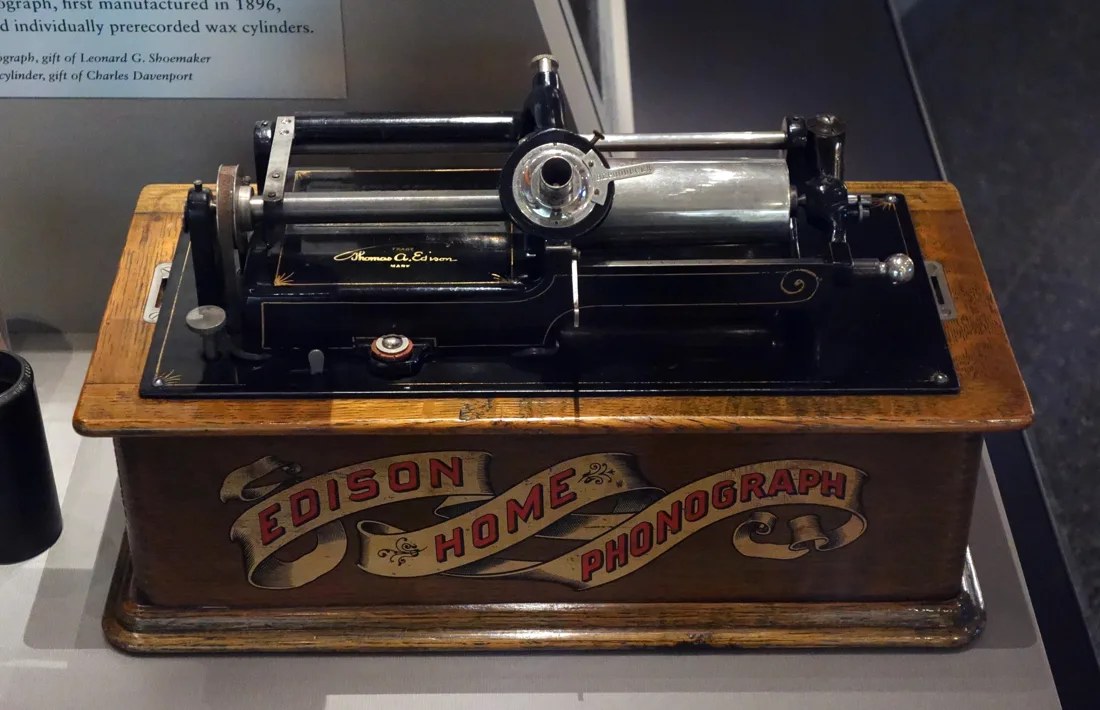
Transcribing the phonograph and typing the journals makes information shareable, searchable and comparable. It changes what the group can do. The records are material objects that can be copied, withheld or destroyed, not just a convenient way for Stoker to tell a story.
Follow the documents through the novel →
Ask what compilation leaves out. The opening assurance that irrelevant material has been removed invites trust while revealing selection. Mina’s labour gives her authority, but most of the sustained records still belong to the hunters. The Count, Renfield and working witnesses have unequal access to the written account.
For research on media, compare Jennifer Wicke with Alexander Lehner. The working notes offer a different record: evidence of Stoker planning a fiction, rather than evidence produced by characters inside it.
The opening frame and the final note
The prefatory assurance asks us to receive the documents as contemporary testimony. The final note, written seven years after the events, questions whether their assembled form would count as proof. Read those claims together: narrative completeness and external verification are different things.
The child Quincey offers continuity after the American’s death, while the return to family memory changes the status of the record. A conclusion might argue for restoration, for unresolved uncertainty, or for both in different respects. It should explain the tension rather than choose the happiest or darkest detail alone.
From identifying a feature to analysing a method
Brief observation: Seward uses a phonograph, which is modern technology.
Developed analysis: Seward’s phonograph initially stores his experience in a medium the others cannot consult as easily as shared pages. When Mina transcribes it, she turns a private voice into part of the common record. The change in medium therefore produces a change in power: evidence can be placed beside other accounts, while the work of making it available gives Mina a practical authority that the men later restrict. The device matters because of what the plot makes people do with it.
The developed version links medium, action, knowledge and a qualified interpretation. Apply the same method to one feature of the Demeter log or Lucy’s memorandum. Use the essay-writing steps to turn the observation into an answer to a specific question.
Extract practice: set extracts (AQA 7707) and unseen passages (OCR)
Which kind of extract question will you meet? It depends on your course. AQA 7707 prints an extract from Dracula and asks you to explore its significance in the extract and across the novel. OCR H472 prints an unseen Gothic passage by another writer, so your knowledge of Dracula must not be read into it. The 9ET0 prose task and 9EL0 literary comparison do not supply an extract from the studied novels; 9EL0 also has a separate unseen non-fiction task.
AQA 7707: a set-extract practice
Extract: Chapter 2, from “Through them I have come to know your great England” to “none other should be master of me.” (Harker’s journal, 7 May: the Count’s library.)
Practice question (an Estate-written question modelled on AQA’s “Explore the significance of…” pattern; the official example is linked below): Explore the significance of language and communication in Dracula. You should consider:
- the presentation of language and communication in the extract and at different points in the novel
- the use of fantasy elements in constructing a fictional world.
A route through the extract
Narrative perspective: this is Harker’s journal, in shorthand, reporting the Count’s speech after the event. What has Harker understood at this point, and what has he not? (Compare the dramatic irony with Chapter 3.)
Language: the Count’s formal syntax (“To you, my friend, I look that I know it to speak”) against his stated aim of passing unnoticed in London.
Significance across the novel: the Count masters English documents (letters, deeds, shipping papers in Chapter 8), and the hunters defeat him by pooling documents (Chapter 17). Language is the means of invasion and of defence.
Context, briefly and only where it explains a detail: travel, property and the 1890s fear of the foreigner who cannot be told apart. See the Arata reading on Quotations and terms.
Avoid: retelling the scene; treating the Count’s speech as simply “creepy”; ignoring who is writing it down.
OCR H472: approaching an unseen Gothic passage
What does OCR want from the unseen? A close reading of the passage as written: its narrative voice, setting, structure and language, related to Gothic conventions you know from wider reading. The 2022 examiners’ report warns against assuming that pale figures in an unseen passage must be vampires. The passage, not your set text, supplies the evidence.
A method for preparation:
Read the headnote: author, date and what has happened before the extract.
Identify the narrator and how much they know. Is the account first person, retrospective or a document?
Track the structure: where does tension rise, where is information withheld, and how does the passage end?
Choose three or four precise details of language, and say what each contributes to the effect.
Only then add a brief comparison with a convention (the threshold, the double, the sublime landscape), naming a text only where it sharpens a point.
Practise with unfamiliar passages: use Unseen Gothic passages by other writers for the OCR task, alongside Short texts by Stoker for unseen practice. Let each passage supply the evidence rather than importing events from Dracula.
Checked against the official AQA paper; narrative perspective belongs in the analysis, while the official task also asks about fantasy and fictional world-building.
Follow the evidence further
The Estate example essay on Gothic traditions and narrative form places these methods in literary history. Compare the documentary witnesses in Collins, then use the Bibliography and Research guide for further work.
Return to characters, chronology and chapters · Compare narrative methods across two works.
Prepared by the Bram Stoker Estate. Page last updated 8 November 2026. Report a correction here.