resources
Getting started
Choose a text you can work with, establish what your course asks of you, then begin reading. For a first reading without detailed plot discussion, use Reading Dracula.
Chapter C now includes a past-question catalogue and board-published candidate responses, with separate qualification and examination-year labels.
Age and content
We suggest the full novel for older teenagers, generally aged 15–16 and above, with a teacher or parent deciding what suits the individual. Many members of Bram’s family read the book at around eleven. This is editorial guidance, not a formal age rating. The novel includes frightening scenes, blood and violence, threats to children, death, sexual threat and coercion, and period language and attitudes concerning race, nationality, disability and gender. Edited versions can suit younger readers; the younger-reader guide introduces adapted books, and the teacher resources identify possible starting points.
Editions, text and audio
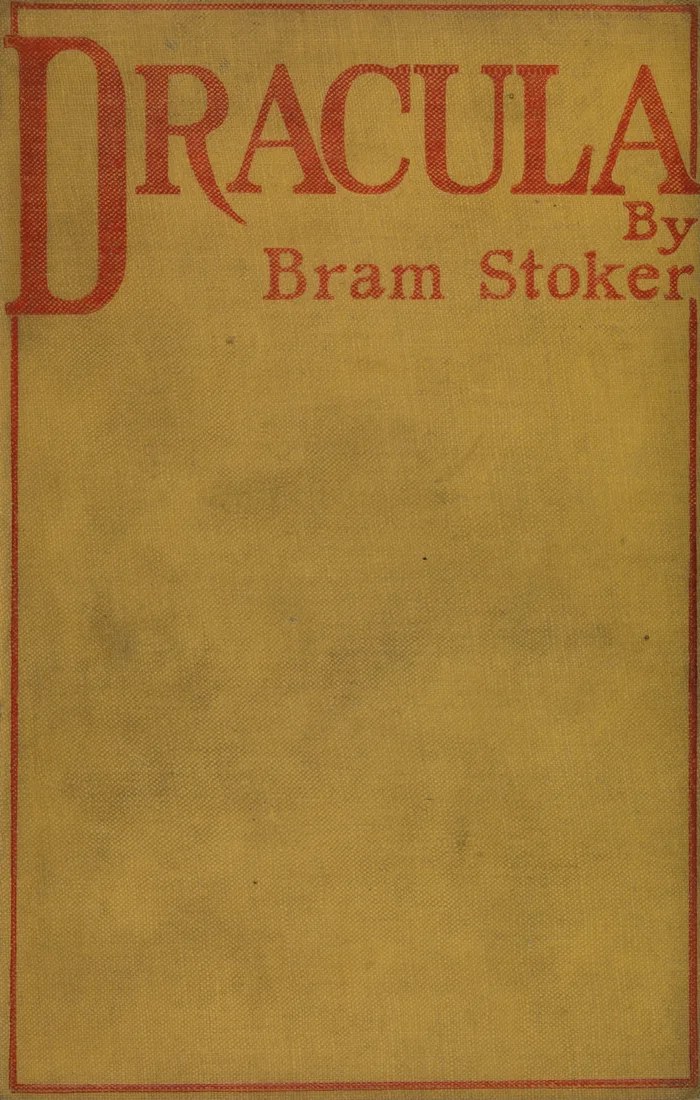
For a class, choose an edition with stable page numbers, an introduction that can be read after the novel, and explanatory notes. These options offer different levels of annotation and critical material; follow your teacher’s choice for a class set.
| Edition | Editor and date | Notes |
|---|---|---|
| Oxford World’s Classics | Roger Luckhurst, 2011 | Introduction covering the Irish background, the Gothic and the novel’s contexts; explanatory notes; a chronology; includes “Dracula’s Guest”. Widely used for A-level and undergraduate study. |
| Penguin Classics | Maurice Hindle, revised 2003, with a preface by Christopher Frayling | Introduction and notes; appendices include Bram’s 1908 essay on censorship and his interview with Winston Churchill. |
| Norton Critical Edition | David J. Skal and John Edgar Browning, 2nd edition 2022 (first edition Nina Auerbach and David J. Skal, 1997) | The 1897 Constable text with background documents, seven contemporary reviews, pieces on the adaptations and eleven critical essays. Useful where critical views are assessed. |
| Bedford/St. Martin’s critical edition | John Paul Riquelme, 2nd edition, 2016 | The 1897 text, contextual documents and six critical essays introducing cultural, psychoanalytic, gender, queer and postcolonial approaches. Includes a glossary of critical terms. A useful option for researched high-school and college work; ISBN 9781457619328. |
| Broadview | Glennis Byron, 1997 | Text with appendices: “Dracula’s Guest”, Bram’s 1908 essay “The Censorship of Fiction”, and documents on Transylvania, London, degeneration, gender and the first reviews. Useful for comparing the novel with contemporary documents. |
| The New Annotated Dracula | Leslie S. Klinger, 2008 | Extensive annotation and illustration; perhaps for the teacher’s desk rather than the class set. |
| Dracula Annotated for the 125th Anniversary | Dacre Stoker and Robert Eighteen-Bisang, 2022 | An annotated edition drawing on Bram Stoker’s working notes, edited by Dacre Stoker and Robert Eighteen-Bisang. |
| Free text | Project Gutenberg, ebook 345 | The 1897 text, with chapter anchors for linking. Check availability in your country. |
| Audio | LibriVox: free, volunteer-read, unabridged recordings. Naxos AudioBooks (2015): a different reader for each narrator; approximately 17 hours. Audible (2012): full-cast reading, with Alan Cumming and Tim Curry. Penguin Audio (2020): Studying Dracula: The Complete Text and Revision Guide. Unabridged narration with A-level analysis and revision material. | Check that a recording is unabridged, not a dramatisation: the BBC radio versions are dramatisations. Listening while following the text helps some readers follow the shifts of voice. |
Further annotated editions are in the Bibliography; check the current printing before ordering.
For large-print, braille, DAISY audio and dyslexia-friendly formats, see Accessible editions and audio.
How to cite Dracula
Should I give page numbers or chapters? Chapters, unless your teacher asks for pages. Page numbers differ between editions, but chapter numbers in the 1897 text do not. This guide uses Arabic chapter numbers (Chapter 17) and the 1897 text as reproduced by Project Gutenberg (ebook 345).
In an essay: quote briefly and give the chapter in brackets: Mina insists that “dates are everything” (Chapter 17).
Who is writing? Name the document as well as the speaker where it matters: Seward records Van Helsing’s praise of Mina (Chapter 18, Seward’s diary).
The opening note and the final note stand outside the numbered chapters. Cite them as “prefatory note” and “the final note (after Chapter 27)”. In these guides, “final note” and “closing note” are descriptive terms and use lower case. Preserve a printed heading’s capitalisation only when quoting that heading.
At university: give the full edition in your bibliography, for example Bram Stoker, Dracula, ed. Roger Luckhurst (Oxford: Oxford University Press, 2011), and cite by chapter and page.
In closed-book exams (OCR, CCEA): short, accurate quotations of a few words are better than long, half-remembered ones.
Understand your course
You can begin reading before studying every examination detail. For now, establish three things with your teacher or college:
- Your qualification and paper: note the board, course code and examination year.
- The task and permitted texts: check whether you will write about Dracula alone, compare it with another work, analyse a supplied extract or complete coursework.
- The basic conditions: check whether the task is open or closed book and which edition or partner text your course uses.
We return to these questions in Chapter C: Your course and examination, with the full course table, question formats, marking criteria, past papers and examiner feedback. First, choose your text and begin getting to know the novel.
Where next?
Prepared by the Bram Stoker Estate. Page last updated 8 November 2026. Report a correction here.