
resources
Dracula: university study and research
Move from a broad theme to a researchable question, a defined body of evidence and a conversation with scholarship. This guide connects the novel’s 1890s context, critical reading and archive routes without repeating the full Bibliography.
Start with a particular 1890s problem
- Fin de siècle and the end of an era. Begin with the 1897 Jubilee and the approaching turn of the century. Treat imperial confidence and anxieties about decline as coexisting positions, then ask how a particular document, image or passage articulates one of them.
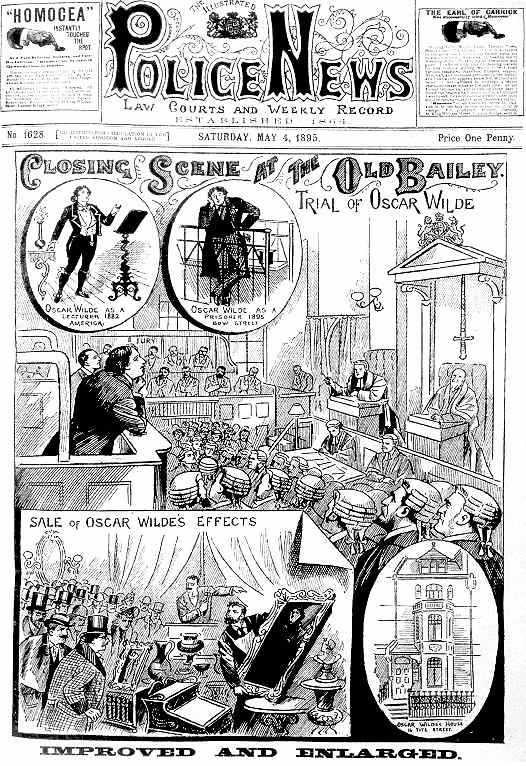

Read the surviving Wilde connections →
- Gender, work and marriage. Read Mina’s skills and the men’s decisions alongside New Woman debates. Compare Senf with Kistler rather than treating “the Victorian woman” as a single social position.
- Empire and mobility. Connect routes, property and languages with Arata’s reverse-colonisation argument. Then test what that account explains less well, including the alliance’s reliance on foreign expertise and American help.
- Bodies and classification. Investigate transfusion, degeneration and criminal anthropology as different histories. The characters’ references to Nordau and Lombroso are objects of analysis, not diagnoses the researcher should adopt.
- Media and modernity. Follow how handwriting, phonograph, typing and news become evidence. Compare Wicke and Lehner against the novel’s actual handling of recording and copying.
- Irishness, religion and class. Place Stoker’s Dublin and London lives beside the novel’s uneven treatment of expertise, belief and labour. Avoid making a character a national allegory before testing the details. Bram’s biography and the Lyceum connections provide a documented starting point.
The Context and themes guide gives chapter connections; the context chronology helps prevent historical anachronism.
Choose critical books for a purpose
| Research need | Starting points | How to use them |
|---|---|---|
| Map the field | Roger Luckhurst (ed.), The Cambridge Companion to Dracula (2017; often cited as 2018); William Hughes’s Bram Stoker’s Dracula: A Reader’s Guide (2009). | Use a chapter or critical overview to identify a debate, then follow the works it cites. |
| Locate the wider vampire tradition | Nina Auerbach, Our Vampires, Ourselves (1995); Christopher Frayling, Vampyres (1992 edition listed in the Bibliography). | Compare what changes across texts and periods, rather than treating a vampire as a fixed symbol. |
| Investigate politics and identity | David Glover, Vampires, Mummies and Liberals (1996); Joseph Valente, Dracula’s Crypt (2002). | Test a political or Irish interpretation against passages it explains and passages that resist it. |
| Work with documents and correct myths | Elizabeth Miller, Dracula: Sense & Nonsense (2000; 2nd edition, 2006) and Bram Stoker’s Dracula: A Documentary Volume (2005); the facsimile working notes (2008). | Separate surviving evidence from the histories later built around it. |
| Study the novel beyond its best-known title | William Hughes, Beyond Dracula (2000); Hughes and Andrew Smith (eds), Bram Stoker: History, Psychoanalysis and the Gothic (1998). | Choose a focused comparison with another Stoker work or a distinct critical approach. |
| Read the classic critical arguments | Elaine Showalter, Sexual Anarchy (1990); Patrick Brantlinger, Rule of Darkness (1988); Kelly Hurley, The Gothic Body (1996); Glennis Byron (ed.), Dracula: New Casebooks (1998/1999 editions). | Select a relevant argument and check its full publication details in the edition you consult. Test it against a passage that resists it. |
Publication details are maintained in the Bibliography’s critical studies and history and sources sections. Use Source materials for individual article links and availability; a catalogue description is not access to a complete book.
Which text are you reading? Textual history in brief
Does it matter which edition I use? At university, yes. Cite the edition you use and know which text it follows.
1897: first edition, Archibald Constable and Company, Westminster, published 26 May 1897. Most modern editions follow it.
1899: first American edition, Doubleday & McClure, New York.
1901: Constable’s abridged sixpenny paperback. It is a useful source for what the shorter edition omits, without assuming who authorised every alteration.
1914: Dracula’s Guest and Other Weird Stories, published by Florence Stoker after Bram’s death. Her preface presents the title story as an episode cut from Dracula. Treat that claim as a debated question rather than a fact.
Working notes: Stoker’s notes and outlines (1890 onwards) are at the Rosenbach in Philadelphia. They are available in facsimile in Robert Eighteen-Bisang and Elizabeth Miller (eds), Bram Stoker’s Notes for Dracula (2008).
Editions compared
| Edition | Editor | What the apparatus is good for |
|---|---|---|
| Oxford World’s Classics (2011) | Roger Luckhurst | A compact introduction to the novel’s fin-de-siècle contexts, notes and a chronology. Replaced an earlier OWC edition with Maud Ellmann’s widely debated introduction |
| Penguin Classics (rev. 2003) | Maurice Hindle | Notes and appendices, including Stoker’s essay “The Censorship of Fiction” (1908) |
| Broadview | Glennis Byron | Contemporary documents (degeneration, the New Woman, reviews): useful for placing the novel in the 1890s |
| Norton Critical, 2nd ed. (2022) | John Edgar Browning and David J. Skal | Reviews, adaptations and a broad range of criticism |
| The New Annotated Dracula (2008) | Leslie S. Klinger | Extensive annotation, written as a playful “true story” frame. Useful for detail, but check its claims against scholarly editions |
The fin-de-siècle cluster: what Dracula is read alongside
University modules rarely teach Dracula alone. Expect it beside Stevenson, Strange Case of Dr Jekyll and Mr Hyde (1886); Wilde, The Picture of Dorian Gray (1890–91); Haggard, She (1887); Le Fanu, Carmilla (1872); Marsh, The Beetle (1897); Wells, The Island of Doctor Moreau (1896); and New Woman fiction such as Sarah Grand and George Egerton. A standard starting point for primary documents is Sally Ledger and Roger Luckhurst (eds), The Fin de Siècle: A Reader in Cultural History, c.1880–1900 (2000), which reprints writing on degeneration, sexology, empire and the New Woman.
A theory toolkit, applied to Dracula
Which theory should I use? Choose the one that best explains the passage you are analysing, and test it against a passage that resists it.
Psychoanalytic: repression and its return; the vampire’s bite as displaced desire (Harker’s “wicked, burning desire”, Chapter 3). Test it against the novel’s insistence on documents and procedure.
Feminist and gender: Lucy’s punishment and Mina’s double role (Roth, Senf, Kistler). Test it against Mina’s own writing in Chapters 17 and 26.
Queer: desire between men routed through women (Craft; Schaffer). Separate textual readings from biographical claims (see Stoker’s life and queer readings).
Postcolonial: reverse colonisation and the East–West border (Arata). Test it against the multinational alliance.
Marxist: the Count as accumulated capital (Moretti). Test it against his aristocratic pride.
Monstrosity and the abject: the body that crosses categories, living and dead, human and animal (Halberstam; Kristeva’s “abjection”, from Powers of Horror, 1980). Test it on the three women in Chapter 3.
The uncanny: the familiar made strange (Freud, “The Uncanny”, 1919). Test it on the Count’s absent reflection (Chapter 2).
Build a critical conversation
Choose two accounts that make different claims about the same evidence. Write down each claim, its decisive passages, its historical assumptions and what it leaves unexplained. Then return to the novel before deciding which account, combination or challenge your essay will develop.
For example, place a gender reading of Mina beside a media reading of her transcription. Does technical competence change who has authority, or is that work absorbed into conventional service? Read Chapters 17–19 together and let the disagreement sharpen the question.
A citation should show what you are using a scholar for. Do not group several names after a general claim or use a quotation from an abstract as though you had read the whole article. Mark inaccessible works for library follow-up.
Reading a critical article
How do I read a critic rather than just cite one? Try these two classic articles, and ask the same five questions of each.
Stephen D. Arata, “The Occidental Tourist: Dracula and the Anxiety of Reverse Colonization”, Victorian Studies 33 (1990).
Christopher Craft, “‘Kiss Me with Those Red Lips’: Gender and Inversion in Bram Stoker’s Dracula”, Representations 8 (1984).
What is the claim, in one sentence?
Which passages carry it?
What does it leave out?
What would its author say about the final note?
How would you test it against Chapter 17, where Mina assembles the records?
Arata: publication and access · Craft: publication and access.
Choose an archive route with a defined output
| Question | Estate route | A manageable research output |
|---|---|---|
| How did a fictional decision develop? | Working notes; typescript history. | Compare one planning entry with the published passage. State exactly which version or facsimile you consulted. |
| How was the novel presented in 1897? | Stoddard’s interview; early reception research. | Separate an author’s public account, a reviewer’s judgement and a later critical explanation. |
| How can correspondence illuminate a debate? | Charlotte’s work; Whitman letters; archive transcriptions. | Analyse the document’s date, recipient and purpose before making a comparison with fiction. |
| How does theatre work matter? | Irving and Terry; theatre bibliography. | Test a specific narrative or performance effect, rather than naming theatre as a general influence. |
| What changed after publication? | Stage and screen; history of Dracula scholarship. | Choose one adaptation or critical moment and compare what it preserves, changes or invents. |
Start with the Research guides and reference material and archives and original papers. Holdings are dispersed. A finding aid identifies material; it does not establish that the object is digitised or freely reproducible.
Where the papers are
Original material is dispersed. Start with the Research guide and consult each institution’s own catalogue and access conditions before planning a project.
Trinity College Dublin Library – family and related material; The Rosenbach – the Dracula working notes; Shakespeare Birthplace Trust – Stoker correspondence and Lyceum material; University of Leeds Special Collections – Stoker correspondence. The further collections and finding aids route also identifies British Library holdings.
A finding aid is distinct from a digitised original. Follow the holding institution’s item-specific credit and permission terms; this guide does not prescribe an unverified joint credit line.
Seminar questions
Why does a novel about an ancient threat need the newest technology to defeat it?
Is Mina’s work in Chapter 17 the novel’s most radical act, or its most conservative one?
What does Renfield know that the doctors do not, and why does the novel give him that knowledge?
Does the final note undermine the claim of the prefatory note?
How far is the Count a character at all after Chapter 4?
What happens to Dracula if we read it as an Irish novel? What does that reading fail to explain?
Dissertation topics that use primary sources
The 1901 abridgement: a comparison with the 1897 text.
From notes to novel: how the working notes reshape the plan (Styria to Transylvania; the dropped characters).
Dracula and the 1897 press: reception in national and regional reviews.
Mina’s typewriter: office technology, women’s work and the novel’s form.
The Lyceum and the Count: stage practice and the novel’s set pieces (avoid the claim that Irving “was” the Count; ask what theatre practice explains).
Florence Stoker and the afterlife of Dracula: copyright, Nosferatu and the 1920s stage versions.
Keep the source trail visible
- Define the source. Record author, title, date, edition or repository reference, page or folio, stable link and access date. Identify whether you used an original, a facsimile, a transcription or a modern quotation.
- Record what you actually saw. A catalogue entry, search result or abstract is not the underlying manuscript or article. Note gaps and second-hand references openly.
- Separate kinds of claim. Label a documented fact, an interpretation and a possible influence differently. The Wilde connection is useful context without licensing a diagnosis or a hidden biographical key.
- Follow scholarship forward and back. Use references to locate earlier work, then search for responses and newer research. The Journal of Dracula Studies archive and William Hughes’s research guide provide routes into the field.
Where next?
Has this guide helped you find evidence or develop a research question? Let us know what was useful and which research routes are missing.
Studying Dracula · Context and themes · Stoker’s life and queer readings · Research guide.
Prepared by the Bram Stoker Estate. Page last updated 8 November 2026. Report a correction here.